
Discover Unlimited Art Possibilities
At RedKalion, you can find virtually any artwork from any artist, available in a wide range of sizes to perfectly match your space.
If you didn’t find what you’re looking for, contact us at support@redkalion.com . We will source any artwork and produce it in any size and format you need, including art prints, posters, canvas, framed pieces, framed canvas, and more.
For dedicated art enthusiasts, we also offer handcrafted replicas of any artwork, carefully painted by highly skilled artists using traditional techniques.
For custom requests, contact us at support@redkalion.com .
What makes RedKalion acrylic prints different?
Our prints use 4mm thick, high-grade acrylic, offering superior depth and vibrancy compared to standard posters. The material provides a modern, sleek aesthetic while protecting the artwork from moisture and dust.
How long will this William Morris print last?
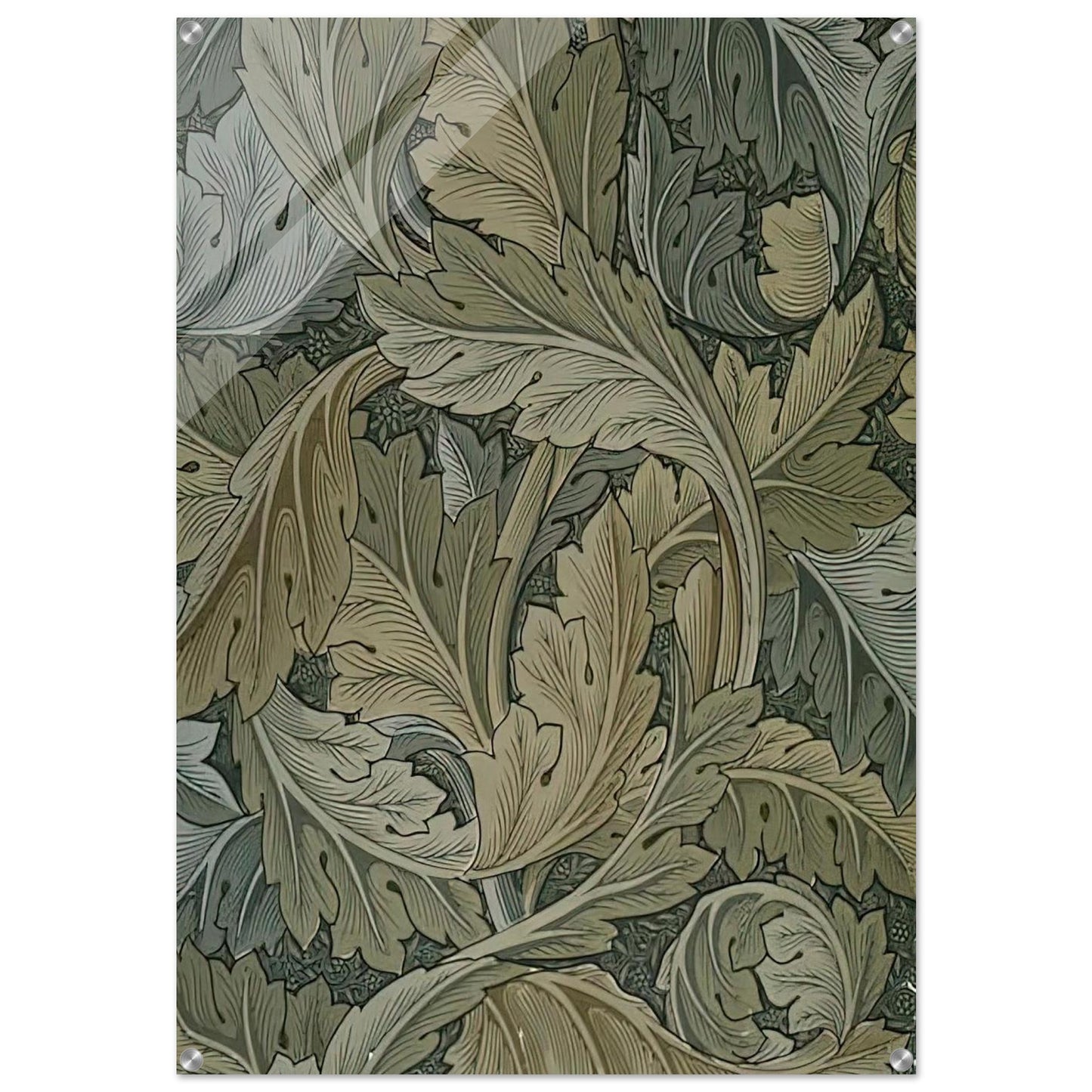
Designed for longevity, our archival-grade acrylic prints are UV-resistant. This ensures that the intricate Acanthus colors remain vivid and do not fade, even when exposed to natural light over many years.
Does the print come ready to hang?
Yes, each print includes a specialized hanging kit with screws. Pre-drilled holes are positioned 14mm from the edges, allowing for a secure and elegant floating appearance on your wall.
What is the estimated delivery for this fine art print?
RedKalion ensures secure packaging and insured shipping for all museum-quality prints. Delivery times vary by location, but most orders are processed and shipped within a few business days with full tracking provided.
Is this a museum-quality reproduction?
Absolutely. We use high-resolution digital captures of the original 1875 Acanthus woodblock designs, ensuring every detail of William Morris’s hand-drawn artistry is preserved with historical accuracy.
What inspired William Morris to create the Acanthus design in 1875?
Morris was inspired by the lush, unruly beauty of English gardens and classical Greek architecture. He sought to bring the outdoors inside, emphasizing the organic growth of patterns to contrast with industrial rigidity.
Why is the Acanthus wallpaper considered a breakthrough in textile design?
It represented a shift toward large-scale, complex layering. By using thirty distinct woodblocks, Morris achieved a depth of color and pattern density that was previously unheard of in decorative arts.