
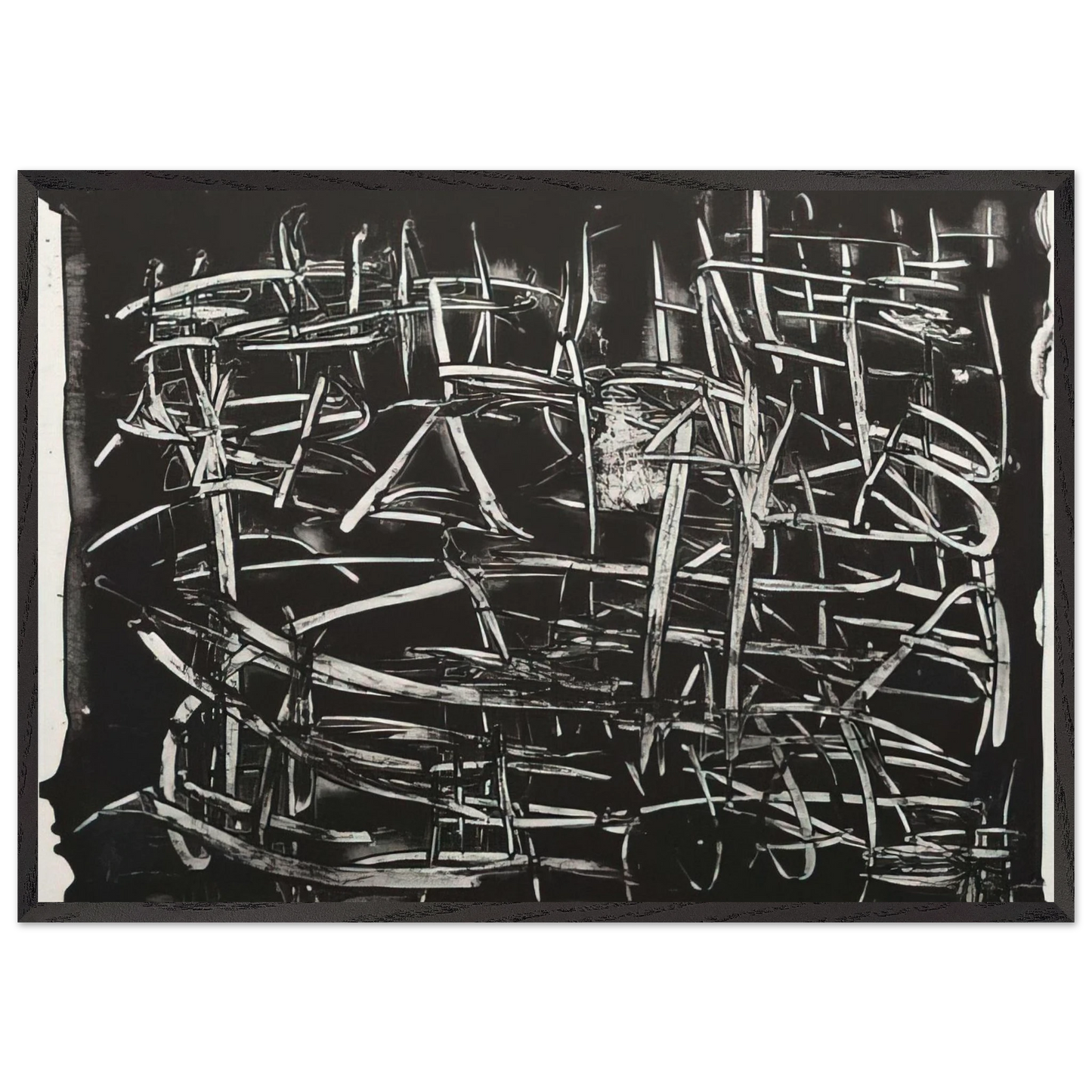
What materials are used for the Alba - 1997 print?
We use 250 gsm (110 lb) natural white, archival museum-quality paper. This FSC-certified paper has a matte, uncoated finish, ensuring the vibrant colors of Günther Förg's work remain stunning for decades without yellowing.
Is the frame durable and sustainable?
Yes, the frame is made from responsibly sourced oak and ash. It is 20mm (0.79") thick, providing a premium, sturdy profile that is significantly more robust than standard frames, protected by shatterproof plexiglass.
How long will this fine art print last?
Our prints are created using archival-grade materials and acid-free paper. When kept out of direct sunlight, these museum-quality reproductions are designed to maintain their integrity and color vibrancy for over 100 years.
Is the artwork ready to hang upon arrival?
Absolutely. Your Günther Förg print arrives fully assembled in its black wooden frame with a hanging kit included. You can elevate your interior design immediately upon delivery with no additional tools required.
What is RedKalion’s commitment to sustainability?
RedKalion prioritizes the planet by using FSC-certified wood and paper or equivalent sustainable materials. We ensure that our premium art reproductions have a minimal environmental footprint while maintaining maximum aesthetic impact.
What is the historical significance of Förg’s Alba (1997)?
Alba (1997) represents Förg's fascination with architectural structures. By the late 90s, Förg was renowned for bridging the gap between painting and the built environment, using 'window' motifs to explore light and spatial depth.
How does the matte finish affect the viewing experience?
The matte, uncoated finish eliminates reflections, allowing the viewer to appreciate the subtle textures and tonal transitions of Förg’s abstract composition from any angle, mirroring the atmosphere of a high-end art gallery.