


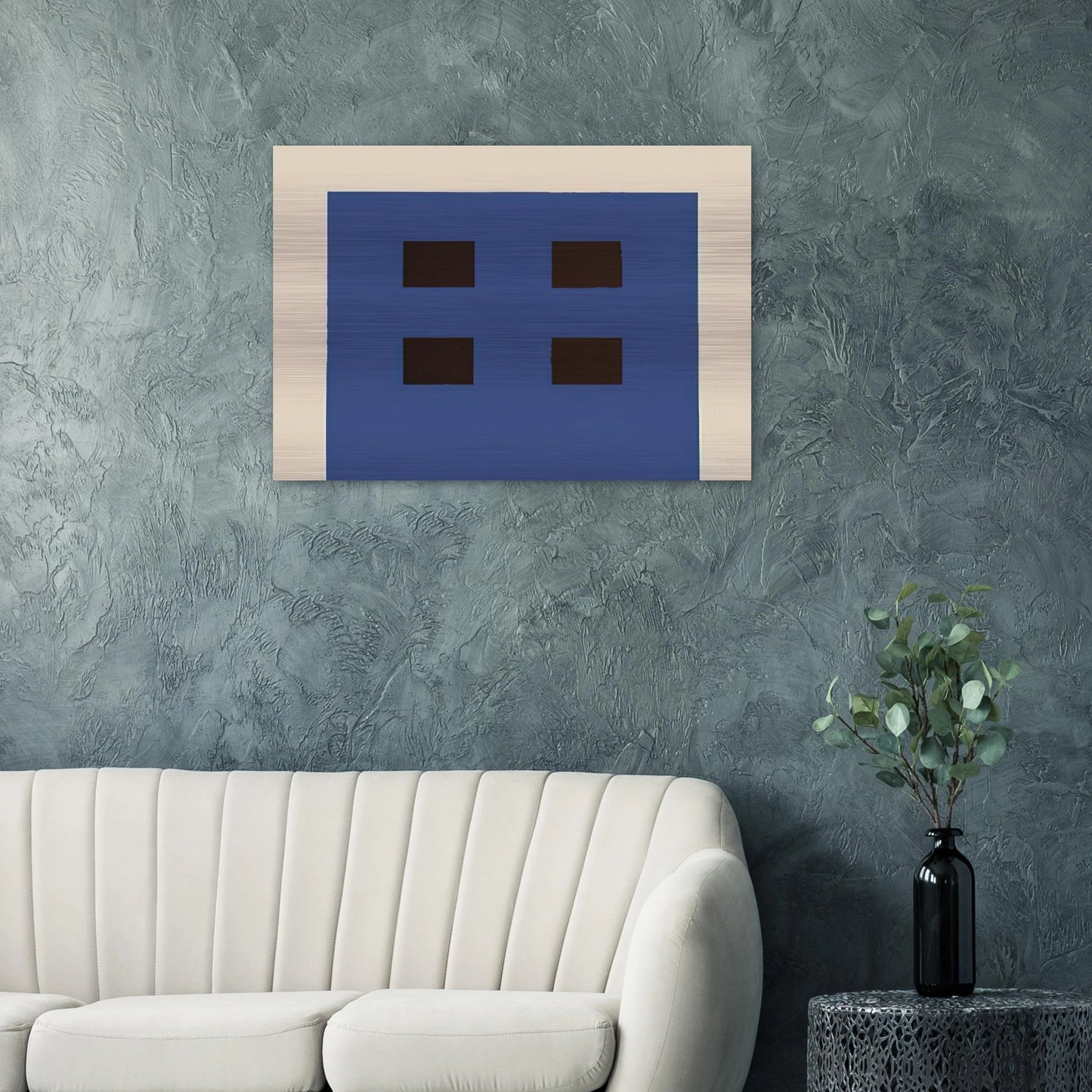
What makes the Aluminum DIBOND® material unique for Peter Halley prints?
Our 3mm Aluminum DIBOND® uses a brushed silver finish with a horizontal grain. This industrial texture complements Halley's geometric themes, while the metallic surface provides a modern, high-end look that paper prints cannot achieve.
How does the matte finish affect the appearance of 'Apartment House'?
The glare-free matte finish ensures that the artwork remains visible from all angles without reflections. The direct print technology preserves the bold, flat colors essential to Peter Halley's Neo-Geo aesthetic.
Is the hanging hardware included with the print?
Yes, every Peter Halley Aluminum Print from RedKalion includes a professional hanging kit. The specific mounting system varies by fulfillment country to ensure safe and secure installation.
How is the print protected during shipping?
We use robust, custom-engineered packaging designed for oversized metal prints. Our logistics team ensures that your museum-quality reproduction arrives in pristine condition, ready for display.
What is the archival longevity of an AluDibond print?
Aluminum DIBOND® is exceptionally durable and resistant to fading, moisture, and temperature changes. These archival-grade prints are designed to endure for decades without loss of color vibrancy.
What is the significance of Peter Halley’s 'cells' and 'conduits'?
In Halley's work, 'cells' represent isolated living or working spaces, while 'conduits' represent the pipes and wires that connect them. 'Apartment House' (1981) is a foundational example of this social critique.
Why is 'Apartment House' (1981) considered a Neo-Geo masterpiece?
It marked a shift from traditional abstraction toward a conceptual critique of the 'geometry' of modern society, positioning Halley as a leader of the Neo-Geometric movement in the 1980s.