
Discover Unlimited Art Possibilities
At RedKalion, you can find virtually any artwork from any artist, available in a wide range of sizes to perfectly match your space.
If you didn’t find what you’re looking for, contact us at support@redkalion.com . We will source any artwork and produce it in any size and format you need, including art prints, posters, canvas, framed pieces, framed canvas, and more.
For dedicated art enthusiasts, we also offer handcrafted replicas of any artwork, carefully painted by highly skilled artists using traditional techniques.
For custom requests, contact us at support@redkalion.com .
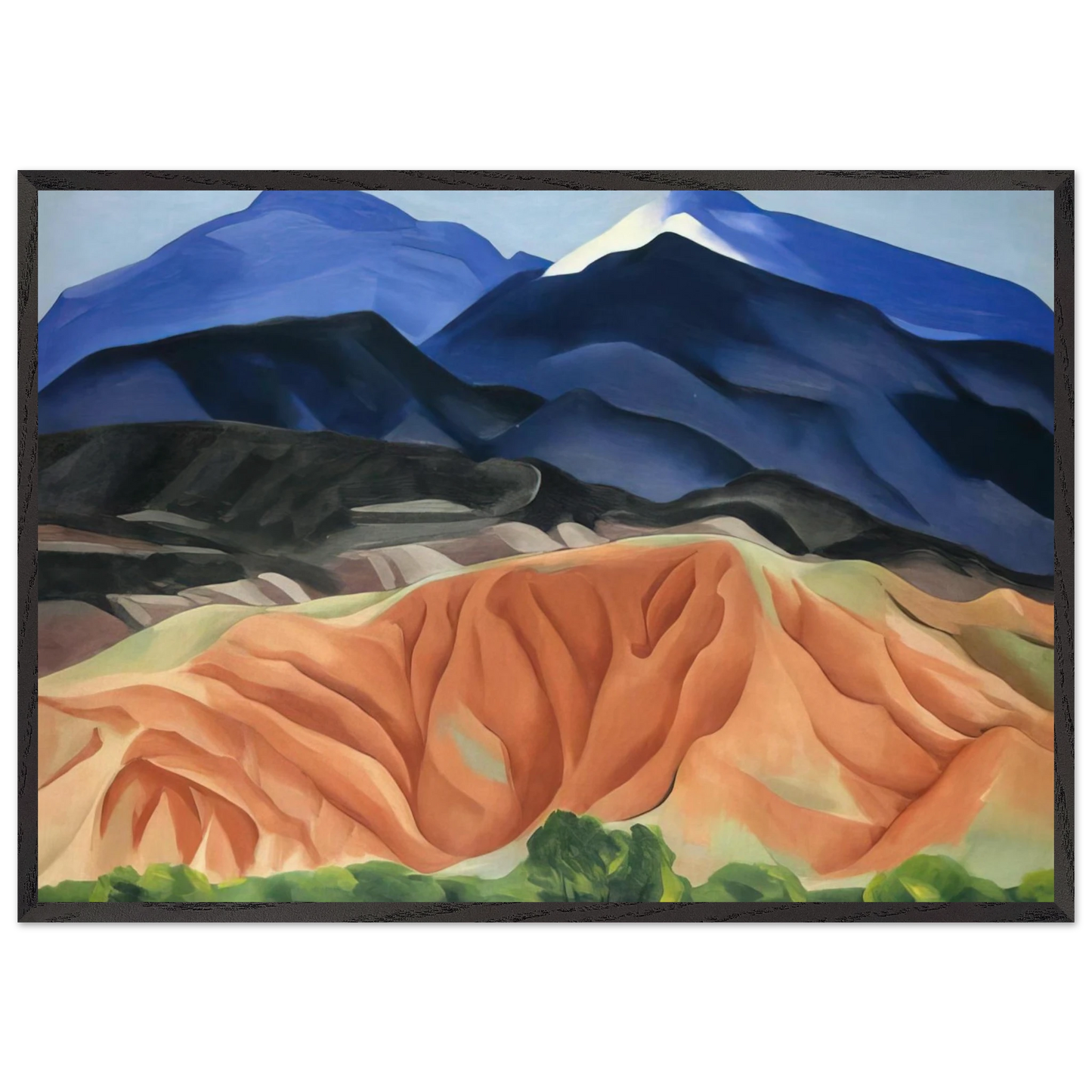
What materials are used for the Black Mesa Landscape print?
We use archival-grade 250 gsm (110 lb) natural white paper. It is matte, uncoated, and museum-quality to ensure longevity and prevent glare on this Georgia O'Keeffe masterpiece.
Is the black wooden frame sustainably sourced?
Yes, our frames are crafted from FSC-certified or equivalent responsibly sourced oak and ash wood, measuring 20mm in width for a premium, durable finish.
How is the artwork protected during shipping and display?
Each print is secured behind shatterproof plexiglass within the frame. We ship in robust packaging to ensure your museum-quality reproduction arrives in perfect condition.
Does the framed print come ready to hang?
Absolutely. Every RedKalion framed art print includes a pre-mounted hanging kit, allowing you to display your new New Mexico landscape immediately upon delivery.
How long will this archival print last without fading?
By using 250 gsm archival paper and acid-free materials, this print is designed to last for decades without yellowing or significant fading when kept out of direct sunlight.
Who is 'Mary' referred to in the title 'Out Back of Marys'?
The title refers to Mary Wheelwright, a friend of O'Keeffe and founder of the Wheelwright Museum. O'Keeffe often painted the Black Mesa from Mary’s ranch in Alcalde, New Mexico.
What makes O'Keeffe’s Black Mesa series historically significant?
The Black Mesa series represents O'Keeffe's shift toward Modernist landscape abstraction, where she simplified geographical features into essential forms to capture the 'spirit' of the American Southwest.