

Discover Unlimited Art Possibilities
At RedKalion, you can find virtually any artwork from any artist, available in a wide range of sizes to perfectly match your space.
If you didn’t find what you’re looking for, contact us at support@redkalion.com . We will source any artwork and produce it in any size and format you need, including art prints, posters, canvas, framed pieces, framed canvas, and more.
For dedicated art enthusiasts, we also offer handcrafted replicas of any artwork, carefully painted by highly skilled artists using traditional techniques.
For custom requests, contact us at support@redkalion.com .
Frequently Asked Questions
What artwork is featured in this acrylic print?
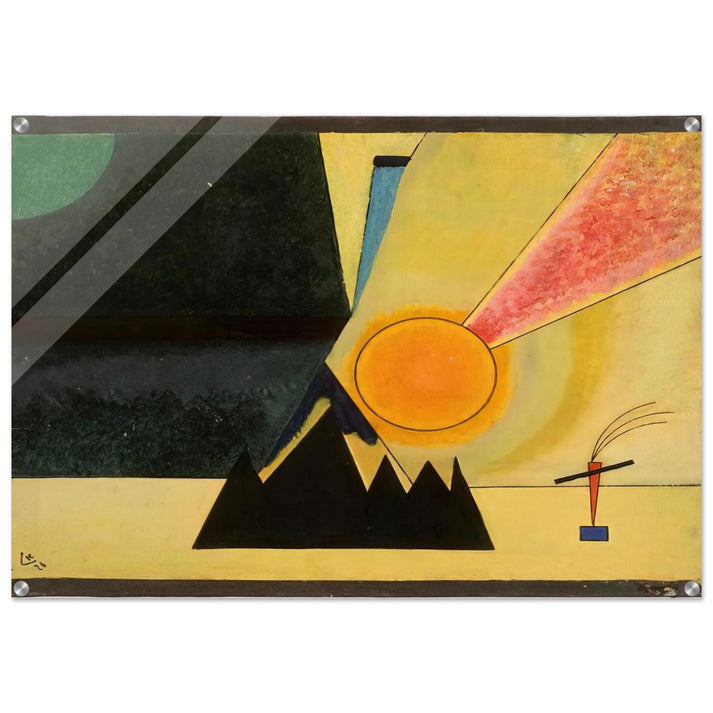
This museum-quality reproduction features Wassily Kandinsky's seminal 1926 abstract composition, "Development," known for its dynamic geometric forms and vibrant color palette.
What are the dimensions of this Wassily Kandinsky wall art?
The dimensions of this Wassily Kandinsky wall art are 70x100 cm, which is equivalent to approximately 28x40 inches.
What material is the artwork printed on?
This fine art print is produced on a durable 4mm (0.15") thick acrylic panel, offering a sleek, vibrant, and modern presentation of the "Development" artwork.
How is the acrylic print packaged and shipped?
Each acrylic print is carefully packaged to ensure it arrives safely. Shipping details and timelines are available during the checkout process.
How long can I expect this archival print to last?
Utilizing museum-quality inks and durable acrylic, this print is designed for exceptional longevity, preserving the vibrancy and detail of Kandinsky's "Development" for years.
Can you tell me more about Wassily Kandinsky's style during the Bauhaus period?
During the Bauhaus period (1922-1933), Kandinsky's work became more geometric, exploring the relationship between color, form, and composition with a systematic approach.
What is the significance of the title "Development" in Kandinsky's oeuvre?
The title "Development" suggests a progression or evolution within Kandinsky's abstract language, showcasing his continuous exploration of visual elements and their expressive potential.