Verfügbarkeit für Abholungen konnte nicht geladen werden
Unsere hochwertigen Holzrahmen, gefertigt aus verantwortungsvoll angebautem Eichen- oder Eschenholz, zeichnen sich durch eine einzigartige Maserung aus, die ihnen zusätzlichen Charakter verleiht. Die Poster werden auf hochwertigem, ungestrichenem Papier in Museumsqualität gedruckt – cremefarben und ideal für alle, die höchste Qualität suchen.
Sofort aufhängefertig: Inklusive Aufhängevorrichtung, kann direkt an der Wand aufgehängt werden.
Rahmenmaterial: Verantwortungsvoll beschafftes Eichen- und Eschenholz.
Rahmenmaße: 20 mm (0,79") dick und breit, breiter als der klassische 14 mm (0,55") Rahmen.
Papiergewicht: 250 g/m² (110 lb), Dicke: 0,29 mm (11,4 mils), ideal für Kunstwerke.
Papierveredelung: Mattes, ungestrichenes, naturweißes Archivpapier in Museumsqualität.
Schutz: Das Poster ist durch bruchsicheres Plexiglas geschützt.
Nachhaltiges Papier: FSC-zertifizierte Materialien oder gleichwertige Materialien.
Verfügbare Größen: 15 Größen in Zoll (USA & Kanada) und cm (Rest der Welt).
Keine Mindestbestellmenge, Druck und Versand auf Bestellung.
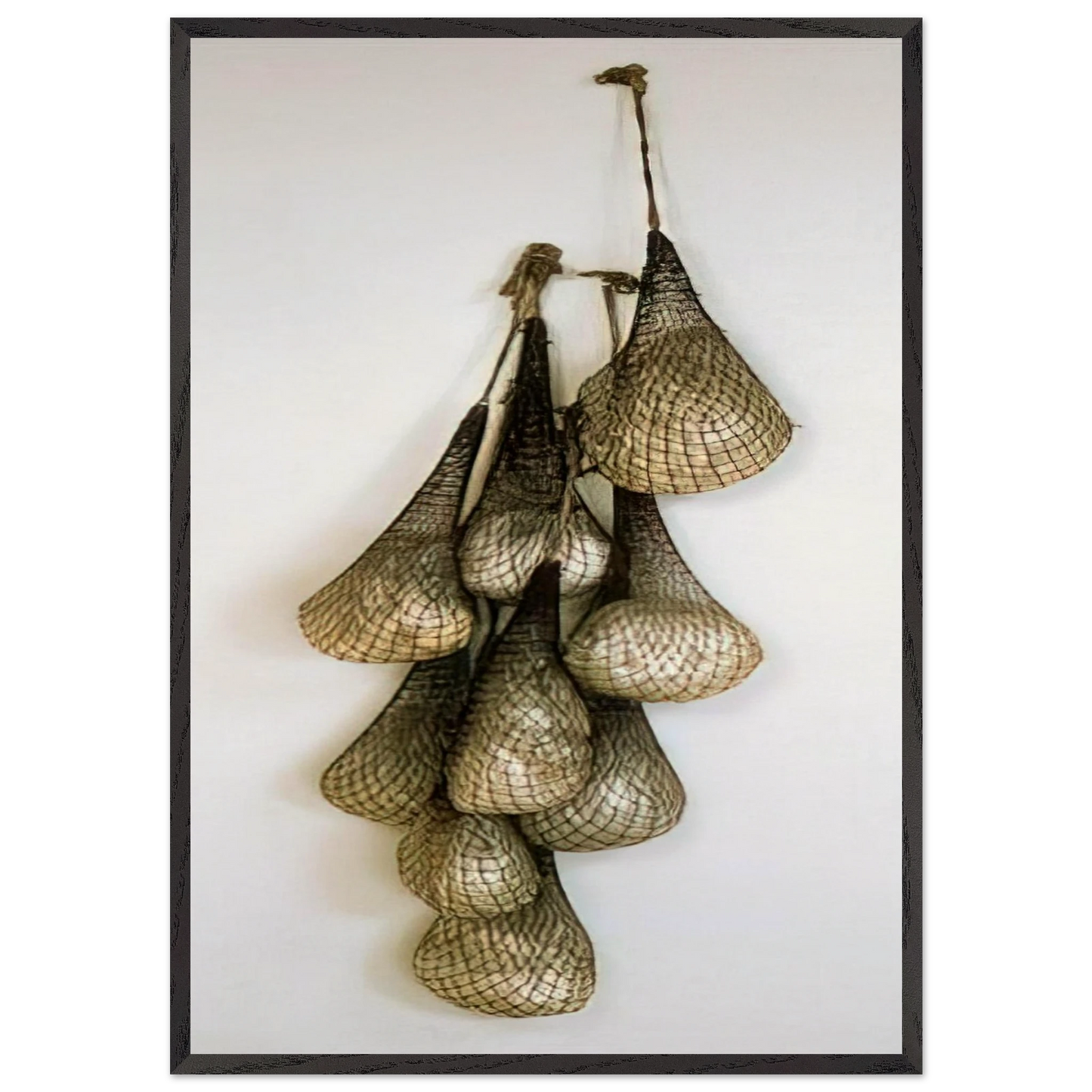
What are the dimensions of this Eva Hesse framed art print?
This framed art print measures 70x100 cm (28x40 inches), with a black wooden frame that is 20mm (0.79") thick and wide, offering a substantial, modern profile for display.
What type of paper is used for this museum-quality reproduction?
We use 250 gsm (110 lb) archival museum-quality paper with a matte, uncoated finish and natural white color, ensuring longevity and fine art detail for this Eva Hesse print.
Is this framed print ready to hang?
Yes, this framed art print includes a hanging kit and is ready-to-hang directly on your wall, making installation simple and immediate.
How is the print protected in the frame?
The print is protected by shatterproof plexiglass, which safeguards it from damage while maintaining clarity, ideal for this archival reproduction of Eva Hesse's work.
Is the paper sustainable for this fine art print?
Yes, the paper is FSC-certified or equivalent, ensuring sustainable sourcing for this premium Eva Hesse art print.
What is the historical significance of UNTITLED OR NOT YET 1966 by Eva Hesse?
This 1966 piece marks Eva Hesse's shift to post-minimalism, exploring organic forms and materials that challenged rigid art conventions of the era.
Why did Eva Hesse use ambiguous titles like 'UNTITLED OR NOT YET'?
Hesse often used open-ended titles to emphasize process and imperfection, inviting viewers to interpret her work beyond fixed meanings in 1960s art.
Wenn du dich für eine Auswahl entscheidest, wird die Seite komplett aktualisiert.