
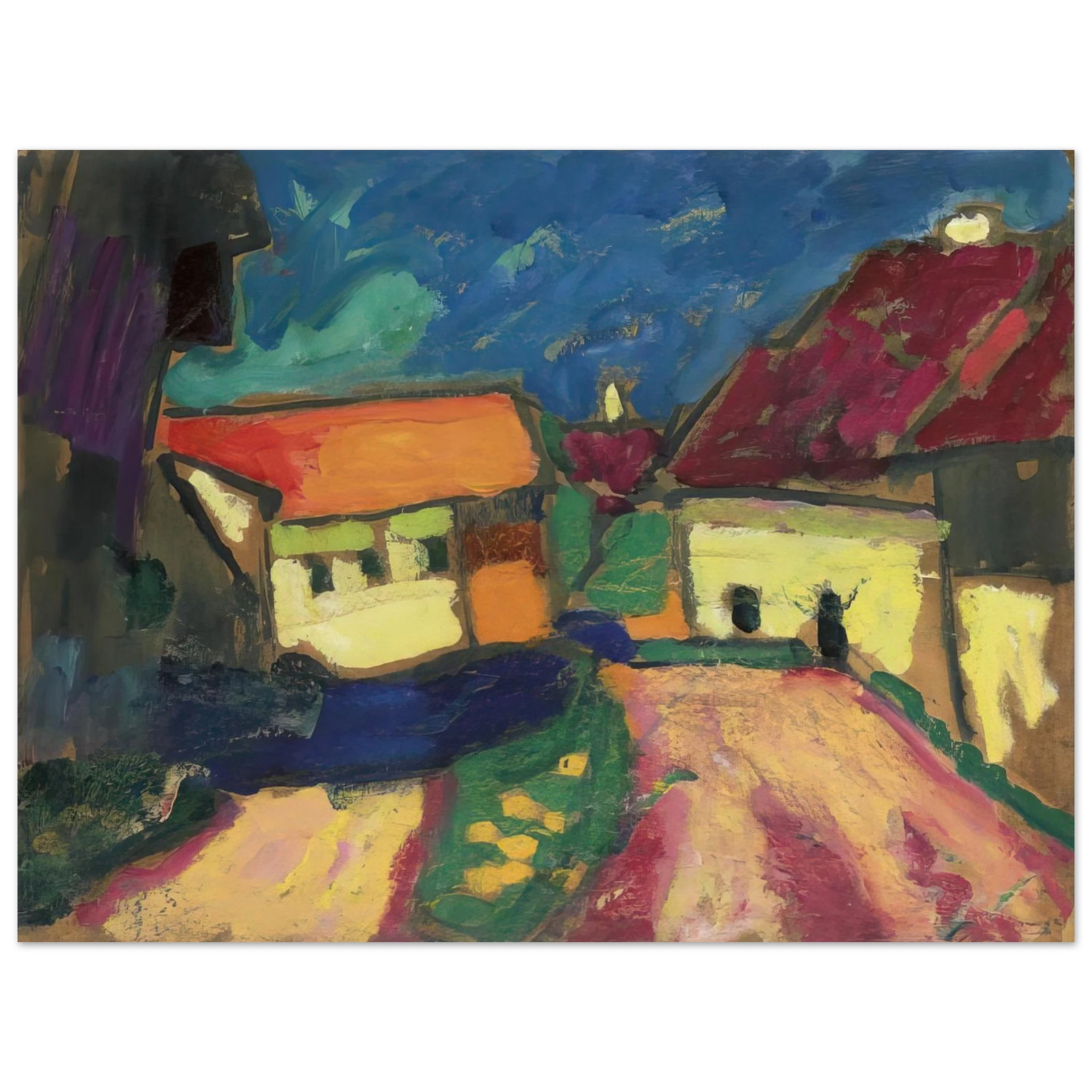
What are the paper specifications for this Jawlensky print?
We use Master's Edition archival paper, weighing 250 gsm (110 lb) with a thickness of 0.29 mm. It features a luxurious matte, uncoated, natural white finish for a true museum-quality aesthetic.
Will this fine art poster yellow or fade over time?
No. Our prints are produced on acid-free paper with a pH above 7. This archival-grade material ensures that the vibrant colors of the 1908 landscape remain preserved for generations.
Is the paper used for this reproduction eco-friendly?
Yes, RedKalion is committed to sustainability. We exclusively use FSC-certified paper (or equivalent certifications) to ensure our museum-quality prints are ethically and responsibly sourced.
How is my order fulfilled and shipped?
Each Jawlensky print is printed and shipped on demand with no minimum order requirements. This ensures every piece arrives in pristine condition while reducing waste through efficient logistics.
Does the print have a glossy or a matte finish?
This print features a matte finish. The uncoated, natural white paper provides a sophisticated, glare-free texture that enhances the depth and emotional resonance of Jawlensky’s expressionist brushwork.
Why is the year 1908 significant for Alexej von Jawlensky?
1908 was a turning point spent in Murnau with Kandinsky. It marked Jawlensky's shift toward the intense, subjective use of color and simplified forms that defined European Expressionism.
What artistic style does Landschaftstudie Dorfstrasse represent?
This work is a hallmark of early Expressionism and Synthetism. It emphasizes bold outlines and vibrant, non-naturalistic colors to convey the inner experience of the landscape rather than a literal depiction.