
RedKalion
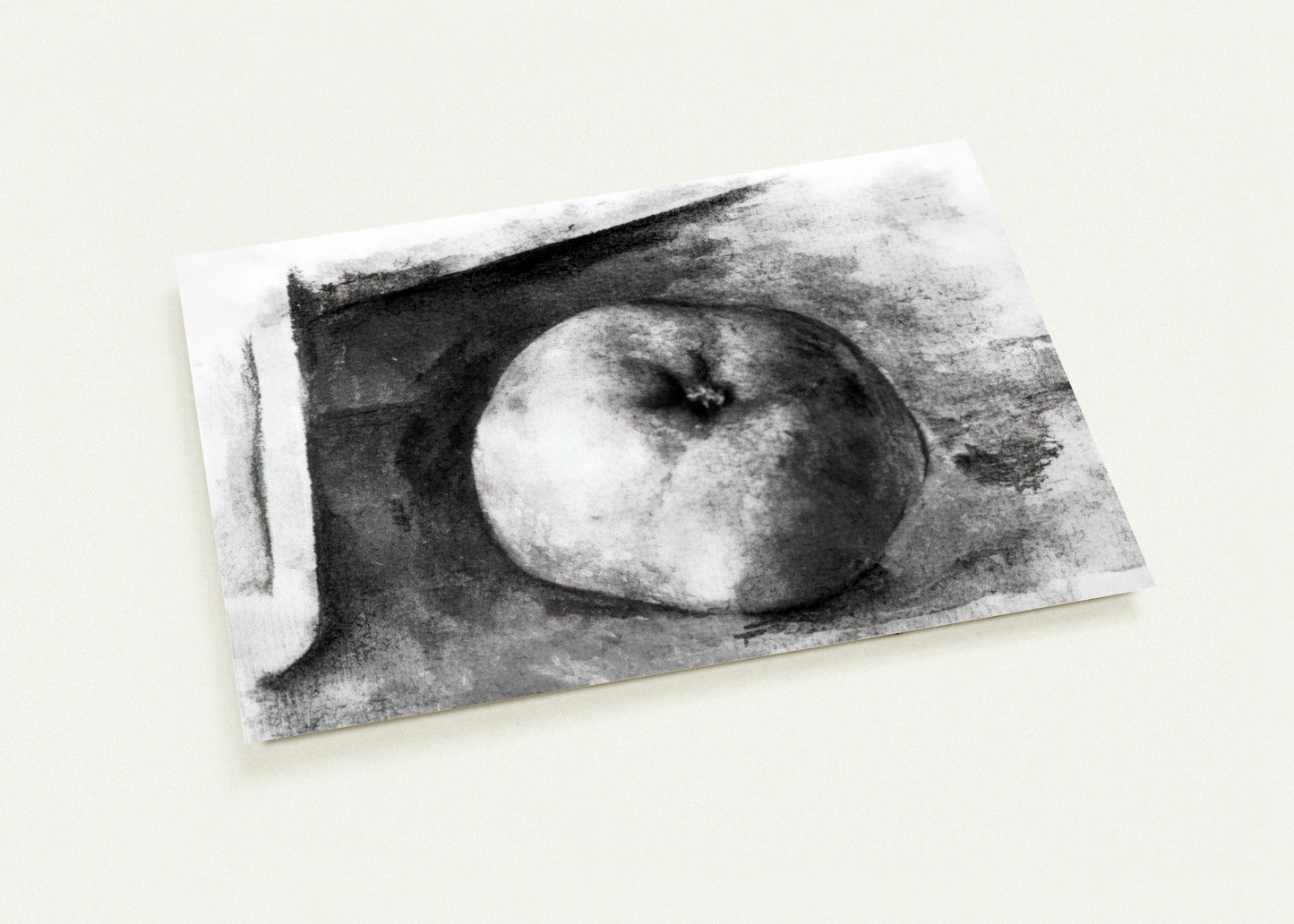
Apple - 1914 By Pablo Picasso Pack of 10 Post Cards | Pablo Picasso Post Cards | A6 (10.5 x 14.8 cm) - 4.1 x 5.8 inches
Apple - 1914 By Pablo Picasso Pack of 10 Post Cards | Pablo Picasso Post Cards | A6 (10.5 x 14.8 cm) - 4.1 x 5.8 inches
Δεν ήταν δυνατή η φόρτωση της διαθεσιμότητας παραλαβής
A Masterpiece of Synthetic Cubism: Picasso's Apple (1914)
Step into the revolutionary world of early 20th-century modernism with this exquisite pack of 10 postcards featuring Pablo Picasso’s 'Apple' (1914). Created during the height of the Synthetic Cubist movement, this work represents a pivotal moment in art history. Moving away from the dense complexity of Analytic Cubism, Picasso began experimenting with simpler shapes, vibrant color planes, and a sense of playful texture. This curated set allows you to share a piece of the avant-garde with friends or display them as a minimalist art gallery in your own home.
Museum-Quality Reproduction for the Discerning Collector
At RedKalion, we believe that fine art should be accessible without compromising on technical excellence. These postcards are not mere stationary; they are high-fidelity reproductions. Utilizing our advanced 12-color fine art printing technology, we capture the subtle nuances and tonal shifts of Picasso's original palette with a depth that standard 4-color processes cannot replicate.
Premium Specifications
- Historical Significance: An iconic example of Picasso's transition into simplified form and collage-like aesthetics.
- Superior Color Depth: 12-color archival ink system for vivid, accurate color reproduction.
- Exquisite Texture: A smooth matte finish ensures a glare-free viewing experience, highlighting the artwork's details.
- Heavyweight Quality: Printed on 200 gsm (80 lb) paper with a thickness of 0.26 mm (10.3 mils) for a substantial, premium feel.
- Eco-Conscious Curation: Each card is printed on FSC-certified paper, reflecting our commitment to environmental sustainability.
- Format: Pack of 10 A6 postcards (10.5 x 14.8 cm), perfect for framing or mailing.
Elevate your correspondence or your collection with these archival masterpieces. RedKalion ensures each print is produced on demand, maintaining the highest standards of quality control and artistic integrity.
Discover Unlimited Art Possibilities
At RedKalion, you can find virtually any artwork from any artist, available in a wide range of sizes to perfectly match your space.
If you didn’t find what you’re looking for, contact us at support@redkalion.com . We will source any artwork and produce it in any size and format you need, including art prints, posters, canvas, framed pieces, framed canvas, and more.
For dedicated art enthusiasts, we also offer handcrafted replicas of any artwork, carefully painted by highly skilled artists using traditional techniques.
For custom requests, contact us at support@redkalion.com .
What distinguishes the printing quality of RedKalion postcards?
We use 12-color fine art printing technology, which offers superior color vibrancy and accuracy compared to standard 4-color prints, ensuring Picasso’s work looks as authentic as possible.
What are the physical dimensions and paper weight?
Each A6 postcard measures 10.5 x 14.8 cm (4.1 x 5.8 inches). They are printed on durable 200 gsm (80 lb) paper with a professional thickness of 0.26 mm.
Are these postcards environmentally friendly?
Yes. RedKalion is committed to sustainability; our postcards are printed on FSC-certified paper, ensuring responsible forest management and eco-friendly production standards.
How long will these prints last without fading?
Our postcards use archival-grade inks and a matte finish designed to resist fading and glare, preserving the visual integrity of the artwork for years to come.
Is there a minimum order requirement for these postcards?
There is no minimum order requirement. Each pack of 10 is printed on demand, allowing us to maintain premium museum-quality standards for every single customer.
What is the significance of the year 1914 in Picasso’s career?
1914 marked the peak of Synthetic Cubism. During this era, Picasso focused on flatter shapes, brighter colors, and the use of 'signs' to represent objects like the apple.
Why did Picasso choose such a simple subject as an apple?
Picasso used the apple to experiment with form and spatial relationships, demonstrating that even a common object could be deconstructed and reimagined through the lens of modernism.