


Discover Unlimited Art Possibilities
At RedKalion, you can find virtually any artwork from any artist, available in a wide range of sizes to perfectly match your space.
If you didn’t find what you’re looking for, contact us at support@redkalion.com . We will source any artwork and produce it in any size and format you need, including art prints, posters, canvas, framed pieces, framed canvas, and more.
For dedicated art enthusiasts, we also offer handcrafted replicas of any artwork, carefully painted by highly skilled artists using traditional techniques.
For custom requests, contact us at support@redkalion.com .
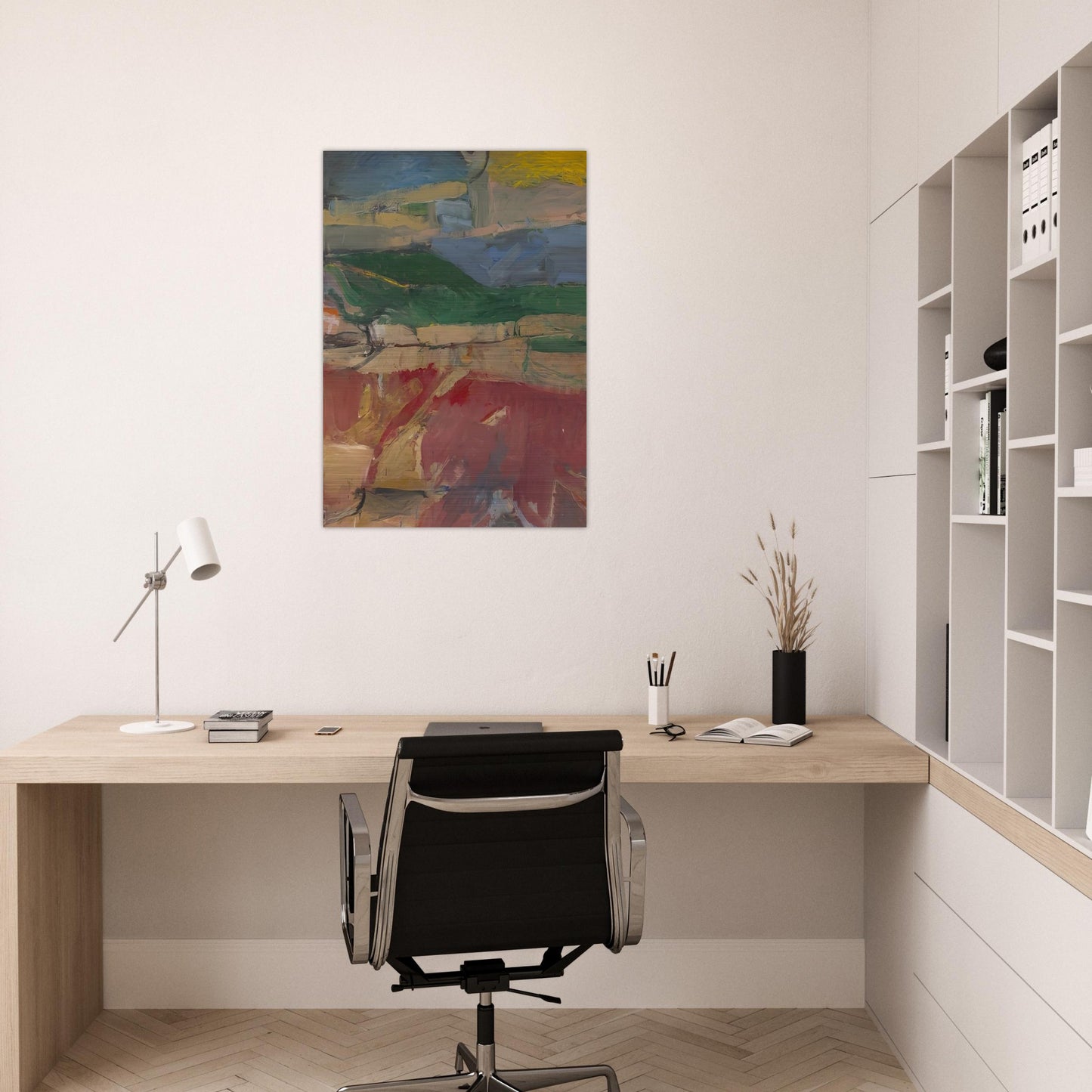
What are the dimensions and specifications of this Diebenkorn print?
This premium print measures 70x100 cm (28x40 inches) and is 3mm thick. It is crafted on brushed silver Aluminum DIBOND®, providing a rigid, durable, and lightweight fine art solution.
How does the metallic brushed aluminum finish affect the artwork?
The horizontal grain and metallic finish create a dynamic look. Unprinted white areas reveal the silver aluminum, while the matte finish ensures a glare-free viewing experience under any lighting.
Is the Berkeley #32 print ready to hang upon arrival?
Yes. Every RedKalion aluminum print comes with a specialized hanging kit included. The specific kit varies by fulfillment country to ensure the most secure mounting for your region.
How is the print quality and color accuracy maintained?
We use a state-of-the-art direct-to-substrate printing process. This ensures vivid colors and sharp details that honor Richard Diebenkorn’s original palette while offering archival-grade longevity.
Will this aluminum print fade over time?
No. Aluminum DIBOND® is highly resistant to UV light and environmental factors. Our direct print technology ensures the artwork remains vibrant and stable for decades, unlike traditional paper prints.
What is the significance of the Berkeley series in Diebenkorn’s career?
The Berkeley series (1953–1955) marks Diebenkorn's mastery of abstract landscapes. Berkeley #32 illustrates his shift from purely non-objective work toward a style that synthesized physical terrain with gestural abstraction.
Why is aluminum the ideal medium for Richard Diebenkorn’s work?
Aluminum enhances the spatial complexity of Diebenkorn’s compositions. The industrial texture of the metal complements the raw, energetic brushstrokes of the 1950s Berkeley period, providing a contemporary contrast.