
What makes the paper quality suitable for fine art?
We use 250 gsm (110 lb) archival museum-quality paper. It is natural white, uncoated, and matte, ensuring high color density and long-term durability without the yellowing associated with standard prints.
How is the frame constructed?
The frame is made from responsibly sourced oak and ash wood, finished in black. At 20mm thick and wide, it offers a more substantial, premium aesthetic compared to thinner, mass-market frames.
Is the artwork protected from damage?
Yes, each print is shielded by shatterproof plexiglass, providing the clarity of glass with superior durability. The archival paper and FSC-certified materials ensure the piece remains a lasting investment.
Is the print ready to hang upon arrival?
Absolutely. Every framed print includes a pre-installed hanging kit. The 70x100 cm format is designed for immediate mounting, allowing you to elevate your decor without additional assembly.
Are the materials used environmentally sustainable?
RedKalion prioritizes sustainability by using FSC-certified wood and paper or equivalent certifications. This ensures your high-end art print supports responsible forest management and environmental stewardship.
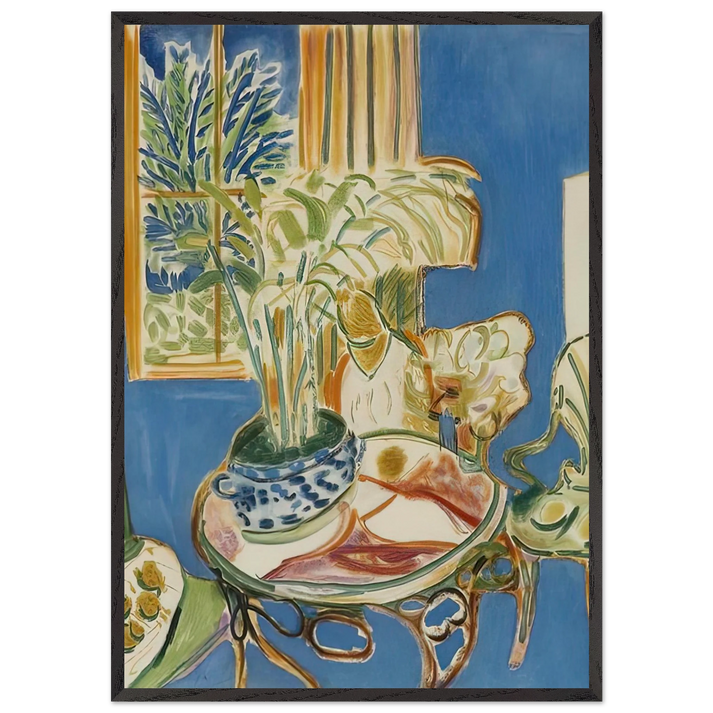
What defines Matisse’s style in Blue Interior (1947)?
This period reflects Matisse's move toward color synthesis and flat perspective. It bridges his early Fauvist passion for color with the bold, simplified silhouettes found in his later gouaches découpés.
Where was the original Blue Interior painted?
Matisse painted this work at the Villa Le Rêve in Vence, France. The interior scenes from this era often featured the distinct Mediterranean light and decorative patterns of his studio residence.