
Discover Unlimited Art Possibilities
At RedKalion, you can find virtually any artwork from any artist, available in a wide range of sizes to perfectly match your space.
If you didn’t find what you’re looking for, contact us at support@redkalion.com . We will source any artwork and produce it in any size and format you need, including art prints, posters, canvas, framed pieces, framed canvas, and more.
For dedicated art enthusiasts, we also offer handcrafted replicas of any artwork, carefully painted by highly skilled artists using traditional techniques.
For custom requests, contact us at support@redkalion.com .
What is the quality of the paper used for this Lygia Pape print?
We use 250 gsm (110 lb) archival museum-quality paper. It is natural white, uncoated, and matte-finished, ensuring your Lygia Pape reproduction has the tactile feel and longevity of an original gallery piece.
How is the artwork protected and framed?
The print is housed in a 20mm wide/thick black frame made from responsibly sourced ash or oak. It features shatterproof plexiglass, which provides superior protection against UV rays and physical damage compared to standard glass.
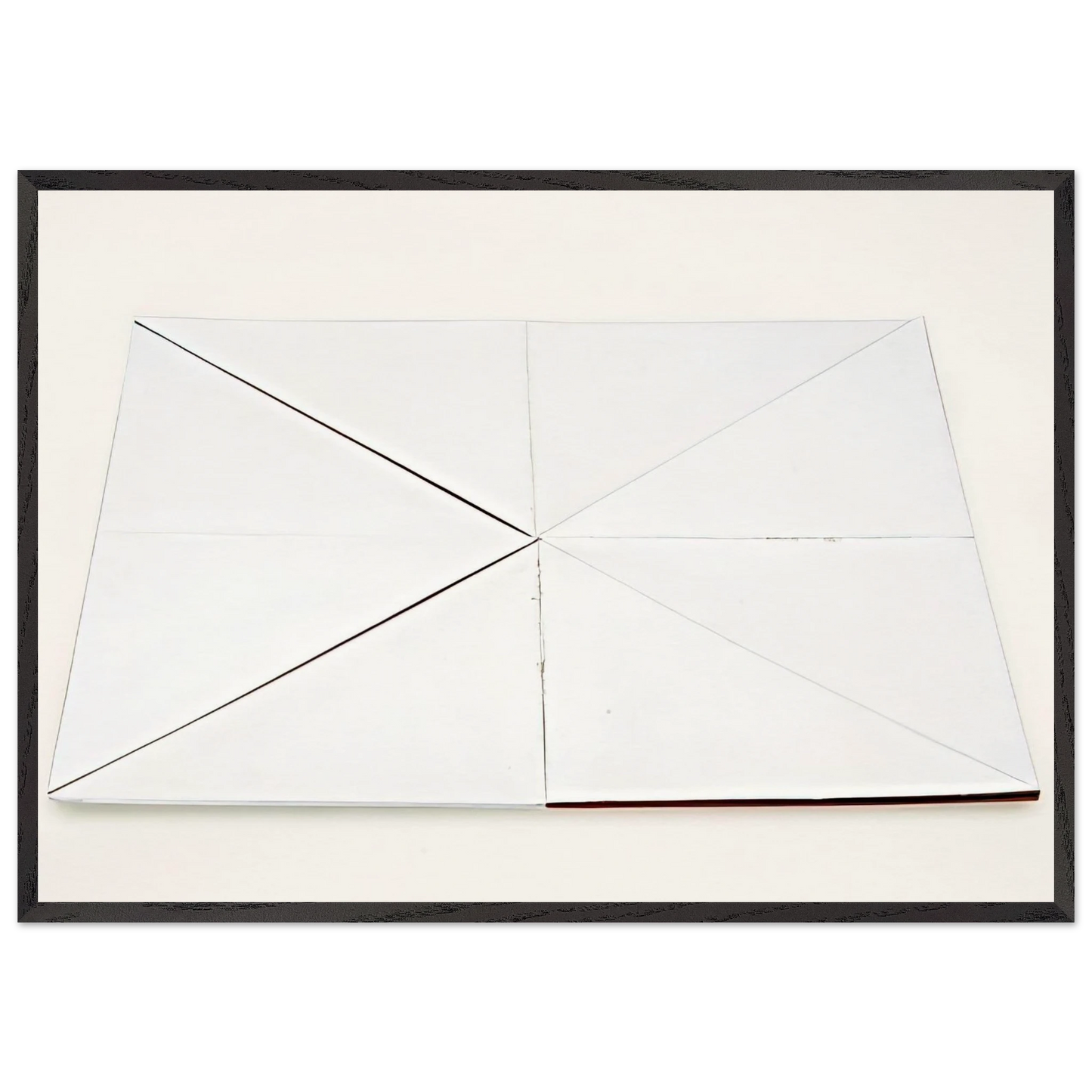
Is the Book of Creation print ready to hang?
Yes. Your framed art print arrives fully assembled with a professional hanging kit included. You can display this Neo-Concrete masterpiece immediately upon delivery without any additional hardware required.
What are the environmental credentials of the materials?
Sustainability is core to RedKalion. We use FSC-certified wood for our frames and paper, ensuring that your fine art print is produced using ecologically responsible and ethical forestry practices.
How does the 20mm frame differ from standard frames?
Most commercial frames are only 14mm thick. Our 20mm (0.79") frame provides a deeper, more robust profile, offering a premium gallery aesthetic that better supports the 70x100 cm format.
What is the significance of the Fire motif in Lygia Pape's work?
Fire is one of the 16 'pages' in Pape's Livro da Criação. It represents the discovery of fire as a transformative moment in human history, translated into geometric abstraction to merge cosmology with structural art.
How does this print capture the Neo-Concrete aesthetic?
Neo-Concretism emphasized subjectivity and the viewer's phenomenological experience. This print captures the movement's focus on geometric clarity and the 'organic' nature of abstract forms that Pape championed in 1960s Brazil.