
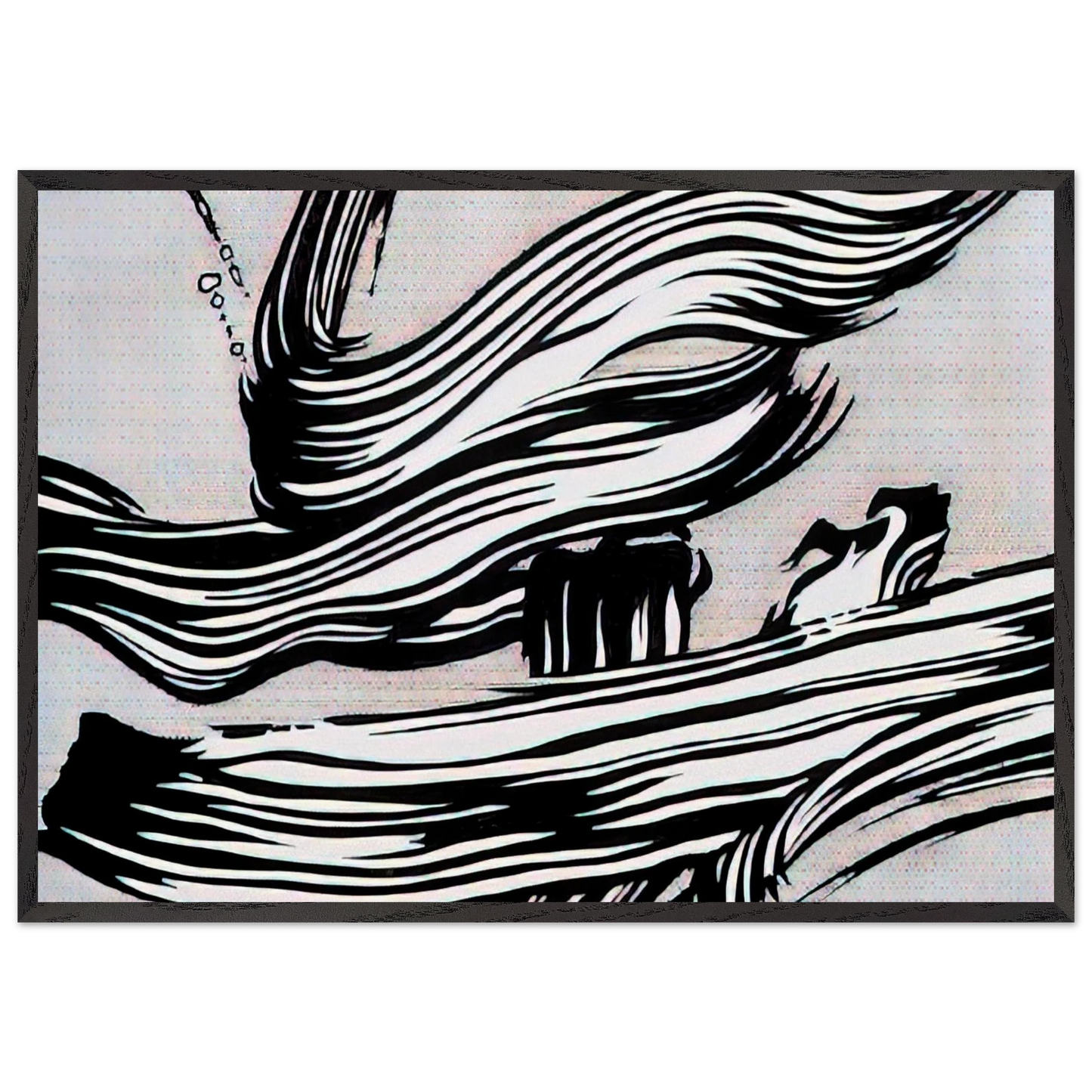
What makes this Roy Lichtenstein print museum-quality?
Our Lichtenstein prints are produced on 250 gsm archival-grade paper with a natural white, matte finish. This ensures the colors remain vibrant and the paper resists yellowing, meeting the standards for fine art curation.
How is the frame constructed?
The frame is crafted from responsibly sourced (FSC-certified) black oak and ash wood. It features a robust 20mm (0.79") profile, providing a more substantial and premium aesthetic than standard commercial frames.
Is the artwork ready for immediate display?
Yes. Your framed art print arrives fully assembled with a hanging kit included. The artwork is protected by durable, shatterproof plexiglass, ensuring it is ready to hang upon arrival.
What is the significance of the 250 gsm paper thickness?
The 250 gsm (110 lb) weight and 0.29 mm thickness provide a heavy, premium feel that prevents warping. This archival-grade material is the preferred choice for high-end galleries and collectors.
How is the print protected during shipping?
We use archival-safe packaging and shatterproof plexiglass to ensure your print arrives in pristine condition. The plexiglass offers superior protection against impact while maintaining crystal-clear visibility.
Why did Roy Lichtenstein create the Brushstrokes series?
Lichtenstein created the series as a satirical commentary on Abstract Expressionism. He transformed the 'emotional' brushstroke into a mass-produced, comic-book-style graphic, questioning the nature of artistic originality and commercialism.
What are Ben-Day dots in Lichtenstein’s work?
Ben-Day dots are a commercial printing technique used in comic books. Lichtenstein magnified these dots to highlight the industrial nature of his subjects, a key element of the 1968 Brushstrokes aesthetic.