
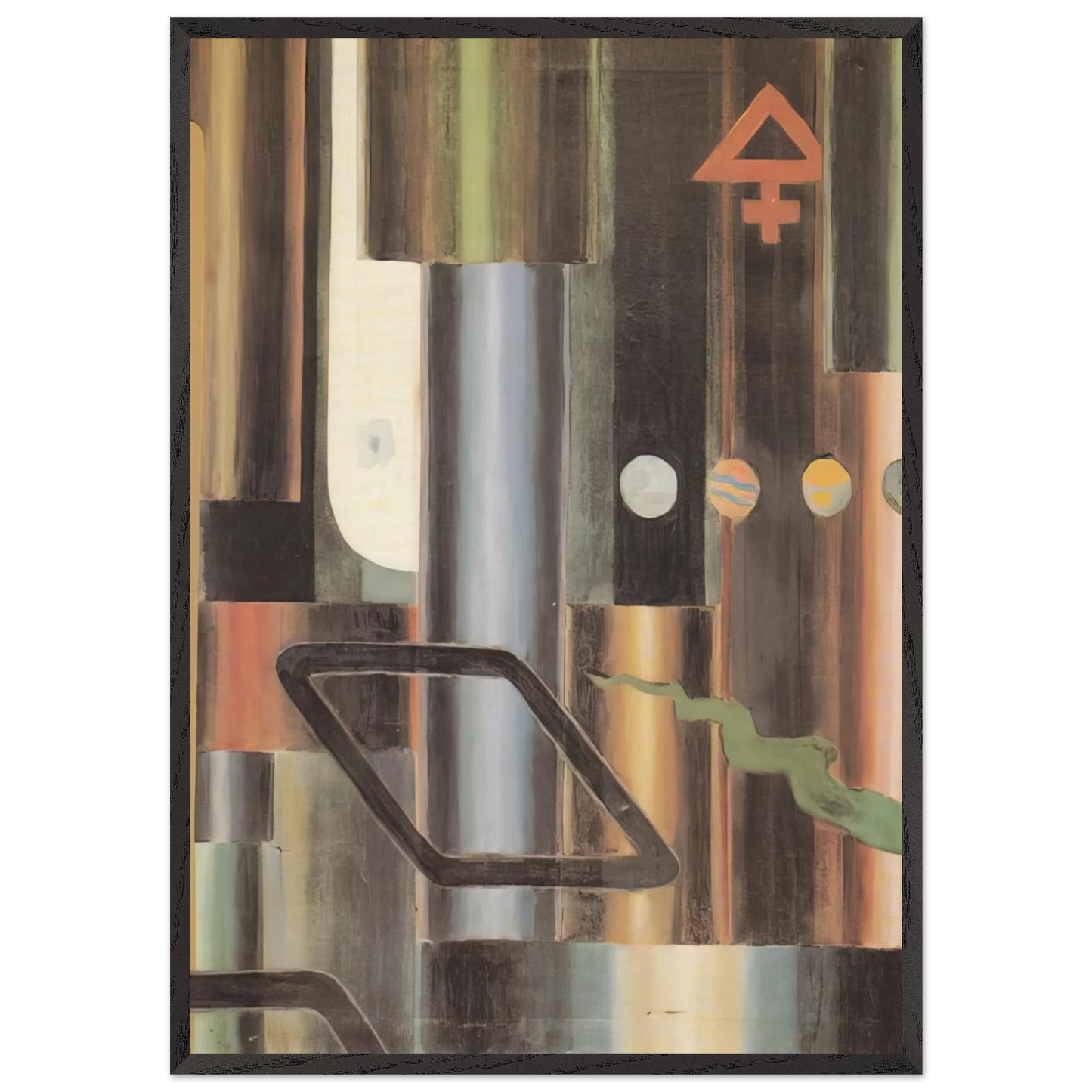
What is the historical significance of La libra sinfiamma e le piramidi by Julius Evola?
Painted in 1921, this metaphysical artwork reflects Julius Evola's fusion of esoteric philosophy and avant-garde art, exploring themes of alchemical transformation and spiritual hierarchy through symbolic imagery like flaming scales and pyramids.
What are the exact dimensions and framing details of this art print?
This framed print measures 70x100 cm (28x40 inches) with a black wooden frame made from responsibly sourced oak and ash wood, 20mm thick, and includes shatterproof plexiglass for protection.
What type of paper is used for this museum-quality reproduction?
It uses 250 gsm (110 lb) matte, uncoated, natural white archival paper, 0.29 mm thick, made from FSC-certified sustainable materials for long-lasting fine art prints.
Is this framed art print ready to hang upon delivery?
Yes, it comes ready-to-hang with a hanging kit included, allowing for immediate wall display without additional setup.
How does the archival quality ensure the print's longevity?
The archival museum-quality paper and sustainable materials resist fading and degradation, preserving this Julius Evola reproduction for generations as a durable art investment.
What symbolism do the flaming scales and pyramids represent in Evola's work?
The flaming scales symbolize alchemical balance and purification, while the pyramids represent spiritual ascent and ancient wisdom, key elements in Evola's metaphysical and esoteric themes.
Why is the frame thicker than standard frames?
The 20mm (0.79") thick frame, wider than classic 14mm frames, provides enhanced durability and a bold, modern aesthetic that complements Evola's geometric and symbolic art style.