
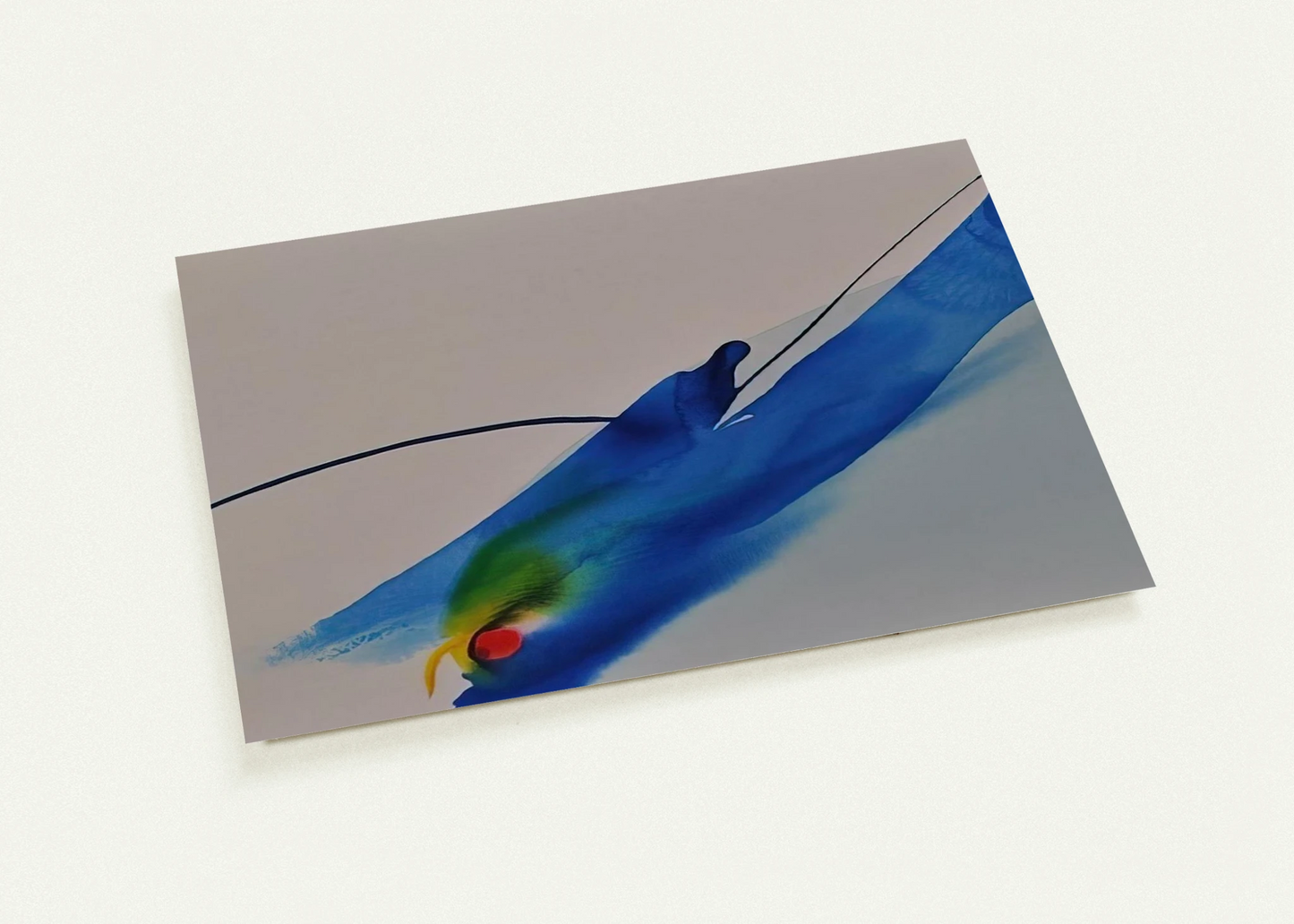
Discover Unlimited Art Possibilities
At RedKalion, you can find virtually any artwork from any artist, available in a wide range of sizes to perfectly match your space.
If you didn’t find what you’re looking for, contact us at support@redkalion.com . We will source any artwork and produce it in any size and format you need, including art prints, posters, canvas, framed pieces, framed canvas, and more.
For dedicated art enthusiasts, we also offer handcrafted replicas of any artwork, carefully painted by highly skilled artists using traditional techniques.
For custom requests, contact us at support@redkalion.com .
What is the artwork Phenomena Calling - 1969 by Paul Jenkins?
Phenomena Calling is a 1969 abstract expressionist painting by Paul Jenkins, known for his "poured painting" technique using acrylics to create fluid, cosmic forms. This museum-quality reproduction captures its vibrant colors and emotional depth in a post card format.
What are the specifications of these post cards?
Each post card is A6 size (10.5 x 14.8 cm / 4.1 x 5.8 inches), printed on 200 gsm (80 lb) FSC-certified paper with a smooth matte finish and 0.26 mm thickness, using 12-color fine art printing for vivid colors.
How is the color quality of these fine art prints?
Our 12-color fine art printing technology delivers vivid, accurate colors with stunning depth, far superior to standard 4-color inkjet prints, ensuring a premium reproduction of Paul Jenkins' work.
Are these post cards eco-friendly and archival?
Yes, they are printed on environmentally conscious, FSC-certified paper with archival-grade inks, designed for longevity and minimal environmental impact.
What is the shipping and ordering process?
These post cards are printed on demand with no minimum orders, and shipping details vary by location; check our website for current logistics and delivery times.
What was Paul Jenkins' technique in Phenomena Calling?
Jenkins used a "poured painting" method, manipulating acrylic paints on canvas to create spontaneous, fluid shapes that reflect his interest in abstraction and spiritual phenomena.
How does this artwork fit into abstract expressionism?
As part of the post-war New York art scene, Jenkins' work blends abstract expressionism with lyrical abstraction, emphasizing color and form to evoke emotional and cosmic themes.