
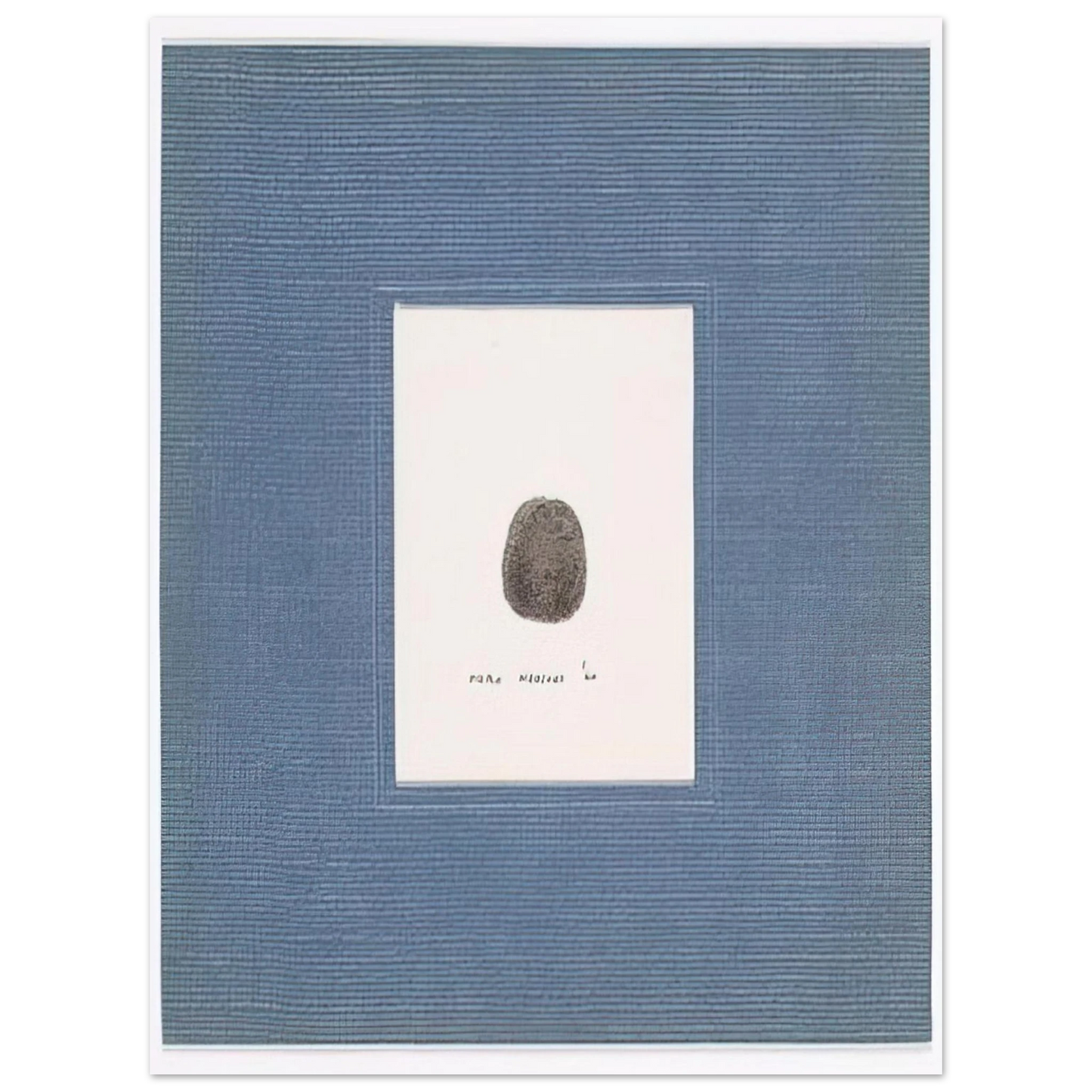
What is the historical significance of Piero Manzoni's Thumbprint (1960)?
Piero Manzoni's Thumbprint (1960) is a key work in conceptual art, challenging authorship by using his own thumbprint as art, reflecting post-war avant-garde movements and questioning traditional artistic value.
How does this fine art print capture the details of the original artwork?
Our museum-quality reproduction on Master's Edition archival paper preserves the subtle textures and nuances of Manzoni's original thumbprint, ensuring an authentic visual experience with a matte, uncoated finish.
What are the specifications of the paper used for this print?
This print uses acid-free, FSC-certified Master's Edition archival paper: 250 gsm (110 lb) weight, 0.29 mm (11.4 mils) thickness, with a natural white (off-white) matte finish for longevity and luxury.
How is this print shipped and what are the fulfillment options?
We print and ship on demand with no minimum orders, ensuring each 75x100 cm fine art poster is carefully handled and delivered directly to you.
How long will this archival print last without fading or yellowing?
Made from acid-free paper (pH above 7), this museum-quality reproduction resists yellowing over time, offering durable, archival longevity for your collection.
What makes Manzoni's thumbprint technique unique in art history?
Manzoni's technique involved directly imprinting his thumbprint, blurring lines between artist and artifact, and pioneering body art concepts that influenced later minimalist and conceptual movements.
Why is the matte finish important for this reproduction?
The matte, uncoated finish enhances the natural texture and off-white hue, mimicking the original's tactile quality while reducing glare for optimal display in any lighting.