
RedKalion
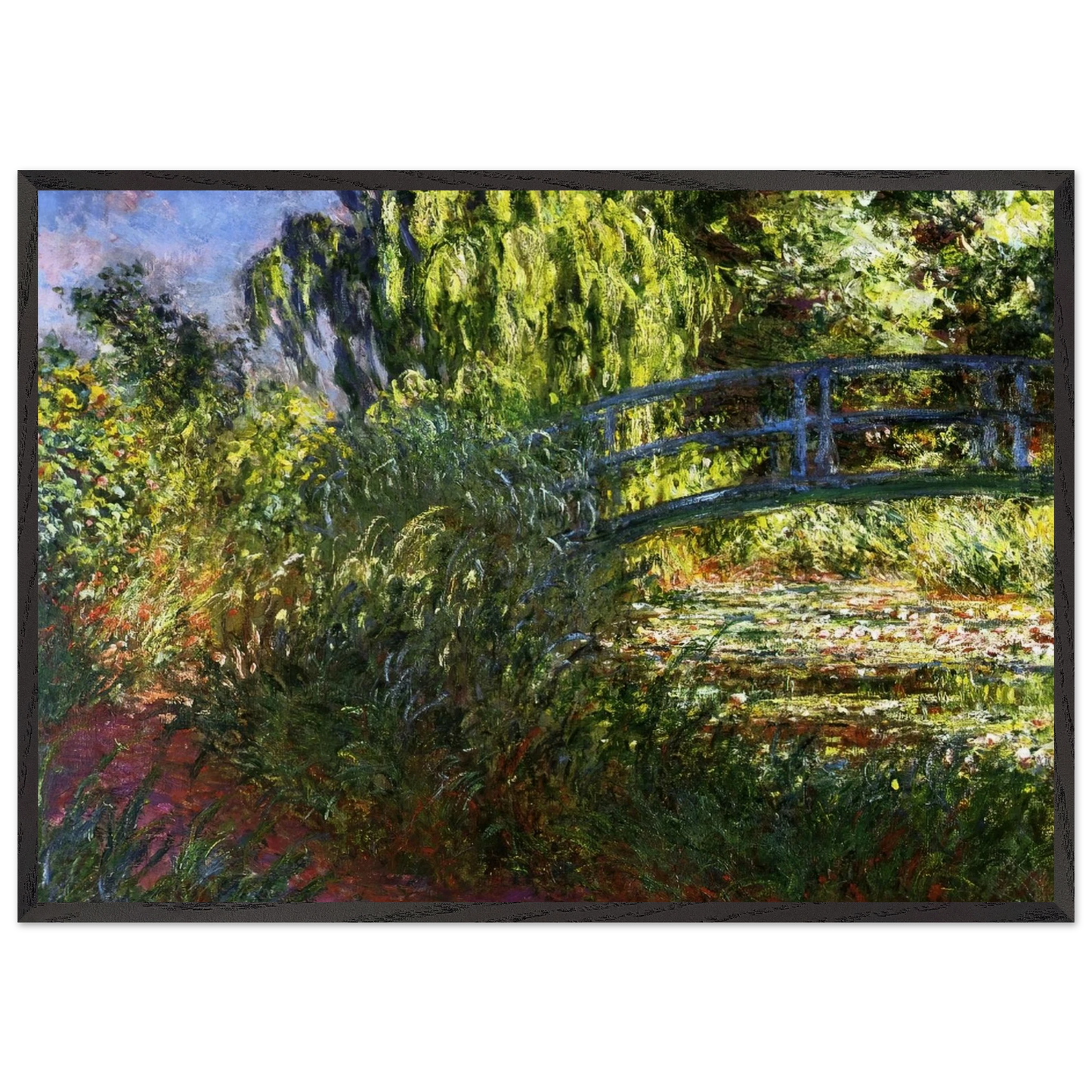
The Japanese Bridge The Water-Lily Pond and Path by the Water - claude monet 70x100 cm / 28x40 inches Framed Art Print – Black Wooden Frame
The Japanese Bridge The Water-Lily Pond and Path by the Water - claude monet 70x100 cm / 28x40 inches Framed Art Print – Black Wooden Frame
Δεν ήταν δυνατή η φόρτωση της διαθεσιμότητας παραλαβής
Claude Monet's The Japanese Bridge, The Water-Lily Pond and Path by the Water – Museum-Quality Framed Art Print
Immerse your space in the serene beauty of Claude Monet's iconic Impressionist masterpiece, The Japanese Bridge, The Water-Lily Pond and Path by the Water. This fine art print captures the artist's revolutionary exploration of light, color, and reflection in his beloved Giverny garden. Painted in the late 1890s, this work exemplifies Monet's water lily series, where he dissolved forms into shimmering brushstrokes to evoke the tranquil, dreamlike atmosphere of the pond. Our museum-quality reproduction ensures every hue and texture is faithfully rendered, allowing you to experience the poetic harmony of nature as Monet intended.
RedKalion presents this archival-grade framed art print in a sophisticated black wooden frame, crafted from responsibly sourced oak and ash wood. The frame measures 20mm (0.79") thick and wide, offering a substantial, gallery-worthy presence that enhances the artwork's impact. Your print is protected by shatterproof plexiglass and printed on 250 gsm (110 lb) matte, uncoated paper with a natural white finish, ensuring longevity and vibrant color fidelity. This sustainable paper is FSC-certified or equivalent, reflecting our commitment to quality and environmental responsibility. Ready-to-hang with an included kit, this piece arrives prepared to elevate any room with timeless elegance.
Elevate your home or office with an archival masterpiece that endures, curated by RedKalion for discerning art lovers.
Discover Unlimited Art Possibilities
At RedKalion, you can find virtually any artwork from any artist, available in a wide range of sizes to perfectly match your space.
If you didn’t find what you’re looking for, contact us at support@redkalion.com . We will source any artwork and produce it in any size and format you need, including art prints, posters, canvas, framed pieces, framed canvas, and more.
For dedicated art enthusiasts, we also offer handcrafted replicas of any artwork, carefully painted by highly skilled artists using traditional techniques.
For custom requests, contact us at support@redkalion.com .
What are the dimensions of this Claude Monet framed print?
This framed art print measures 70x100 cm (28x40 inches), including the black wooden frame, making it a statement piece for any wall.
What type of paper is used for this fine art reproduction?
We use 250 gsm (110 lb) matte, uncoated, archival museum-quality paper with a natural white finish, ensuring vibrant colors and long-lasting durability for your Monet print.
Yes, this Monet reproduction includes a hanging kit and is ready-to-hang directly on your wall upon arrival, with no assembly required.
How is the print protected in the frame?
The print is safeguarded by shatterproof plexiglass, which offers clear visibility and protection against damage, enhancing the archival quality of this water lily artwork.
What makes this a sustainable art print?
This piece features FSC-certified or equivalent sustainable paper and a frame made from responsibly sourced oak and ash wood, supporting eco-friendly practices.
What is the historical significance of Monet's The Japanese Bridge, The Water-Lily Pond and Path by the Water?
Painted in the late 1890s, this work is part of Monet's iconic water lily series, showcasing his Impressionist technique of capturing light and reflection in his Giverny garden, revolutionizing modern art.
Why did Monet focus on the Japanese Bridge in his paintings?
Monet was inspired by Japanese art and built the bridge in his garden as a focal point to explore changing light and atmospheric effects, symbolizing harmony between nature and human creation.