
Discover Unlimited Art Possibilities
At RedKalion, you can find virtually any artwork from any artist, available in a wide range of sizes to perfectly match your space.
If you didn’t find what you’re looking for, contact us at support@redkalion.com . We will source any artwork and produce it in any size and format you need, including art prints, posters, canvas, framed pieces, framed canvas, and more.
For dedicated art enthusiasts, we also offer handcrafted replicas of any artwork, carefully painted by highly skilled artists using traditional techniques.
For custom requests, contact us at support@redkalion.com .
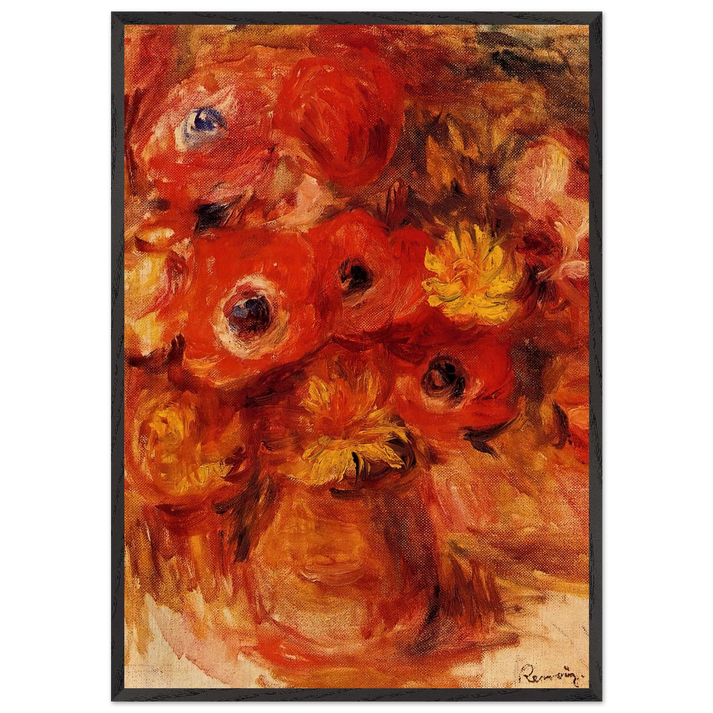
What are the dimensions of this framed Renoir print?
This framed art print measures 70x100 cm (28x40 inches), including a 20mm (0.79") thick black wooden frame, making it an ideal size for prominent wall display in homes or offices.
What type of paper is used for this fine art reproduction?
We use 250 gsm (110 lb) archival museum-quality paper with a matte, uncoated finish and natural white color, ensuring vibrant, long-lasting prints that resist fading over time.
Is this print ready to hang upon delivery?
Yes, this framed art print includes a hanging kit and is ready-to-hang directly on your wall, offering a hassle-free setup for immediate enjoyment of your premium reproduction.
How does the frame protect the artwork?
The frame features shatterproof plexiglass that shields the print from dust, UV light, and damage, while the responsibly sourced oak and ash wood provides durable, elegant support.
Is the paper environmentally sustainable?
Yes, we use FSC-certified materials or equivalent for our paper, ensuring that this museum-quality print aligns with eco-friendly practices without compromising on archival standards.
What makes Renoir's Vase of Anemones significant in art history?
Painted in the late 19th century, this work exemplifies Renoir's Impressionist technique, capturing the fleeting light and vibrant colors of anemones to evoke joy and natural beauty, reflecting a key era in modern art.
Why are anemones a common subject in Renoir's still lifes?
Anemones, with their rich hues and delicate forms, allowed Renoir to explore color harmonies and light effects, showcasing his skill in transforming everyday flowers into expressive, luminous compositions.