
What are the dimensions of this Robert Rauschenberg framed art print?
This fine art print measures 70x100 cm (28x40 inches) and is framed in a black wooden frame with a 20mm (0.79") thickness, making it a substantial and impactful piece for any wall.
What type of paper is used for this museum-quality reproduction?
We use 250 gsm (110 lb) matte, uncoated, natural white archival paper with a thickness of 0.29 mm (11.4 mils), ideal for capturing the subtle textures and ensuring long-term durability of this Robert Rauschenberg print.
Is this framed print ready to hang?
Yes, this ready-to-hang art print includes a complete hanging kit, allowing for immediate display directly on your wall without additional assembly.
How is the print protected in the frame?
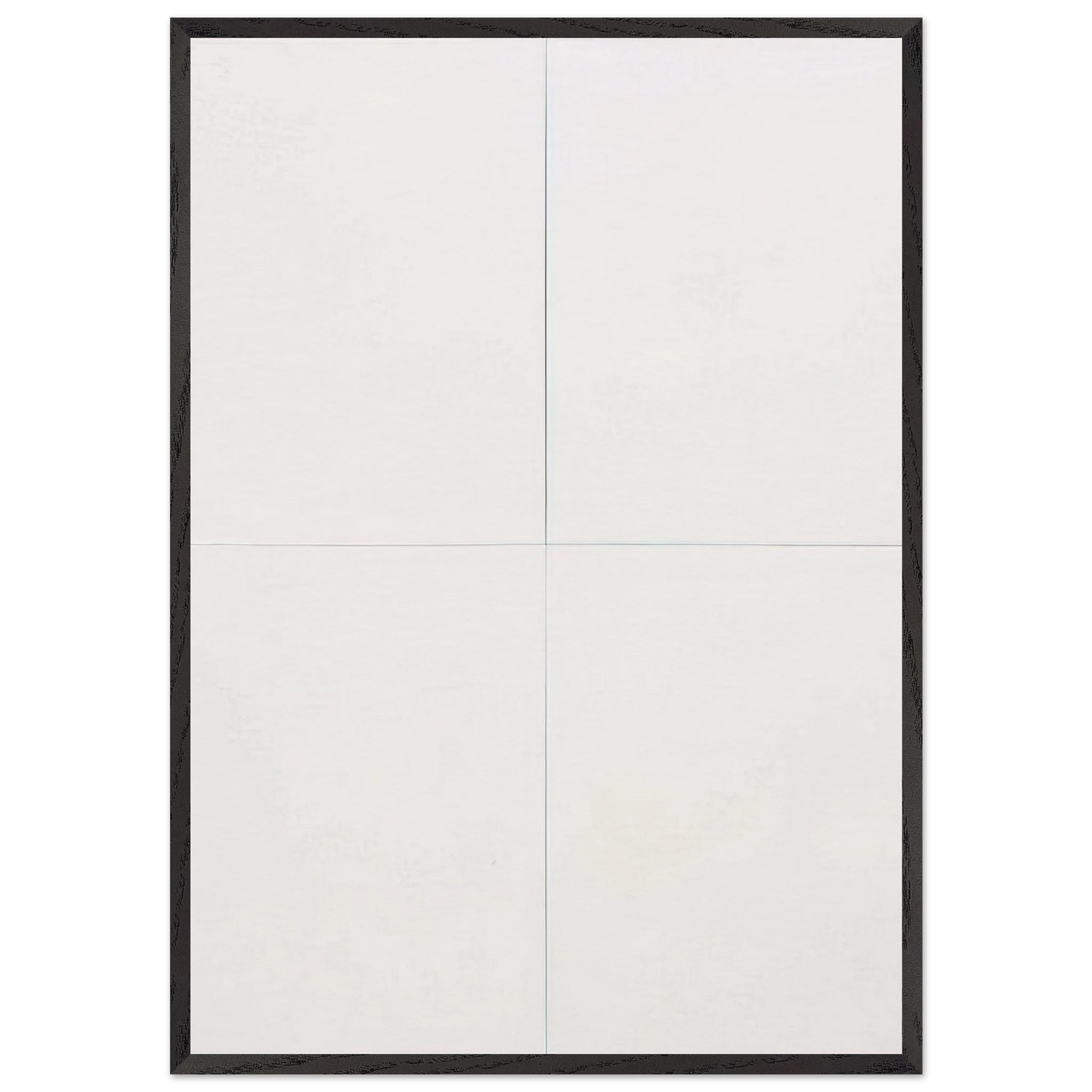
The print is safeguarded by shatterproof plexiglass, which provides clear, durable protection against damage while maintaining the visual integrity of the White Painting [Four Panel] 1951.
Is the framing material sustainable?
Yes, the black wooden frame is crafted from responsibly sourced oak and ash wood, and the paper uses FSC-certified or equivalent sustainable materials, aligning with eco-friendly practices.
What is the historical significance of White Painting [Four Panel] 1951?
Created in 1951, this work is a landmark of Neo-Dada and minimalism, challenging traditional art by using pure white to reflect ambient light and invite viewer interaction, influencing artists like John Cage.
Why did Robert Rauschenberg create all-white paintings?
Rauschenberg intended the White Paintings to act as "clocks" or mirrors of their environment, capturing fleeting light and shadow shifts to emphasize the role of perception in art.