Precio habitual
$999.99 USD
Precio de oferta
$449.99 USD
Oferta
Agotado
Cantidad
No se pudo cargar la disponibilidad de retiro
Nuestros marcos de madera premium, elaborados con roble o fresno de origen responsable, presentan vetas únicas que les aportan carácter. Los pósteres están impresos en papel de edición maestra, de calidad museística, de color blanquecino, sin estucar, ideal para quienes buscan una calidad excepcional.
Listo para colgar: Incluye kit para colgar, listo para colgar directamente en la pared.
Material del marco: Madera de roble y fresno de origen responsable.
Medidas del marco: 20 mm (0,79") de grosor y ancho, más ancho que el marco clásico de 14 mm (0,55").
Gramaje del papel: 250 g/m² (110 lb), grosor: 0,29 mm (11,4 milésimas de pulgada), ideal para bellas artes.
Acabado del papel: Papel mate, sin recubrimiento, blanco natural, de calidad de museo.
Protección: El plexiglás irrompible protege el cartel.
Papel sostenible: materiales con certificación FSC o equivalente.
Tamaños disponibles: 15 tamaños en pulgadas (EE. UU. y Canadá) y cm (resto del mundo).
Sin pedidos mínimos, impreso y enviado bajo demanda.
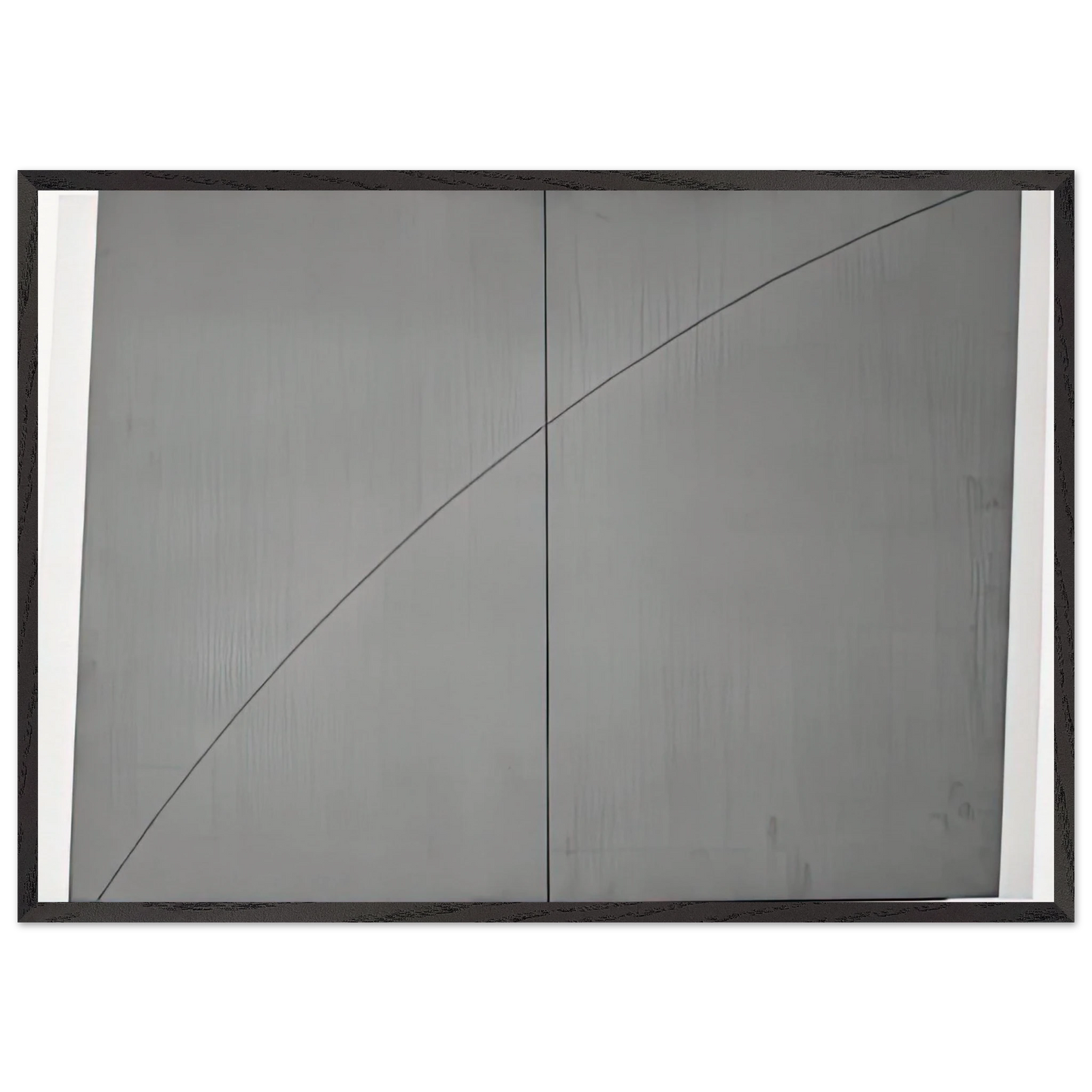
We use 250 gsm (110 lb) natural white, archival museum-quality paper. The matte, uncoated finish prevents glare and ensures the longevity of the Robert Mangold print.
What material is used for the black frame?
The frame is made from responsibly sourced, FSC-certified oak and ash wood. It features a 20mm thickness, providing a more robust and premium feel than standard 14mm frames.
Is the artwork ready to hang upon delivery?
Yes, each framed art print includes a hanging kit. Your Mangold reproduction arrives fully assembled and ready to hang directly on your wall.
How is the print protected from damage?
We use shatterproof, high-clarity plexiglass to protect the print surface. This ensures your artwork remains safe during transit and is shielded from dust and UV exposure.
Is this an eco-friendly product?
Absolutely. RedKalion utilizes FSC-certified materials or equivalent sustainable standards, ensuring our wood and paper are sourced with environmental responsibility in mind.
What is the significance of the year 1978 in Mangold's career?
1978 marked a pivotal era where Mangold integrated drawn lines into shaped canvases, bridging the gap between drawing and painting to create complex spatial tensions.
Why does Mangold use 'distorted' rectangles?
Mangold uses distortion to break traditional Euclidean geometry. By subtly altering the rectangular form, he forces the viewer to engage more deeply with the internal logic of the composition.
Al seleccionar una opción, se actualiza toda la página.