
What paper quality is used for the Eva Hesse Accession II print?
We use 250 gsm (110 lb) natural white, matte, archival museum-quality paper. It is uncoated and acid-free to ensure your fine art print maintains its integrity without yellowing over time.
What are the specifications of the black wooden frame?
The frame is made from responsibly sourced oak and ash wood. It measures 20mm (0.79") in both thickness and width, offering a premium, contemporary aesthetic that is sturdier than standard frames.
Is the artwork protected from damage and fading?
Yes, each print is protected by high-quality shatterproof plexiglass. This provides the clarity of glass while offering superior protection and safety for the archival paper beneath.
How does the print arrive and is it easy to mount?
The 70x100 cm framed art print arrives ready-to-hang with a pre-installed hanging kit. It is securely packaged to ensure it reaches your wall in gallery-perfect condition.
Are the materials used in this print sustainable?
Sustainability is central to RedKalion. All paper and wood frames are FSC-certified or equivalent, ensuring that our museum-quality reproductions support ethical and sustainable environmental practices.
What is the significance of Accession II in Eva Hesse’s career?
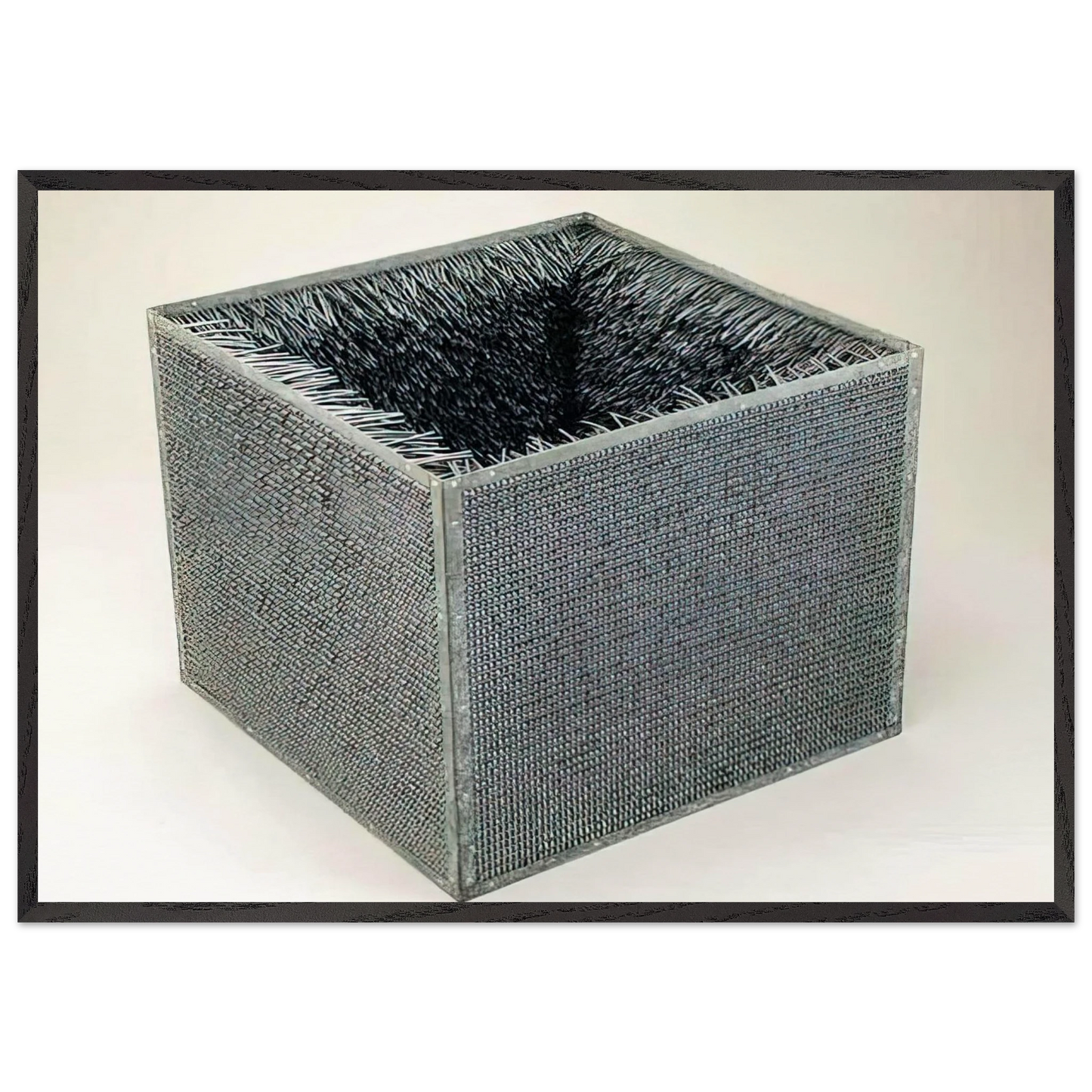
Created in 1968, Accession II is a hallmark of Post-Minimalism. It signifies Hesse's move to humanize industrial forms by threading thousands of vinyl tubes into a steel box, creating a tension between order and chaos.
What artistic movement does this 1968 work represent?
Eva Hesse's Accession II is a definitive example of Post-Minimalism and Process Art, focusing on the tactile nature of materials and the labor-intensive process of creation rather than just the final form.