


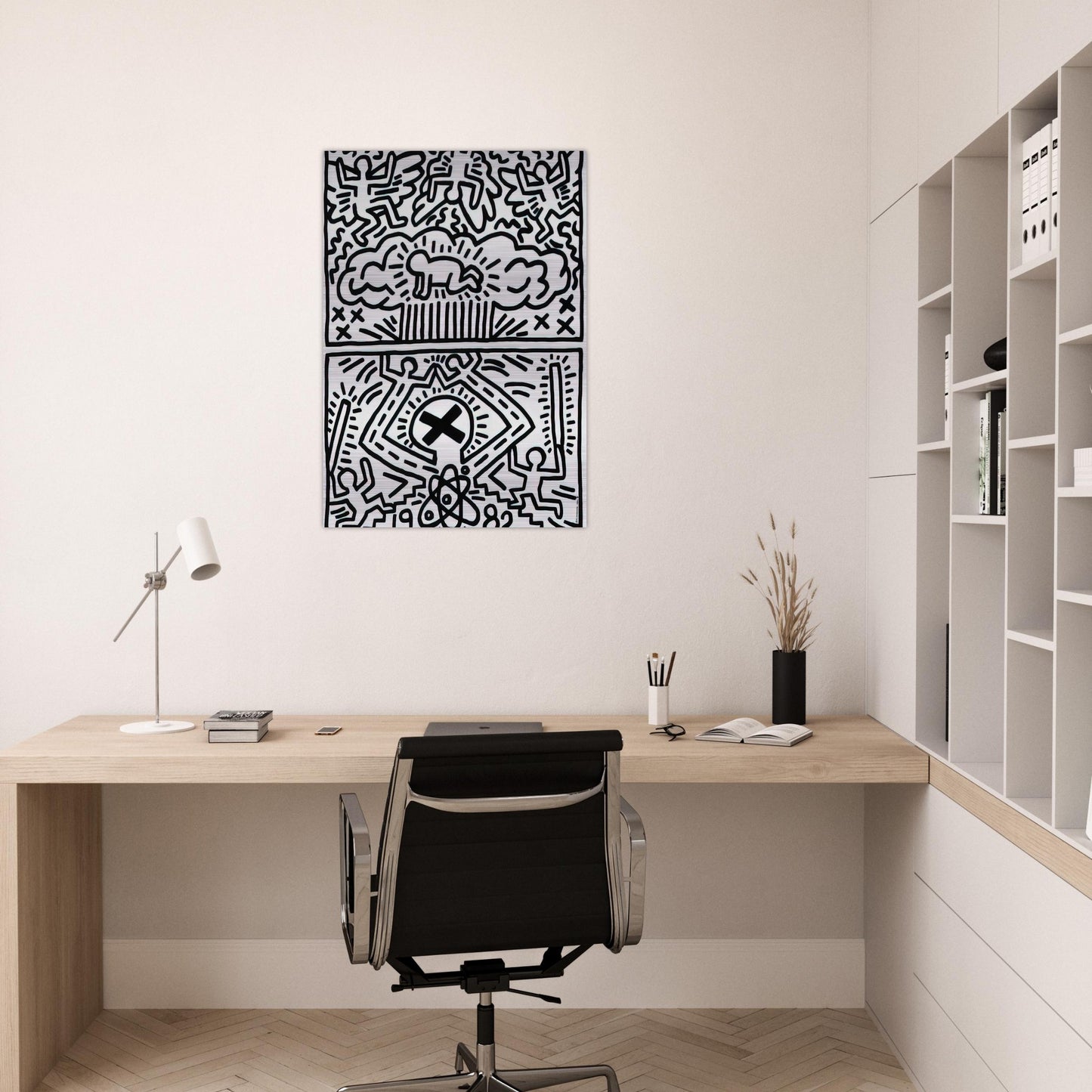
What makes this Keith Haring print archival quality?
RedKalion utilizes 3mm Aluminum DIBOND®, a rigid, professional-grade substrate that prevents warping and degradation over time. Our direct printing process uses UV-resistant inks, ensuring that the bold lines of the Anti-Nuclear Rally 1982 remain vivid for decades without fading.
How does the brushed silver aluminum finish affect the look of the artwork?
The brushed silver finish adds a unique metallic depth. The horizontal grain catches ambient light, while unprinted areas reveal the raw aluminum, creating a sophisticated, industrial aesthetic that perfectly complements Keith Haring’s modern, graphic style.
Is the hanging hardware included with my purchase?
Yes, every Keith Haring aluminum print includes a high-quality hanging kit. The specific hardware provided is optimized for the 70x100 cm format and varies slightly depending on the fulfillment country to ensure a secure, flush-to-wall mount.
How is the print shipped to ensure it arrives safely?
We use custom-made, heavy-duty protective packaging designed specifically for large-format aluminum prints. Each piece is securely fastened within the crate to prevent movement, ensuring your museum-quality reproduction arrives in pristine condition.
Can I display this in a bright room without glare?
Absolutely. The direct-to-aluminum print features a matte, glare-free finish. Unlike traditional glass-framed prints, this aluminum DIBOND® piece absorbs light rather than reflecting it, making it ideal for rooms with large windows or overhead lighting.
What was the significance of the 1982 Anti-Nuclear Rally for Keith Haring?
The 1982 rally was a formative moment for Haring, who personally distributed thousands of posters of this design. It marked his transition from a subway artist to a global activist, using his art to advocate for nuclear disarmament and peace.
How does Haring's visual language communicate activism in this piece?
Haring uses 'radiant' lines and interconnected figures to represent energy and collective action. The simplicity of the forms makes the message accessible to everyone, regardless of language or background, which was central to his philosophy of 'Art is for Everyone.'