RedKalion
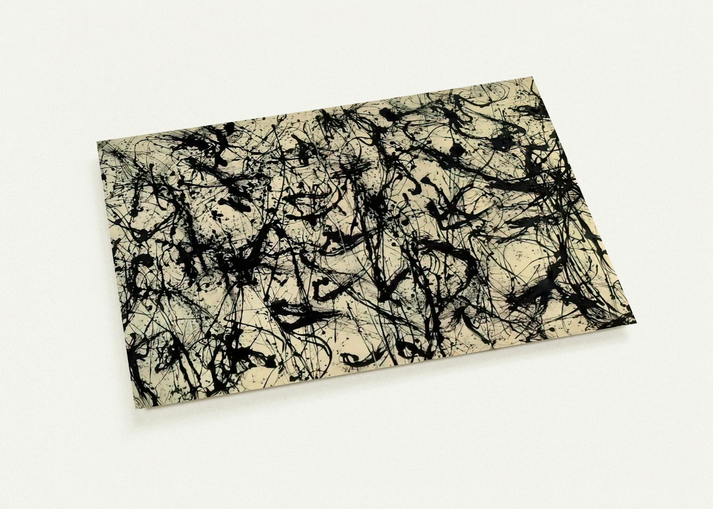
NUMBER 32 1950 By Jackson Pollock Pack of 10 Post Cards | Jackson Pollock Post Cards | A6 (10.5 x 14.8 cm) - 4.1 x 5.8 inches
NUMBER 32 1950 By Jackson Pollock Pack of 10 Post Cards | Jackson Pollock Post Cards | A6 (10.5 x 14.8 cm) - 4.1 x 5.8 inches
No se pudo cargar la disponibilidad de retiro
Jackson Pollock Number 32 1950 Post Card Pack: A Pocket-Sized Abstract Expressionist Masterpiece
Immerse yourself in the revolutionary energy of Abstract Expressionism with this exclusive pack of 10 post cards featuring Jackson Pollock's iconic Number 32 1950. Each A6-sized card (10.5 x 14.8 cm / 4.1 x 5.8 inches) captures the dynamic, intricate web of Pollock's signature drip technique, offering a portable piece of art history perfect for correspondence, collecting, or creative display.
This 1950 masterpiece exemplifies Pollock's "action painting" method, where he poured and dripped industrial enamel onto canvas laid on the floor, creating a complex, all-over composition that redefined modern art. The work's rhythmic chaos and layered textures evoke a sense of raw, spontaneous creativity, making it an ideal conversation starter for art enthusiasts and a unique gift for any occasion.
RedKalion's museum-quality reproduction ensures every detail of Pollock's energetic brushwork is preserved. Utilizing 12-color fine art printing technology, we achieve vivid, accurate colors with stunning depth, far surpassing standard 4-color prints. Each post card is printed on-demand on FSC-certified, eco-friendly paper with a smooth matte finish (200 gsm / 80 lb weight, 0.26 mm thickness) for a clean, glare-free display that honors the original's intensity.
Elevate your correspondence or curate a mini-gallery with this archival-grade pack—a testament to RedKalion's commitment to premium, accessible art reproductions.

Discover Unlimited Art Possibilities
At RedKalion, you can find virtually any artwork from any artist, available in a wide range of sizes to perfectly match your space.
If you didn’t find what you’re looking for, contact us at support@redkalion.com . We will source any artwork and produce it in any size and format you need, including art prints, posters, canvas, framed pieces, framed canvas, and more.
For dedicated art enthusiasts, we also offer handcrafted replicas of any artwork, carefully painted by highly skilled artists using traditional techniques.
For custom requests, contact us at support@redkalion.com .
What is the historical significance of Jackson Pollock's Number 32 1950?
Number 32 1950 is a landmark Abstract Expressionist work by Jackson Pollock, showcasing his revolutionary drip technique that redefined modern art in the mid-20th century, capturing spontaneous creativity and emotional depth.
How does the color reproduction compare to the original Pollock painting?
Our 12-color fine art printing delivers vibrant, accurate colors with stunning depth, ensuring this museum-quality reproduction faithfully captures Pollock's intricate layers and dynamic energy.
What are the specifications of the post cards in this pack?
This pack includes 10 A6 post cards (10.5 x 14.8 cm / 4.1 x 5.8 inches) with a smooth matte finish, printed on 200 gsm FSC-certified paper for an eco-friendly, archival-quality display.
Are these Jackson Pollock post cards suitable for framing or mailing?
Yes, these flat post cards are perfect for framing as mini art prints or for mailing as unique, artistic correspondence to share Pollock's abstract expressionist style.
How is the paper quality ensured for long-term display?
Printed on 200 gsm (80 lb) paper with a 0.26 mm thickness, these post cards offer durability and a glare-free matte finish, ideal for preserving this fine art reproduction.
Can I order a custom size or quantity of these Pollock post cards?
This product is printed on-demand with no minimum orders, but currently available only in the A6 size; contact us for potential custom options for your art collection.
What makes Pollock's drip technique in Number 32 1950 unique?
Pollock's drip technique involved pouring enamel paint from above onto a horizontal canvas, creating complex, all-over compositions that emphasized physical movement and emotional abstraction in post-war art.