
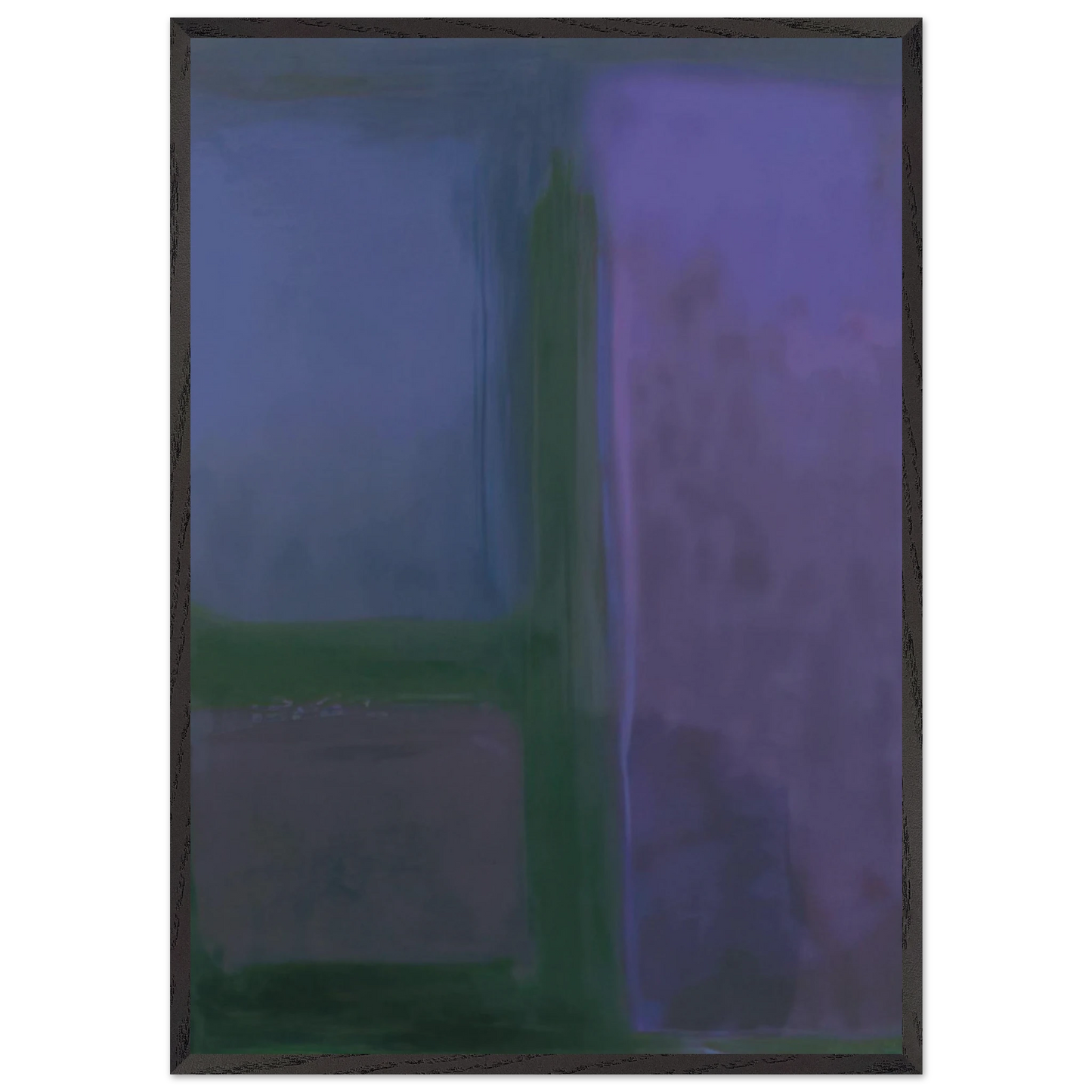
What makes the paper used for the Esteban Vicente print "museum-quality"?
We use 250 gsm (110 lb) natural white, archival-grade paper. It is acid-free and uncoated, ensuring the colors do not yellow over time and the ink remains vibrant for decades, satisfying the highest standards for fine art preservation.
How does the frame compare to standard retail frames?
Our frames are 20mm (0.79") thick, crafted from solid, responsibly sourced oak and ash. This provides a more luxurious, gallery-standard profile than the thinner 14mm frames commonly found elsewhere, ensuring structural integrity and aesthetic weight.
Is the Afternoon 1971 print ready to hang upon delivery?
Yes, your framed art print arrives fully assembled. It includes a professional hanging kit, allowing you to display this Esteban Vicente masterpiece on your wall immediately upon arrival without additional hardware.
What type of protection is used for the artwork surface?
We protect each print with high-quality shatterproof plexiglass. This material offers the clarity of glass while being significantly more resistant to impact and damage, ensuring your artwork stays safe during shipping and in your home.
Is this product environmentally sustainable?
Absolutely. We use FSC-certified wood for our frames and paper from sustainable sources. Our commitment to sustainability ensures that your fine art print is as kind to the planet as it is beautiful in your space.
Which art movement is Esteban Vicente associated with?
Esteban Vicente was a prominent member of the New York School and a first-generation Abstract Expressionist. His work bridge the gap between European modernism and the bold, atmospheric color-field experimentation of American abstraction.
What is the significance of Vicente's 1971 style?
By 1971, Vicente had transitioned into a more atmospheric and luminous phase. His work focused on the harmony of light and color, using softened edges to create a sense of infinite space and emotional resonance.