
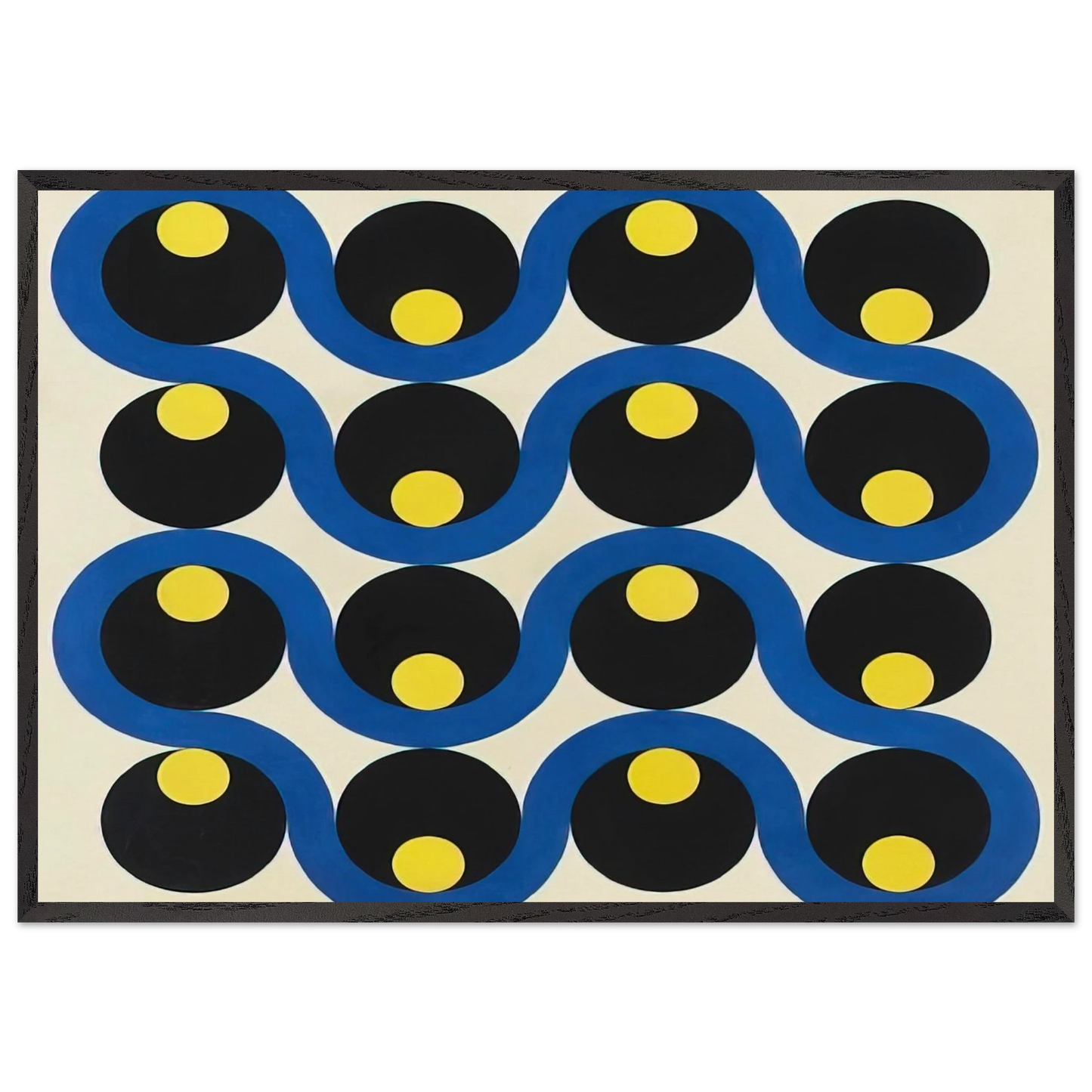
What makes the RedKalion reproduction of 'Beat' museum-quality?
We use 250 gsm archival museum-quality paper that is uncoated and natural white. Combined with precision printing techniques, this ensures the colors and lines of Liberman's 1952 work are reproduced with absolute fidelity and long-term durability.
Is the frame of this Alexander Liberman print made of real wood?
Yes, all our frames are crafted from responsibly sourced, solid oak and ash wood. For this piece, we use a 20mm (0.79") thick black wooden frame, providing a more premium and stable profile than standard gallery frames.
Does the print come ready to hang on arrival?
Absolutely. Your framed art print includes a professional-grade hanging kit. It arrives fully assembled and ready to hang directly on your wall, ensuring a seamless transition from our gallery to your home.
How is the artwork protected during shipping and display?
We use premium shatterproof plexiglass to protect the print. This material offers the crystal-clear visibility of glass while being much safer and more durable, shielding your Alexander Liberman print from dust and UV damage.
Is the paper used for this fine art print sustainable?
Yes, sustainability is core to RedKalion. We use FSC-certified paper or equivalent sustainable materials, ensuring that your fine art reproduction supports responsible forest management while maintaining the highest archival standards.
Who was Alexander Liberman and why is 'Beat' significant?
Alexander Liberman was a legendary artist and editorial director of Vogue. 'Beat' (1952) is a quintessential example of his Hard-edge abstraction, showcasing his ability to translate rhythmic movement into static, geometric forms.
What are the exact dimensions of the frame?
The black wooden frame features a width and depth of 20mm (0.79"). This is specifically chosen to provide a bold, modern silhouette that complements the large 70x100 cm (28x40 inches) format of the print.