
Discover Unlimited Art Possibilities
At RedKalion, you can find virtually any artwork from any artist, available in a wide range of sizes to perfectly match your space.
If you didn’t find what you’re looking for, contact us at support@redkalion.com . We will source any artwork and produce it in any size and format you need, including art prints, posters, canvas, framed pieces, framed canvas, and more.
For dedicated art enthusiasts, we also offer handcrafted replicas of any artwork, carefully painted by highly skilled artists using traditional techniques.
For custom requests, contact us at support@redkalion.com .
What makes this Renoir reproduction "museum-quality"?
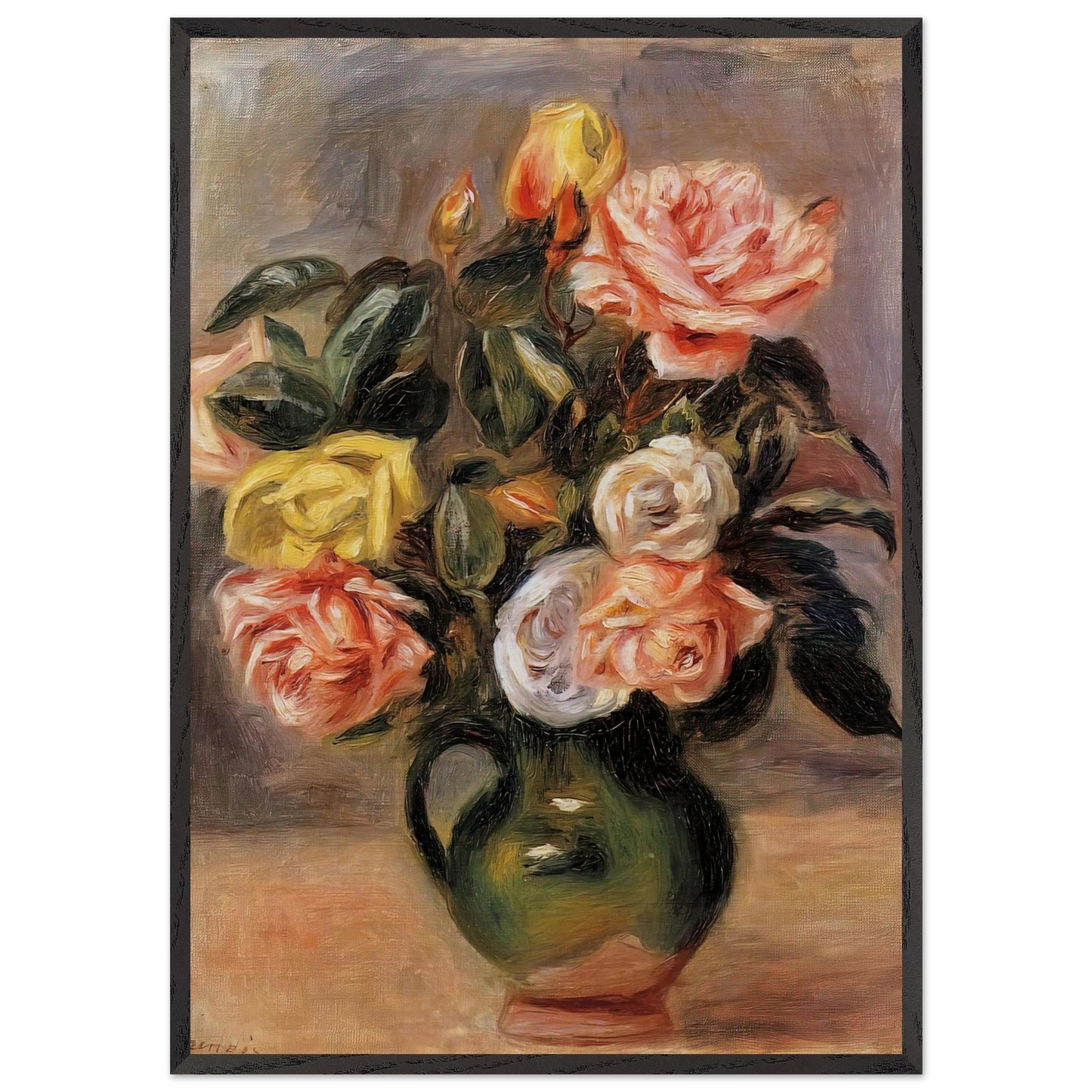
Our prints use 250 gsm archival-grade paper and light-fast inks, mirroring the standards of global galleries to ensure long-term color fidelity and paper integrity for your Bouquet of Roses N2.
Is the black wooden frame sustainably sourced?
Yes, all frames are crafted from FSC-certified oak and ash wood, ensuring that your premium decor supports responsible forest management and environmental sustainability.
How is the artwork protected during shipping and display?
We use shatterproof plexiglass and robust packaging to ensure your Renoir print arrives safely. The plexiglass provides superior protection against UV rays and accidental damage compared to standard glass.
What paper is used for the Bouquet of Roses N2 print?
We utilize 250 gsm (110 lb) natural white, uncoated, archival museum-quality paper. This matte finish avoids glare and highlights the delicate textures of Renoir’s brushwork.
Does the print arrive ready to be displayed?
Absolutely. Your 70x100 cm framed art print comes with a pre-installed hanging kit, allowing you to elevate your space immediately upon delivery.
What was Renoir's inspiration for his floral still lifes?
Renoir often used floral arrangements like the Bouquet of Roses N2 to experiment with color harmony and light, viewing flowers as the perfect subjects for his fluid, Impressionist technique.
Why is the "Bouquet of Roses N2" significant in Impressionism?
This work exemplifies the late 19th-century focus on sensory experience over rigid realism, using soft edges and vibrant hues to evoke the fragrance and vitality of the roses.