
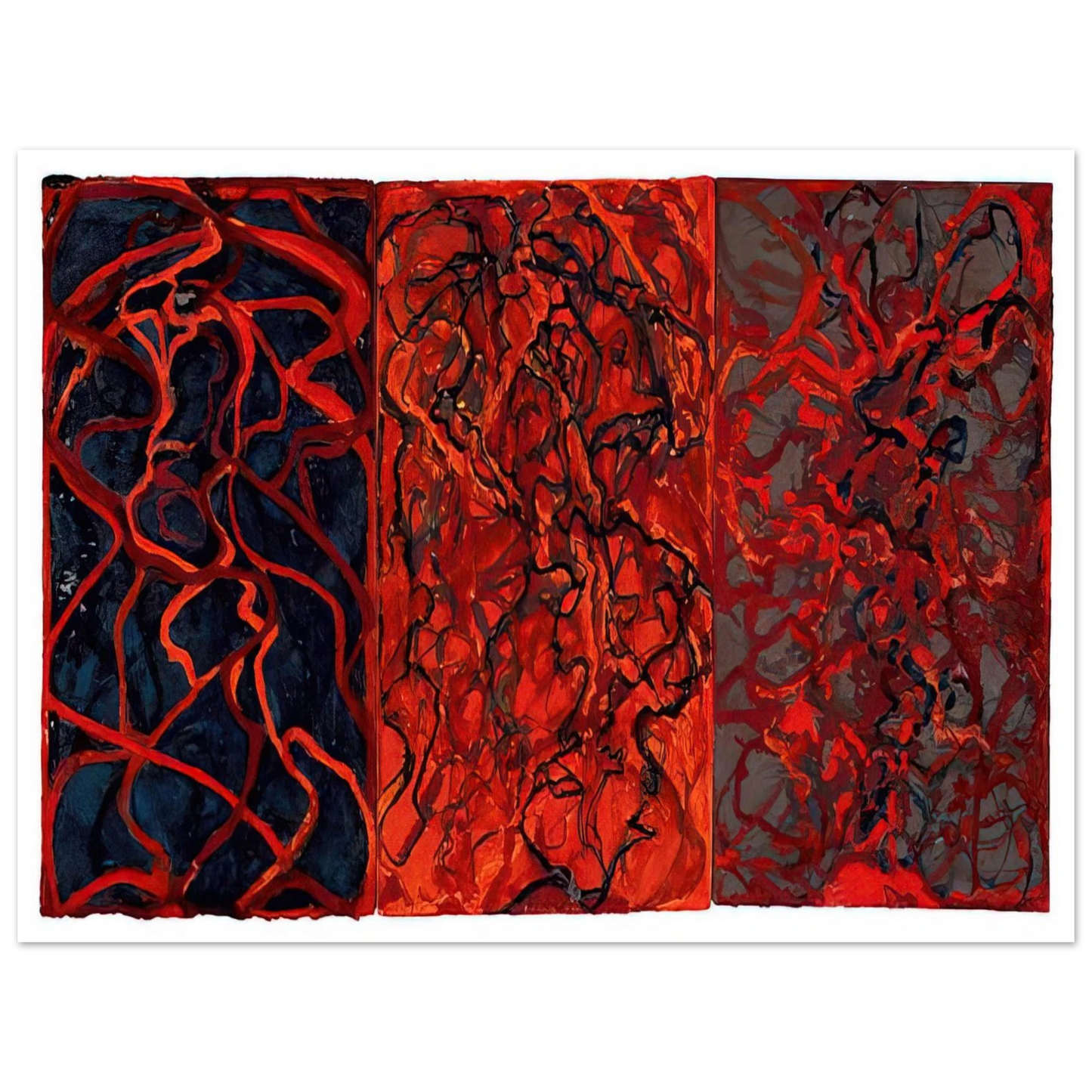
What is the quality of the paper used for this Brice Marden print?
We use Master's Edition archival paper, which is 250 gsm (110 lb) and 0.29 mm thick. This museum-quality, FSC-certified paper features a matte, uncoated finish that provides a luxurious feel and prevents glare from indoor lighting.
How does the archival nature of the print ensure longevity?
The paper is acid-free with a pH value above 7, meaning it is chemically stable and resistant to yellowing or degradation over time. This ensures your Brice Marden reproduction maintains its original clarity and color for decades.
Is the packaging sustainable and how is the print shipped?
Our prints are shipped in robust, protective packaging to ensure they arrive in perfect condition. We print on demand to reduce waste and utilize FSC-certified materials, supporting sustainable forestry practices globally.
What makes this 'Nevisian Triptych' reproduction museum-quality?
A museum-quality print requires high-weight archival paper and precise color reproduction. RedKalion uses 250 gsm natural white paper and professional-grade inks to capture the intricate calligraphic details and tonal nuances of Marden's original 2008 triptych.
Does the print come with a frame?
This product is a standalone fine art poster. It is delivered unframed, allowing you the flexibility to choose a bespoke framing solution that perfectly complements your personal decor and highlights the triptych's unique aesthetic.
What inspired Brice Marden's 'Nevisian Triptych'?
The artwork is inspired by the island of Nevis and the integration of Chinese calligraphic techniques. Marden used long-handled brushes to create flowing, organic lines that mimic the vines and natural light found in his Caribbean environment.
How does the triptych format affect the viewing experience?
The triptych format creates a rhythmic, three-part narrative. In Marden's work, this structure balances verticality with horizontal movement, encouraging the eye to travel across the panels and experience the artwork as a continuous, evolving landscape of color.