

RedKalion
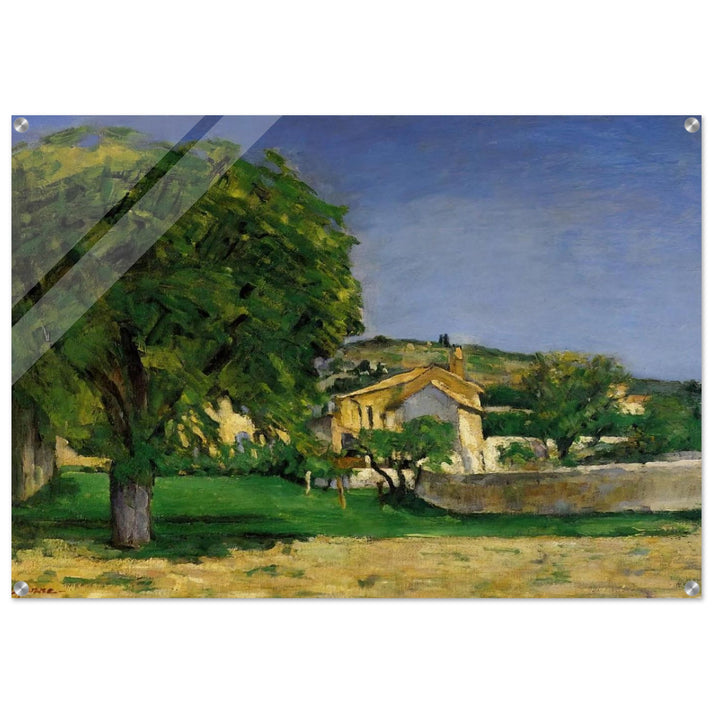
Chestnut Trees and Farmstead of Jas de Bouffin - Paul Cézanne Acrylic Print - 70x100 cm / 28x40″ inches
Chestnut Trees and Farmstead of Jas de Bouffin - Paul Cézanne Acrylic Print - 70x100 cm / 28x40″ inches
Couldn't load pickup availability
Elevate Your Space with Cézanne’s Provençal Masterpiece
In Chestnut Trees and Farmstead of Jas de Bouffan, Paul Cézanne invites us into the intimate landscape of his family estate in Aix-en-Provence. This seminal work marks a pivotal moment in art history, where the foundations of modernism were laid through the artist’s unique 'constructive stroke.' Our museum-quality reproduction captures every nuance of Cézanne's structural exploration, from the rhythmic verticality of the chestnut trees to the geometric solidity of the farmstead.
The RedKalion Archival Standard
As a premier gallery, RedKalion is dedicated to preserving the integrity of fine art. This fine art acrylic print is crafted on a 4mm (0.15") high-grade acrylic panel, providing a sleek, contemporary aesthetic that breathes new life into Post-Impressionist masterpieces. The depth of the acrylic medium enhances the luminosity of the Provençal sun, ensuring the vibrant greens and earthy ochres remain as vivid as the day Cézanne applied them to the canvas.
Superior Craftsmanship and Technical Specifications
Designed for the discerning collector, this 70x100 cm (28x40") print features modern straight-cut corners and a refined finish. To ensure the highest fidelity of color, any transparent areas in the original composition are backed with white, providing an optimal foundation for the rich pigments of this archival-grade reproduction.
- Material: 4mm (0.15") premium acrylic for enhanced depth and durability.
- Mounting: Includes a professional hanging kit with hardware and screws.
- Precision: Pre-drilled holes 14mm from the edge with 8mm diameters for a secure, elegant installation.
- Durability: Shatter-resistant and UV-resistant materials designed to endure for generations.
By choosing RedKalion, you are not merely purchasing a print; you are acquiring a piece of curated history. This Paul Cézanne acrylic print serves as a timeless focal point, bringing the intellectual rigor and natural beauty of French Post-Impressionism into your home or office.


Discover Unlimited Art Possibilities
At RedKalion, you can find virtually any artwork from any artist, available in a wide range of sizes to perfectly match your space.
If you didn’t find what you’re looking for, contact us at support@redkalion.com . We will source any artwork and produce it in any size and format you need, including art prints, posters, canvas, framed pieces, framed canvas, and more.
For dedicated art enthusiasts, we also offer handcrafted replicas of any artwork, carefully painted by highly skilled artists using traditional techniques.
For custom requests, contact us at support@redkalion.com .
What makes the 4mm acrylic print superior to traditional glass?
Our 4mm acrylic offers superior clarity, depth, and impact resistance compared to glass. It is lighter, safer, and features UV-resistant properties that protect your museum-quality fine art print from fading over time.
How is the artwork mounted to the wall?
Each print includes a premium hanging kit with four screws and specialized hardware. The acrylic panel features pre-drilled holes at each corner, positioned 14mm from the edge for a stable, modern 'floating' appearance.
What happens to transparent areas in the artwork?
To maintain the visual impact and color accuracy of the piece, any transparent or semi-transparent background areas are defaulted to a crisp white, ensuring the focal subjects remain vibrant and legible.
How do you ensure the print survives shipping?
RedKalion utilizes specialized, high-impact packaging designed for large-format fine art. Every acrylic print is insured and handled with the white-glove care required for museum-grade archival reproductions.
Will the colors in this Cézanne print fade?
No. We use archival inks and high-grade acrylic that filters out harmful UV rays. This ensures that the delicate color palette of the Jas de Bouffan landscape remains luminous for decades.
What is the significance of Jas de Bouffan in Cézanne’s work?
Jas de Bouffan was the Cézanne family estate. It served as a private laboratory where Paul Cézanne developed his revolutionary style, painting the trees, garden, and farmstead over several decades to master light and structure.
Why did Cézanne focus so heavily on chestnut trees?
Cézanne viewed the chestnut trees as architectural elements. He used their trunks and branches to create a rhythmic structure within the frame, bridging the gap between Impressionist light and the geometric forms that influenced Cubism.