


RedKalion
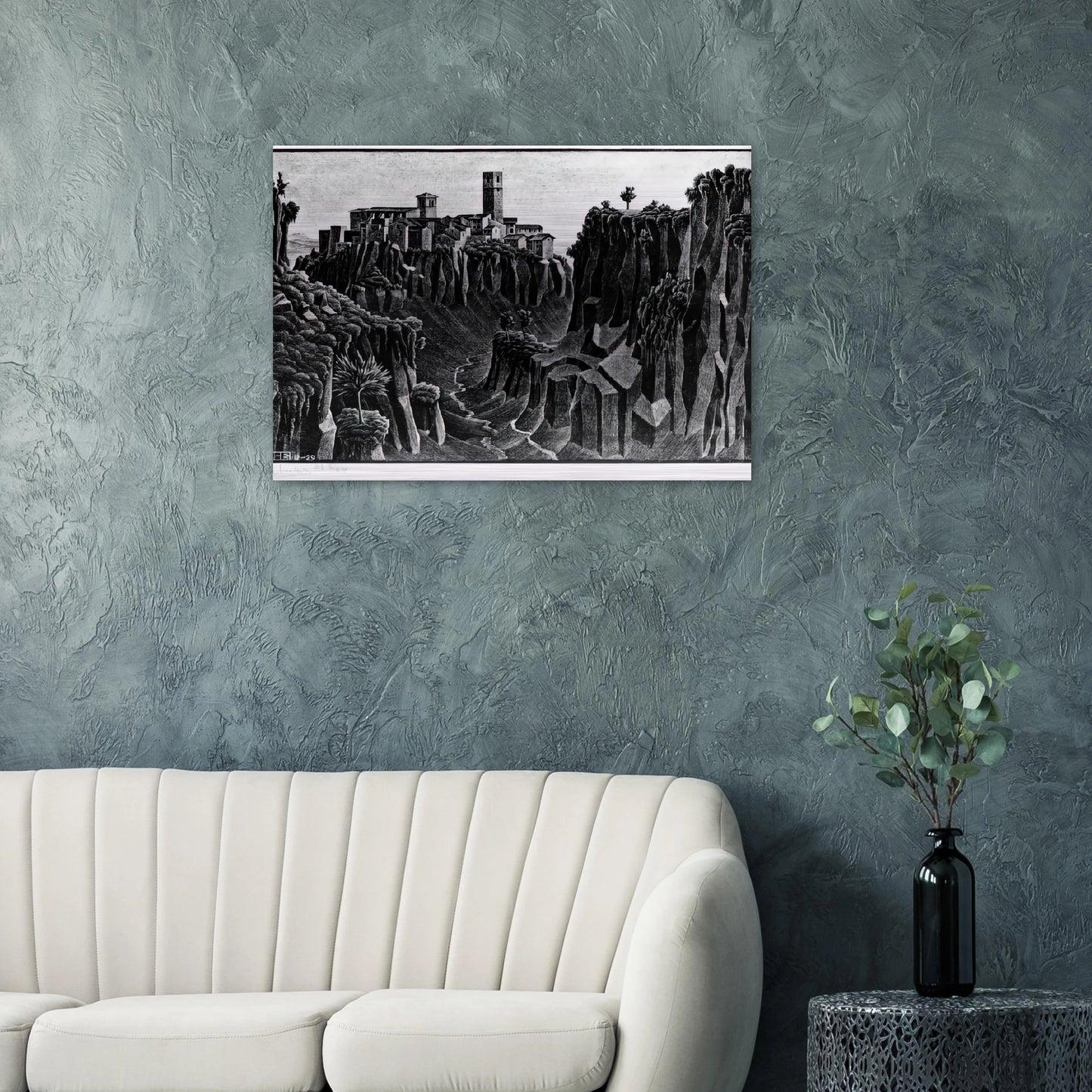
CIMINO BARBARANO - MC Escher Brushed Aluminum Print - 70x100 cm / 28x40 inches | MC Escher Aluminum Print | MC Escher Prints
CIMINO BARBARANO - MC Escher Brushed Aluminum Print - 70x100 cm / 28x40 inches | MC Escher Aluminum Print | MC Escher Prints
Couldn't load pickup availability
A Geometric Masterpiece: Cimino Barbarano by M.C. Escher
Experience the profound architectural vision of M.C. Escher with this museum-quality reproduction of Cimino Barbarano. Originally created in 1929 during Escher's prolific Italian period, this piece captures the rugged, vertical beauty of the village of Barbarano Romano in Viterbo. This fine art print highlights Escher's early mastery of perspective and shadow, revealing the rhythmic geometry that would later define his more surrealist mathematical constructions.
Unrivaled Material Sophistication
At RedKalion, we elevate this historical work through our premium Brushed Aluminum DIBOND® technology. The 3mm (0.12") thick rigid base provides a sophisticated, contemporary aesthetic that complements both modern and traditional interiors. The horizontal grain of the brushed silver finish lends a dynamic quality to the print; as light shifts within your space, the unprinted white areas reveal a striking metallic silver effect that breathes life into Escher’s monochromatic palette.
Archival Precision and Technical Excellence
- Matte, Glare-Free Finish: The direct print on AluDibond ensures vivid color depth and a glare-free viewing experience, essential for appreciating the intricate linework of this lithographic study.
- Brushed Silver Effect: The metallic finish interacts beautifully with ambient light, offering a premium texture that traditional paper cannot replicate.
- Structural Integrity: The 3mm Aluminum DIBOND® base is exceptionally durable and resistant to environmental changes, ensuring an archival-grade display.
- Complete Display Solution: Each print includes a high-quality hanging kit, specifically selected based on the fulfillment region for optimal security and ease of installation.
By choosing a RedKalion reproduction, you are acquiring more than just a print; you are investing in a meticulously curated archival masterpiece that honors the legacy of M.C. Escher. Elevate your space with a work of art that bridges the gap between historical lithography and cutting-edge material science.


Discover Unlimited Art Possibilities
At RedKalion, you can find virtually any artwork from any artist, available in a wide range of sizes to perfectly match your space.
If you didn’t find what you’re looking for, contact us at support@redkalion.com . We will source any artwork and produce it in any size and format you need, including art prints, posters, canvas, framed pieces, framed canvas, and more.
For dedicated art enthusiasts, we also offer handcrafted replicas of any artwork, carefully painted by highly skilled artists using traditional techniques.
For custom requests, contact us at support@redkalion.com .
What materials are used for the CIMINO BARBARANO MC Escher print?
This print is crafted on 3mm (0.12") Brushed silver Aluminum DIBOND®. It features a unique metallic finish with a horizontal grain, providing a durable, rigid, and sophisticated base for the artwork.
How does the brushed aluminum finish affect the artwork’s appearance?
The brushed finish creates a dynamic, matte appearance. Unprinted areas allow the natural silver metallic effect to show through, interacting with light to give the M.C. Escher prints a contemporary, high-end feel.
Is the hanging hardware included with the aluminum print?
Yes, every RedKalion aluminum print includes a hanging kit. The specific type of hardware varies depending on the country of fulfillment to ensure the most secure display for your 70x100 cm piece.
What are the archival properties of this fine art print?
Aluminum DIBOND® is highly resistant to fading and environmental damage. Combined with our direct-to-surface printing techniques, this museum-quality reproduction is designed to remain vibrant and intact for decades.
How is the print protected during shipping?
RedKalion utilizes specialized protective packaging designed for large-format aluminum prints. We ensure that your MC Escher aluminum print arrives in pristine condition, ready for immediate display in your home or gallery.
What is the historical significance of Escher's Cimino Barbarano?
Created in 1929, this work represents Escher’s fascination with Italian architecture. It showcases his transition from landscape artist to a master of geometric perspective, focusing on the dense, rhythmic structures of medieval Italian towns.
Why does the print have a matte finish rather than a glossy one?
A matte finish is selected to prevent glare and reflections, ensuring that the complex details and shadows of Escher's work are visible from any angle, even in brightly lit rooms.