
Discover Unlimited Art Possibilities
At RedKalion, you can find virtually any artwork from any artist, available in a wide range of sizes to perfectly match your space.
If you didn’t find what you’re looking for, contact us at support@redkalion.com . We will source any artwork and produce it in any size and format you need, including art prints, posters, canvas, framed pieces, framed canvas, and more.
For dedicated art enthusiasts, we also offer handcrafted replicas of any artwork, carefully painted by highly skilled artists using traditional techniques.
For custom requests, contact us at support@redkalion.com .
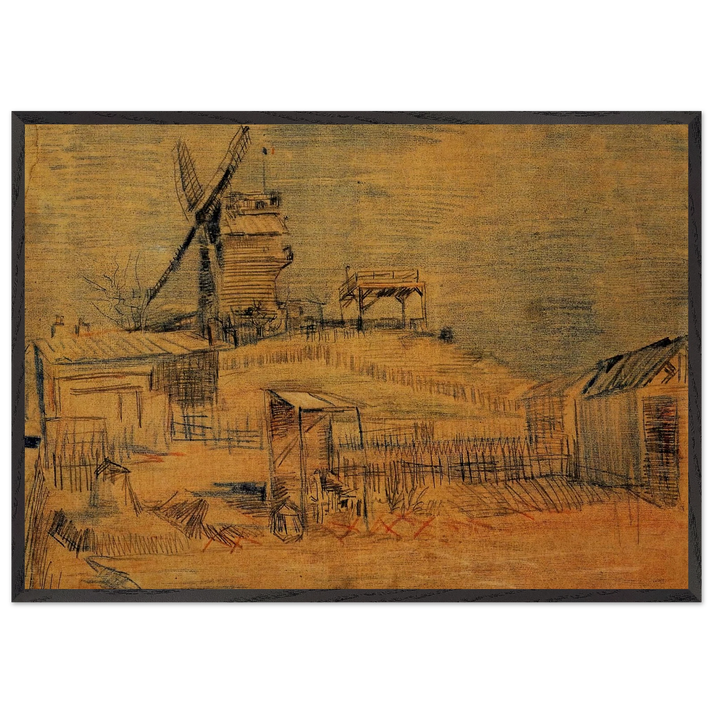
What is the historical significance of Gardens on Montmartre and the Blute-Fin Windmill?
Painted in 1887, this work reflects Vincent van Gogh's Paris period, showcasing his evolving style with vibrant colors and dynamic brushwork inspired by Impressionism and urban life in Montmartre.
What details make this a museum-quality reproduction?
This fine art print uses 250 gsm archival paper with matte finishing and precise color calibration to replicate van Gogh's original palette, ensuring a premium, gallery-worthy display.
What are the specifications of the frame and paper?
The frame is 20mm thick black wood from oak and ash, while the paper is 250 gsm, matte, uncoated, and FSC-certified for a sustainable, archival-quality art print.
How is the print protected and ready for display?
It features shatterproof plexiglass and includes a hanging kit, arriving ready-to-hang as a framed art print for immediate wall installation.
What is the archival longevity of this reproduction?
Made with acid-free, museum-quality paper and stable inks, this reproduction resists fading for decades, ideal for long-term art preservation.
How does van Gogh's technique in this painting differ from his later works?
Compared to his later, more expressive styles, this piece shows tighter brushstrokes and a brighter palette, influenced by Parisian artists like Pissarro and Seurat.
Why was the Blute-Fin windmill a notable subject for van Gogh?
The windmill symbolized Montmartre's rural past amidst urbanization, reflecting van Gogh's interest in blending natural and industrial elements in his landscapes.