
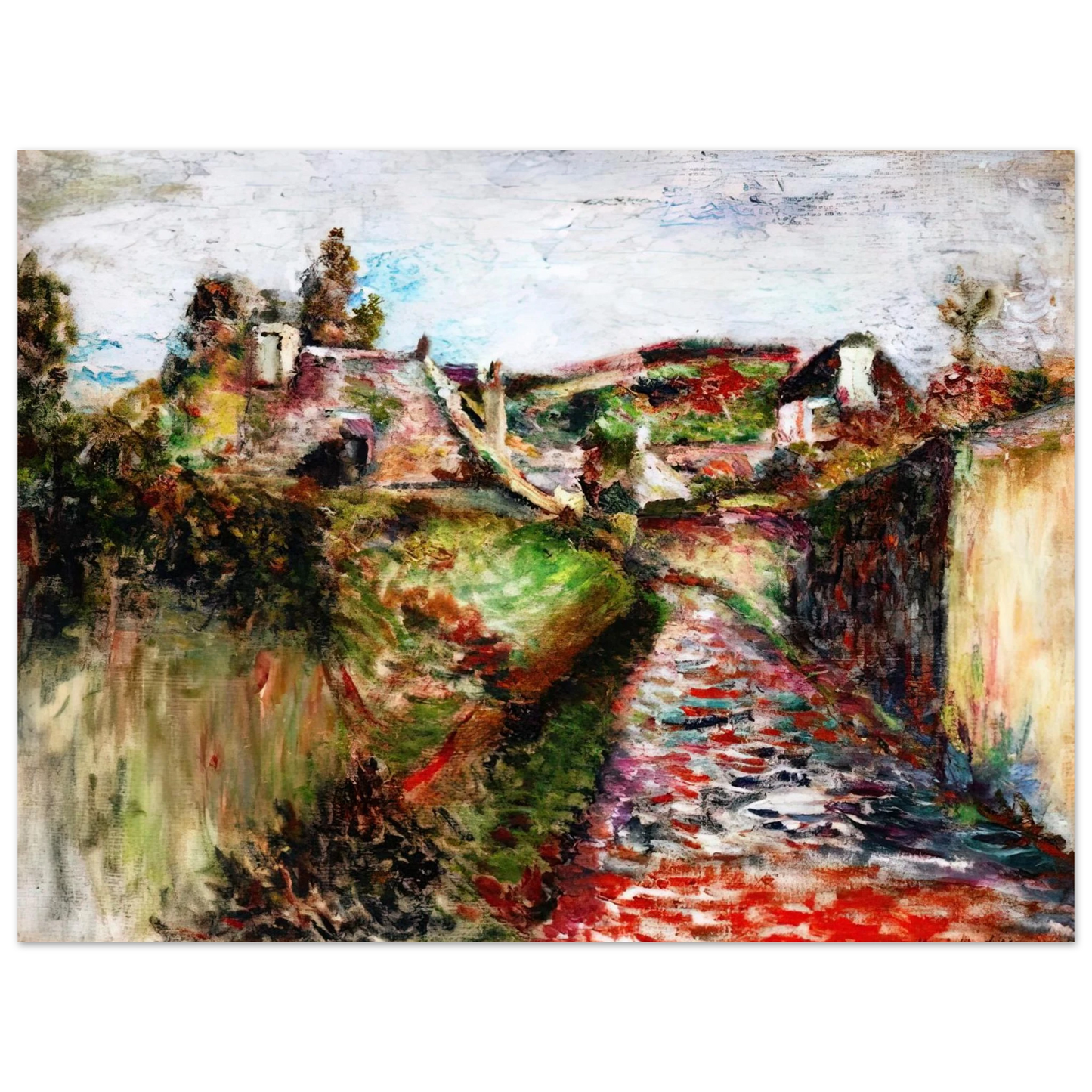
What is the historical significance of Henri Matisse's "View of Belle Ile"?
Painted in 1897, this landscape marks Matisse's transition from Impressionism to Fauvism, capturing the wild beauty of Belle-Île-en-Mer with expressive brushwork and emotive color, foreshadowing his revolutionary style in early 20th-century art.
How does this fine art print capture the details of the original painting?
Our museum-quality reproduction uses high-resolution imaging to replicate Matisse's textured brushstrokes and coastal hues, printed on Master's Edition archival paper for true-to-life fidelity in this 75x100 cm fine art poster.
What are the specifications of the paper used for this print?
This print features Master's Edition archival paper: matte, uncoated, natural white finish, 250 gsm weight, 0.29 mm thickness, acid-free for longevity, and FSC-certified for sustainable fine art reproductions.
How is this print shipped and what are the delivery options?
Printed and shipped on demand with no minimum orders, it arrives securely packaged; delivery times vary by location for this premium art poster from our curated collection.
How long will this archival print last without fading or yellowing?
Made with acid-free, pH-balanced paper, this museum-quality reproduction resists yellowing and fading, ensuring archival longevity for decades when displayed away from direct sunlight.
Why did Matisse choose Belle-Île-en-Mer as a subject in 1897?
Matisse visited Belle-Île-en-Mer to study its dramatic cliffs and light, influenced by Impressionists like Monet; this trip helped him develop his bold color palette and expressive techniques.
What makes the matte finish ideal for this landscape print?
The matte, uncoated finish reduces glare, enhances texture, and provides a natural, gallery-like appearance that complements Matisse's brushwork and the coastal scene's depth.