
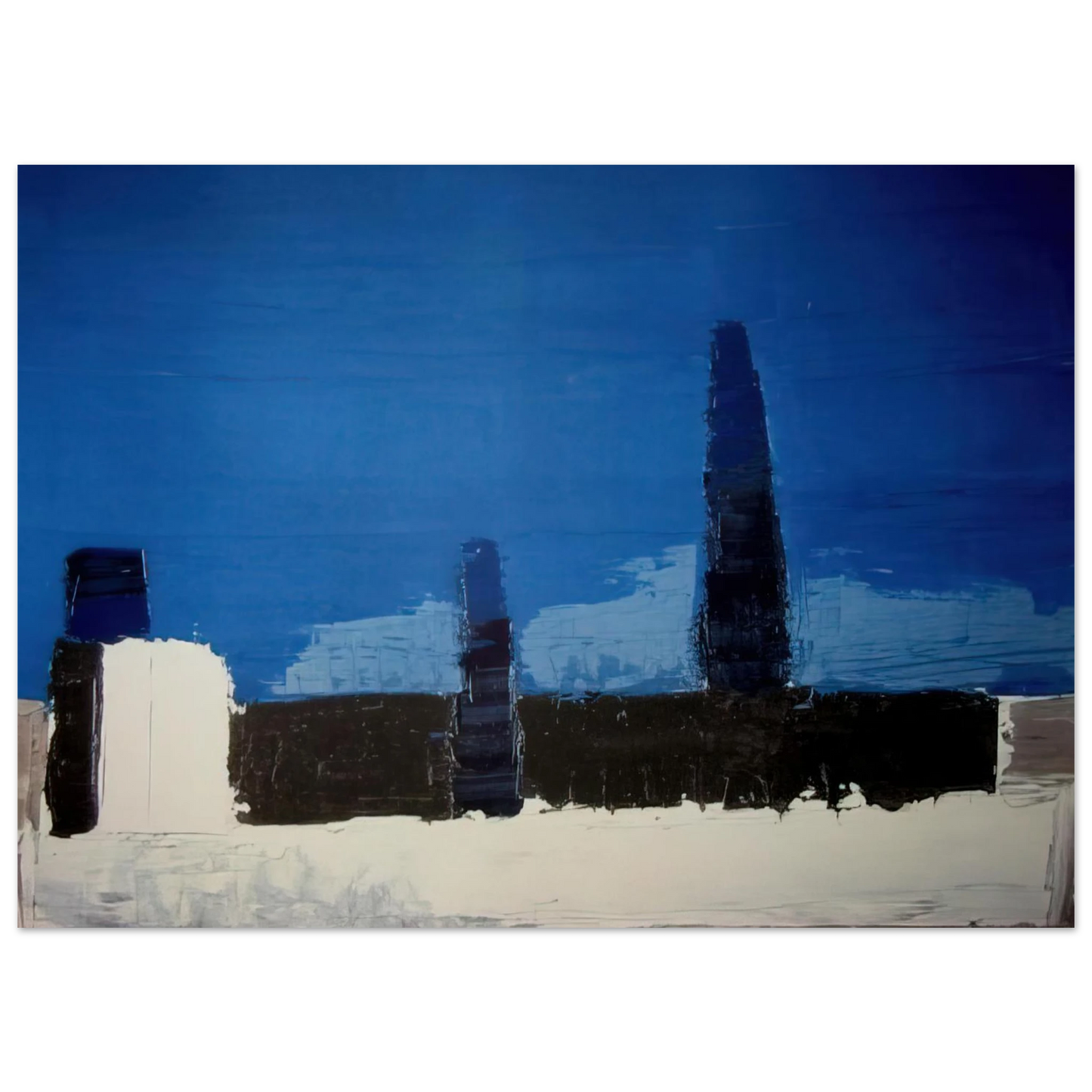

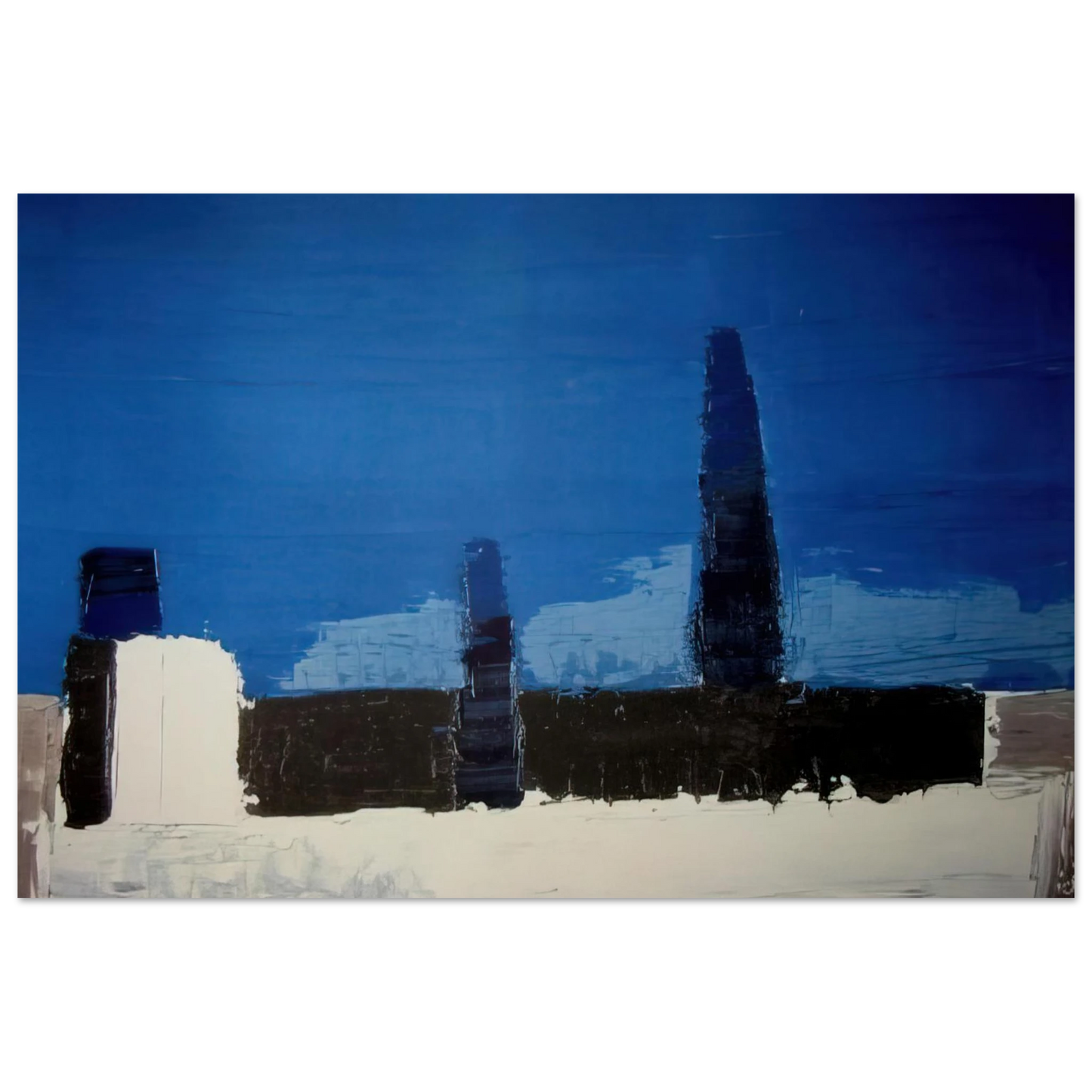
What is the historical significance of Nicolas de Staël's Fiesole (1953)?
Fiesole (1953) marks Nicolas de Staël's shift toward abstraction, using thick impasto and vibrant colors to depict Tuscan landscapes, blending figurative and expressive styles in post-war European art.
How does the paper quality ensure this fine art print's longevity?
Our Master's Edition archival paper is acid-free (pH above 7) and FSC-certified, preventing yellowing and ensuring this museum-quality reproduction lasts for generations without degradation.
What are the specifications of the paper used for this poster?
This fine art print features 250 gsm (110 lb) weight, 0.29 mm (11.4 mils) thickness, with a matte, uncoated finish in natural white for a luxurious texture and archival durability.
How is the print shipped and are there minimum order requirements?
We print and ship on demand with no minimum orders, ensuring each Nicolas de Staël Fiesole reproduction is crafted fresh and delivered securely to your location.
Can you describe the finish and texture of this archival print?
The matte, uncoated finish on natural white paper provides a tactile, off-white surface that enhances the artwork's texture, mimicking the original's expressive brushstrokes.
What inspired Nicolas de Staël's use of color in Fiesole?
De Staël was inspired by the light and terrain of Fiesole, Italy, using bold hues and layered pigments to convey emotional depth and atmospheric abstraction in this 1953 masterpiece.
How does this reproduction compare to the original artwork?
This museum-quality print captures de Staël's impasto technique and vibrant palette with precision, offering an authentic, archival-grade reproduction for display in homes or galleries.