
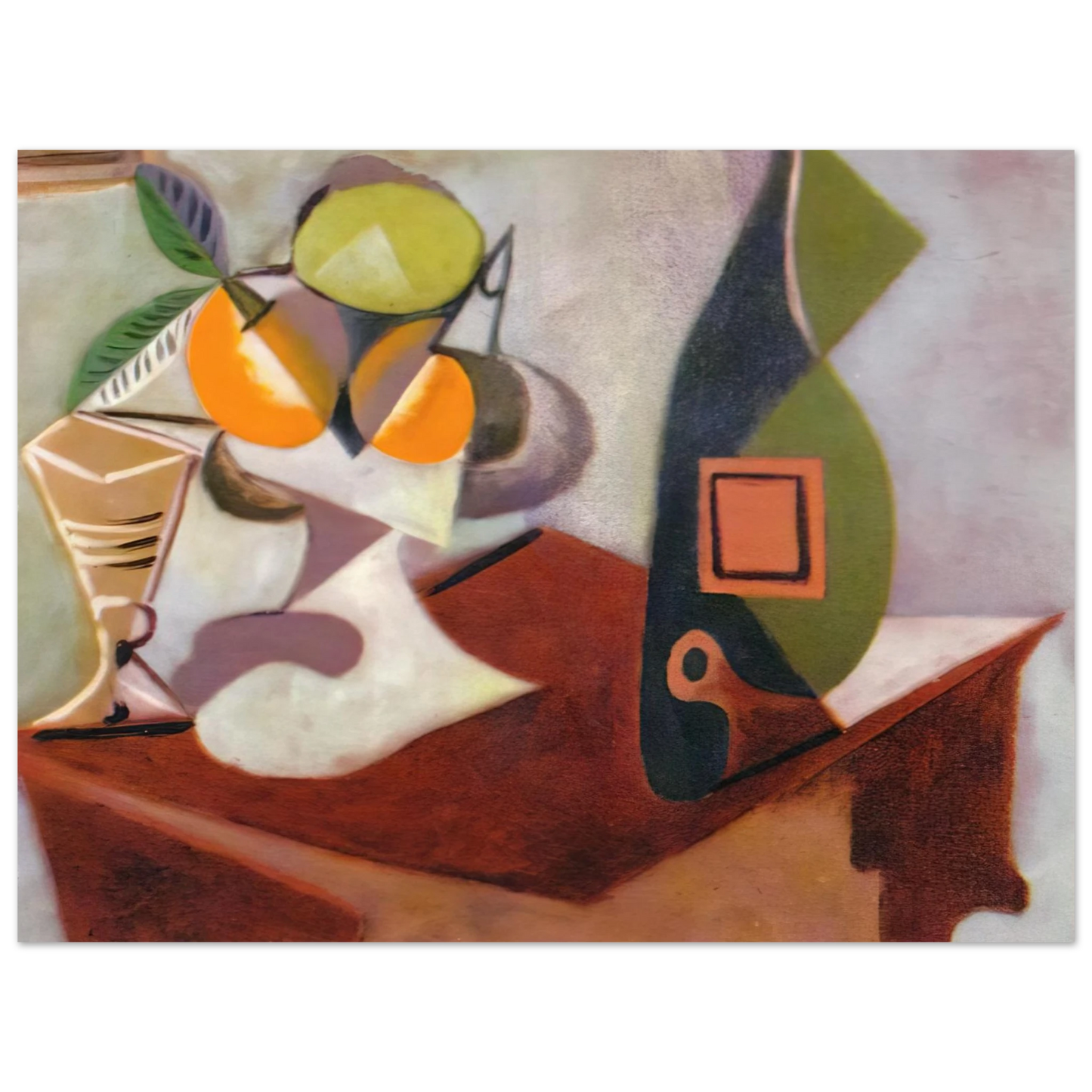
What is the historical significance of Picasso's "Still Life with Lemon and Oranges"?
This artwork is a key example of Picasso's Cubist style from the early 1900s, where he broke from realism to explore abstract forms and vibrant colors, revolutionizing modern art and influencing countless artists.
How does the paper quality ensure this fine art print looks authentic?
Our Master's Edition archival paper uses a matte, uncoated finish and natural white tone to replicate the texture of original artworks, with 250 gsm weight for a premium, durable feel that enhances color accuracy.
What are the shipping and fulfillment details for this museum-quality reproduction?
This print is produced on demand with no minimum orders, ensuring fast, eco-friendly fulfillment and careful packaging to protect your archival fine art poster during transit.
How long will this archival print last without yellowing or fading?
Made from acid-free paper with a pH above 7, this reproduction resists yellowing over time, offering long-lasting vibrancy for your Cubist art collection.
Can you describe the sustainability features of this FSC-certified paper?
The FSC-certified paper supports responsible forestry, aligning with RedKalion's commitment to eco-friendly practices in producing high-quality fine art prints.
What techniques did Picasso use in this still life to convey depth and form?
Picasso employed fragmented planes and overlapping shapes in Cubist style, using bold colors and geometric abstraction to challenge traditional perspective and create dynamic visual interest.
Why is the 75x100 cm / 30x40 inches size ideal for displaying this artwork?
This size balances visibility and detail, making it perfect for home or office decor to showcase Picasso's intricate composition as a standout museum-quality reproduction.