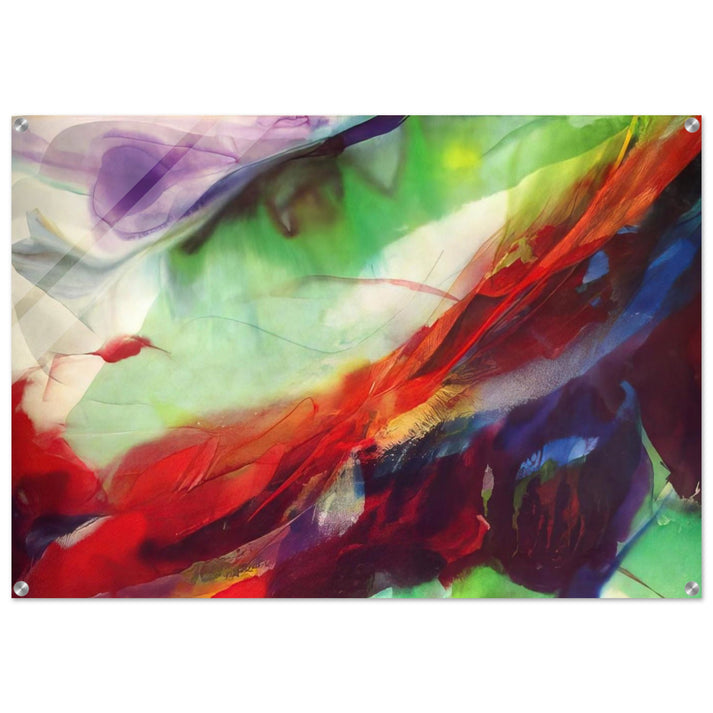


Discover Unlimited Art Possibilities
At RedKalion, you can find virtually any artwork from any artist, available in a wide range of sizes to perfectly match your space.
If you didn’t find what you’re looking for, contact us at support@redkalion.com . We will source any artwork and produce it in any size and format you need, including art prints, posters, canvas, framed pieces, framed canvas, and more.
For dedicated art enthusiasts, we also offer handcrafted replicas of any artwork, carefully painted by highly skilled artists using traditional techniques.
For custom requests, contact us at support@redkalion.com .
What are the dimensions and materials of this Paul Jenkins acrylic print?
This fine art print measures 70x100 cm (28x40 inches) and is mounted behind 4mm (0.15") premium acrylic for a vibrant, durable, and museum-quality finish with straight-cut corners.
How is the artwork presented with a transparent background?
Transparent backgrounds default to white for optimal presentation, ensuring the luminous colors of this Abstract Expressionist masterpiece stand out clearly in your space.
What is included for hanging this acrylic print?
A complete hanging kit is provided, including hardware, screws, and pre-drilled screw holes (14mm from the edge, 8mm diameter) for secure and easy installation of your archival-grade reproduction.
How durable and archival is this acrylic print?
Crafted with 4mm premium acrylic and archival materials, this print offers long-lasting vibrancy and resistance to fading, making it a durable investment for home or office decor.
What shipping and handling can I expect for this large-format print?
We ship this 70x100 cm acrylic print with protective packaging to ensure it arrives safely and ready to hang, with reliable delivery options for your convenience.
What artistic technique did Paul Jenkins use in this 1966 work?
Jenkins employed his signature pour technique with acrylic paints, manipulating them to create fluid, abstract forms that evoke cosmic phenomena and the passage of time in this Abstract Expressionist piece.
What is the significance of the 'hour glass' motif in this artwork?
The hourglass symbolizes the passage of time, contrasting with the eternal, sun-like forms to explore themes of transience and permanence in Jenkins' luminous abstraction.