
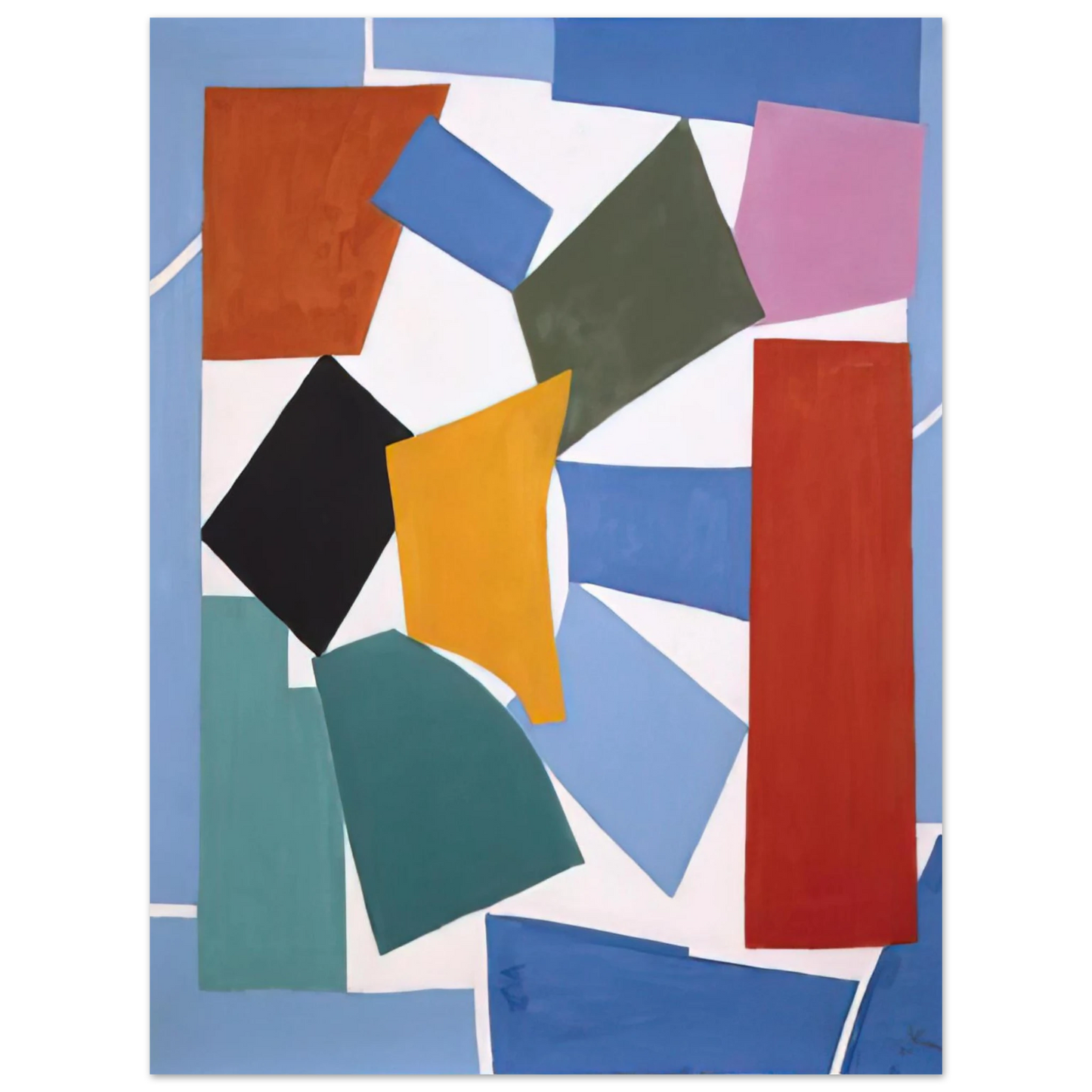
What is the quality of the paper used for this Alma Thomas print?
We use Master's Edition archival paper. It is museum-quality, 250 gsm (110 lb), and features a matte, uncoated finish. The natural white base provides a luxurious texture that perfectly complements the bold colors of Watusi (Hard Edge).
How does the archival nature of this print benefit the collector?
The paper is acid-free with a pH above 7, which prevents yellowing and brittleness over time. This ensures your fine art reproduction maintains its original vibrancy and structural integrity for decades, making it a lasting addition to your collection.
What makes "Watusi (Hard Edge)" significant in art history?
Created in 1963, this work is a brilliant reinterpretation of Matisse's "The Snail." It represents Alma Woodsey Thomas’s mastery of the Washington Color School aesthetic, blending geometric precision with a rhythmic, musical approach to color and space.
Is the paper used for this reproduction sustainable?
Yes, RedKalion is committed to environmental stewardship. This museum-quality print is produced on FSC-certified paper, ensuring that the materials are sourced from responsibly managed forests that provide environmental, social, and economic benefits.
How is shipping handled for this large-format print?
Your 75x100 cm print is printed and shipped on demand with no minimum order requirements. We use robust, protective packaging to ensure your fine art poster arrives in pristine condition, ready for framing in your home or gallery.
What influenced Alma Woodsey Thomas when creating "Watusi (Hard Edge)"?
Thomas was deeply influenced by nature and the works of Henri Matisse. In Watusi (Hard Edge), she intentionally mirrored the composition of Matisse's collage work but infused it with her own unique sense of color theory and rhythmic abstraction.
Will the colors in this fine art print fade over time?
Because we use archival-grade materials and acid-free paper, these prints are designed to resist fading. When kept out of direct, harsh sunlight, the high-pigment reproduction will remain vivid and true to Thomas's original vision for generations.