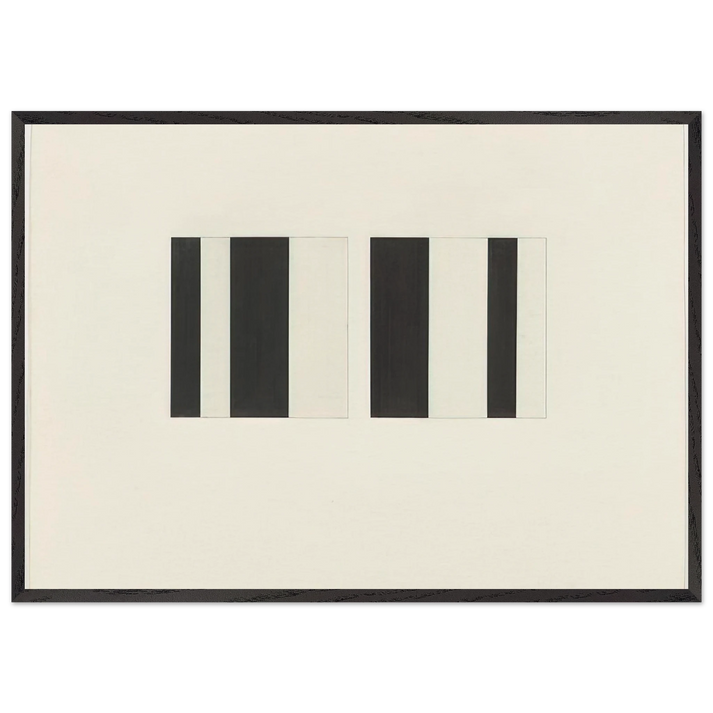

What are the paper specifications for the Brice Marden print?
The artwork is printed on 250 gsm (110 lb) natural white, matte, museum-quality paper. This archival-grade, acid-free paper ensures that the vibrant colors and subtle gradients of Marden’s study remain pristine for decades without yellowing or fading.
Is the black wooden frame sustainably sourced?
Yes. Our frames are crafted from responsibly sourced oak and ash wood, certified by the FSC. The black finish provides a contemporary, architectural border that measures 20mm wide, significantly more robust than standard 14mm frames found in mass-market prints.
How is the artwork protected during shipping and display?
Each framed art print is fitted with high-quality shatterproof plexiglass. This provides the clarity of glass while offering superior durability and protection against UV light and physical impact, ensuring your Brice Marden piece arrives and remains in perfect condition.
Will my framed art print arrive ready to hang?
Absolutely. Your RedKalion framed art print arrives fully assembled with a specialized hanging kit included. You can elevate your home or office gallery space immediately upon delivery with no additional hardware required.
What is the significance of the 1978 Annunciation series?
Brice Marden’s 1978 series represents a pivotal moment in Minimalism. By referencing the Annunciation, Marden infused abstract color-field painting with historical and spiritual weight, using vertical panels to represent the Virgin and the Archangel Gabriel through color and proportion.
Are RedKalion prints considered museum-quality?
Yes. RedKalion specializes in museum-grade reproductions. By utilizing heavy 250 gsm archival paper, premium wood frames, and state-of-the-art printing technology, we ensure our prints meet the standards required for longevity and visual fidelity expected by art collectors.
What is the history behind Marden's use of color bands?
Marden's signature vertical panels are designed to evoke architectural stability. In 'Annunciation Study I', these bands create a rhythmic 'dialogue' of color, a technique Marden refined to bridge the gap between ancient art history and modern abstract minimalism.