RedKalion
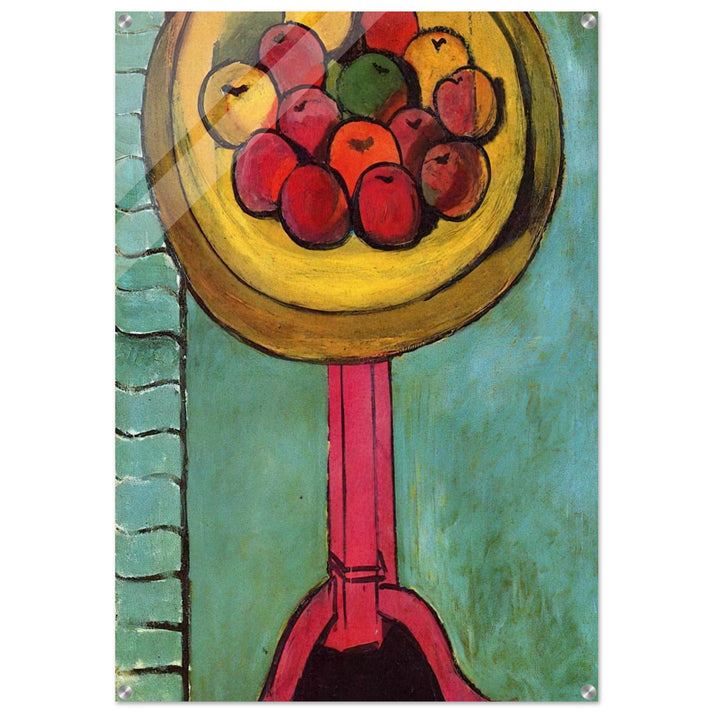
APPLES ON A TABLE GREEN BACKGROUND 1916 - Henri Matisse Acrylic Print - 70x100 cm / 28x40″ inches
APPLES ON A TABLE GREEN BACKGROUND 1916 - Henri Matisse Acrylic Print - 70x100 cm / 28x40″ inches
Noudon saatavuutta ei voitu ladata
Elevate Your Space with Henri Matisse's 1916 Masterpiece
In 1916, during a period of profound artistic experimentation, Henri Matisse created Apples on a Table, Green Background. This work represents a masterful intersection of Fauvist color theory and the emerging structural focus of his later career. At RedKalion, we offer this museum-quality reproduction as a premium acrylic print, capturing the vibrant depth and rhythmic energy that defined Matisse’s vision of the everyday.
The Artistry Behind the Still Life
The 1916 composition is a testament to Matisse's ability to simplify forms while maximizing their visual impact. The bold, saturated green background serves as a stage for the apples, which are rendered with a sculptural presence despite their simplified outlines. This fine art print allows you to appreciate the nuanced brushstrokes and the sophisticated spatial relationships that make Matisse one of the most influential figures in modern art. Our reproduction ensures that the color fidelity remains true to the original, providing a focal point of intellectual and aesthetic weight for your interior.
Premium Acrylic Craftsmanship
RedKalion's commitment to archival excellence is embodied in our 4mm (0.15") acrylic prints. Unlike traditional paper, the acrylic medium enhances the luminosity of Matisse's palette, giving the 1916 green background a sleek, glass-like finish that radiates under ambient light. Each piece features straight-cut corners for a clean, contemporary silhouette that complements both modern and classic decor.
- Material: 4mm (0.15") high-grade acrylic for a vibrant, durable finish.
- Design: Modern straight-cut edges for a sophisticated gallery aesthetic.
- Clarity: Transparent backgrounds default to white, ensuring the vibrant greens and reds of Matisse’s apples pop with maximum intensity.
- Mounting: Includes a professional hanging kit with screws and pre-drilled holes at each corner for a secure, floating installation.
Archival Quality for Discerning Collectors
Choosing a RedKalion reproduction is an investment in enduring beauty. Our acrylic prints are designed to resist fading and environmental wear, ensuring your Matisse masterpiece retains its vividness for decades to come. This is not merely a decorative item; it is an archival-grade reproduction that honors the legacy of a titan of 20th-century art.
Discover Unlimited Art Possibilities
At RedKalion, you can find virtually any artwork from any artist, available in a wide range of sizes to perfectly match your space.
If you didn’t find what you’re looking for, contact us at support@redkalion.com . We will source any artwork and produce it in any size and format you need, including art prints, posters, canvas, framed pieces, framed canvas, and more.
For dedicated art enthusiasts, we also offer handcrafted replicas of any artwork, carefully painted by highly skilled artists using traditional techniques.
For custom requests, contact us at support@redkalion.com .
What are the dimensions and thickness of the Matisse acrylic print?
This Henri Matisse print is available in 70x100 cm (28x40″) and is crafted on 4mm (0.15") thick high-grade acrylic, providing a sleek, modern finish with enhanced color depth.
Is the mounting hardware included with the purchase?
Yes, every RedKalion acrylic print includes a professional hanging kit. This consists of screws and pre-drilled holes located 14mm from each corner for a seamless and secure installation.
How does RedKalion ensure the archival longevity of the print?
We use archival-grade inks and 4mm acrylic that protects the artwork from environmental stressors. This museum-quality material ensures your fine art print maintains its vibrant color and clarity for decades.
What is the shipping and handling process for large acrylic pieces?
Each 70x100 cm print is meticulously packaged in protective materials to prevent scratches or breakage during transit. RedKalion uses trusted couriers to ensure your masterpiece arrives in gallery-perfect condition.
Why is the background printed white instead of transparent?
To maintain the visual integrity and color saturation of Matisse's 1916 palette, transparent areas are defaulted to white. This ensures the green background and red apples are rendered with optimal contrast and brilliance.
What was Matisse exploring in his 1916 work "Apples on a Table"?
In 1916, Matisse was exploring a synthesis between decorative patterns and spatial volume. This piece reflects a more structured, simplified approach to form following his earlier Fauvist experiments.
How does the acrylic medium enhance this specific Matisse piece?
The 4mm acrylic acts as a light pipe, enhancing the luminosity of the green background. It gives the artwork a contemporary, high-definition appearance that mimics the depth of the original oil paint.