RedKalion
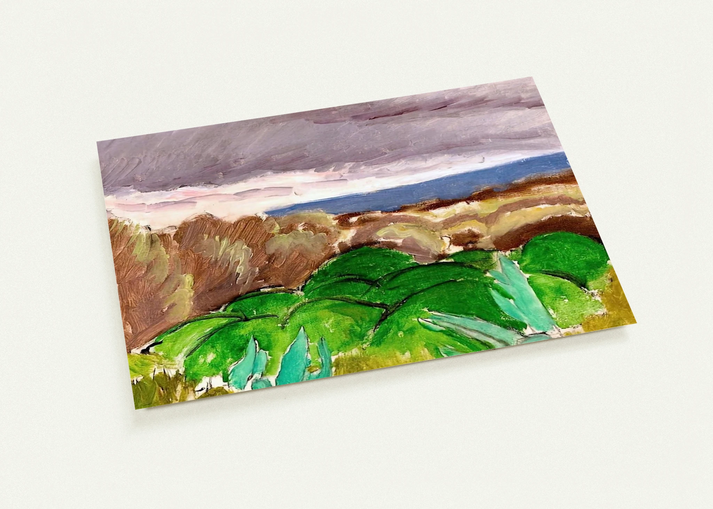
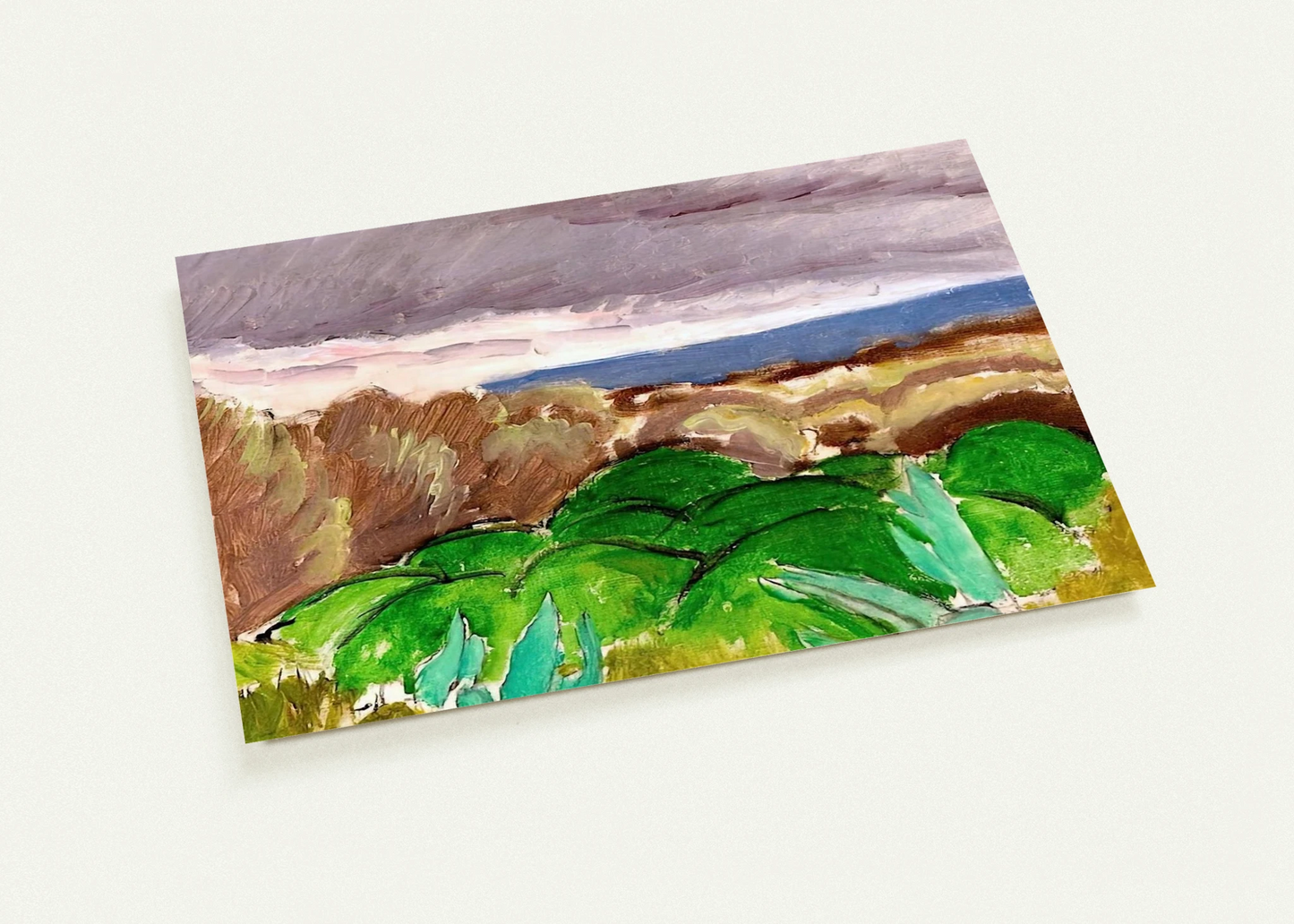
CAGNES LANDSCAPE IN STORMY WEATHER 1917 By Henri Matisse Pack of 10 Post Cards | Henri Matisse Post Cards | A6 (10.5 x 14.8 cm) - 4.1 x 5.8 inches
CAGNES LANDSCAPE IN STORMY WEATHER 1917 By Henri Matisse Pack of 10 Post Cards | Henri Matisse Post Cards | A6 (10.5 x 14.8 cm) - 4.1 x 5.8 inches
Noudon saatavuutta ei voitu ladata
Elevate Your Correspondence with Matisse’s 1917 Masterpiece
In 1917, Henri Matisse ventured into the South of France, a journey that would forever redefine his palette. Cagnes Landscape in Stormy Weather captures a rare, atmospheric tension that contrasts with his later sun-drenched Nice interiors. This pack of 10 museum-quality postcards from RedKalion allows you to share a pivotal moment in art history, where Matisse began bridging the gap between his radical Fauvist roots and the sophisticated naturalism of his mature period.
These are not standard souvenir cards. Each fine art postcard is produced using our advanced 12-color fine art printing technology. Unlike traditional 4-color inkjet processes, our method ensures the brooding greys, deep olives, and kinetic brushwork of the stormy sky are rendered with breathtaking accuracy and tonal depth. The result is a miniature archival masterpiece that evokes the same emotional resonance as the original oil on canvas.
- Paper Quality: Printed on premium 200 gsm (80 lb) paper for a substantial, luxurious feel.
- Sophisticated Finish: A smooth matte finish ensures a clean, glare-free display and an elegant surface for writing.
- FSC-Certified: We prioritize sustainability by using environmentally conscious, responsibly sourced materials.
- Dimensions: Standard A6 (10.5 x 14.8 cm / 4.1 x 5.8 inches), ideal for framing or mailing.
By choosing RedKalion, you are investing in a museum-quality reproduction that honors the artist's legacy. Whether used for personal notes or as a curated set for wall decor, these postcards represent the pinnacle of modern archival printing, ensuring the vibrancy of Matisse’s vision endures for years to come.
Discover Unlimited Art Possibilities
At RedKalion, you can find virtually any artwork from any artist, available in a wide range of sizes to perfectly match your space.
If you didn’t find what you’re looking for, contact us at support@redkalion.com . We will source any artwork and produce it in any size and format you need, including art prints, posters, canvas, framed pieces, framed canvas, and more.
For dedicated art enthusiasts, we also offer handcrafted replicas of any artwork, carefully painted by highly skilled artists using traditional techniques.
For custom requests, contact us at support@redkalion.com .
What makes the printing quality of these postcards superior?
We use 12-color fine art printing technology, which provides a significantly wider color gamut and smoother gradients than standard 4-color inkjet prints, ensuring your Matisse reproduction looks museum-authentic.
What is the weight and texture of the postcard paper?
Each card is printed on 200 gsm (80 lb) FSC-certified paper with a thickness of 0.26 mm. The smooth matte finish provides a professional, non-reflective surface perfect for both display and writing.
Are these postcards produced sustainably?
Yes. RedKalion utilizes FSC-certified, eco-friendly paper. Our print-on-demand model reduces waste by ensuring we only produce what is needed, with no minimum order requirements.
How long will the colors stay vibrant on these art prints?
Due to our archival-grade inks and high-quality 200 gsm paper, these prints are designed for longevity, resisting fading far longer than standard mass-produced postcards.
What are the shipping and production timelines?
Every order is printed on demand to ensure the highest quality control. Once your order is placed, it is meticulously printed and prepared for shipping to ensure it arrives in pristine condition.
What was Henri Matisse’s artistic focus in 1917?
1917 marked a transition for Matisse as he moved toward the French Riviera. Cagnes Landscape in Stormy Weather showcases his exploration of light and atmosphere during this transformative period.
Is the Cagnes Landscape in Stormy Weather part of the Fauvism movement?
While Matisse was a leader of Fauvism, this 1917 work shows a shift toward more complex, atmospheric tones and structured compositions, anticipating his renowned 'Nice period' style.