
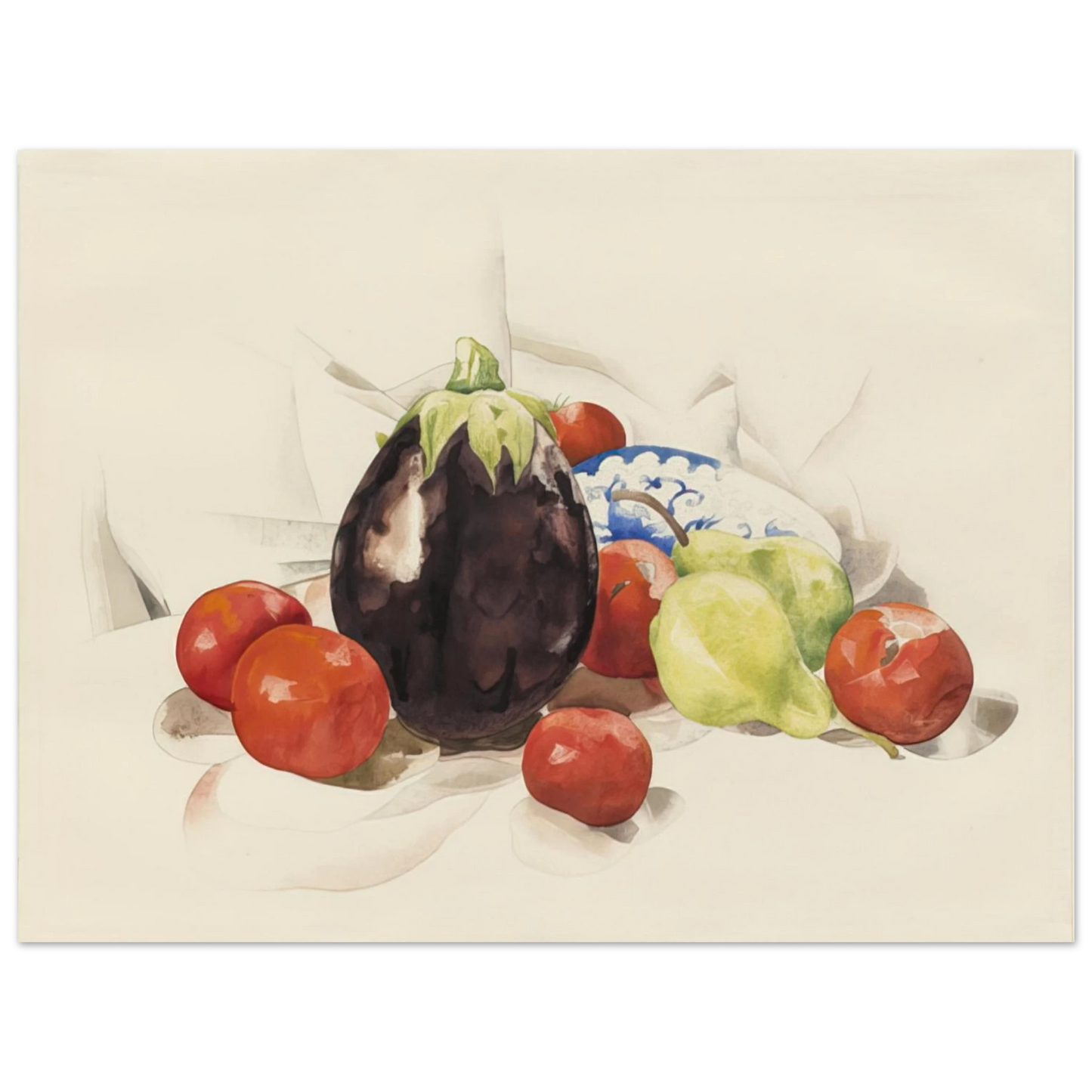
What is the paper quality of this Charles Demuth print?
The print is produced on Master's Edition archival paper. It is a 250 gsm (110 lb) natural white, matte, and uncoated paper, offering a luxurious museum-quality texture and superior durability.
Will the colors of 'Eggplant and Tomatoes' fade over time?
No. We use acid-free paper with a pH above 7, which prevents yellowing and preserves the pigment integrity, ensuring your fine art poster remains vibrant for decades.
Is the paper used for this reproduction sustainable?
Yes, RedKalion uses FSC-certified paper. This ensures the materials are sourced from responsibly managed forests, aligning premium quality with environmental stewardship.
How is the print shipped and fulfilled?
We offer on-demand printing with no minimum orders. Each piece is meticulously packaged and shipped to ensure it arrives in perfect condition, ready for framing in your collection.
What are the exact dimensions and thickness of the poster?
This print measures 75x100 cm (30x40 inches) with a thickness of 0.29 mm (11.4 mils), providing a substantial, premium weight characteristic of museum-grade reproductions.
What was Charles Demuth’s significance in the 1926 Modernist era?
In 1926, Demuth was at the height of his Precisionist style. 'Eggplant and Tomatoes' reflects his shift toward synthesizing organic shapes with the structured, clean lines of American Modernism.
Why is 'Eggplant and Tomatoes' considered a Precisionist masterpiece?
It exemplifies Precisionism by applying mathematical clarity to natural forms. Demuth uses sharp edges and careful color transitions to elevate simple vegetables into a complex, modern structural study.