
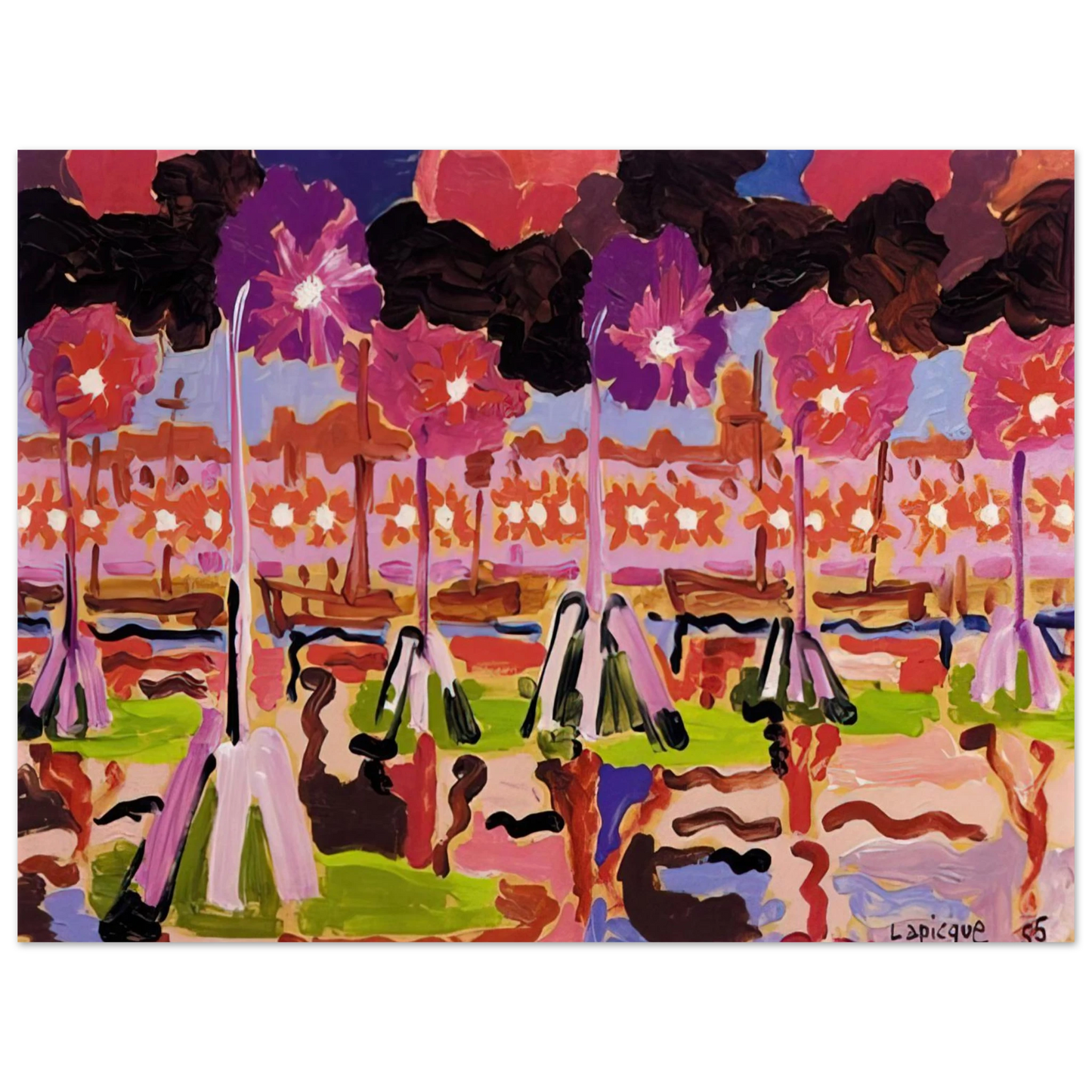
What makes the paper quality of this Charles Lapicque print unique?
We use Master's Edition archival paper, a 250 gsm (110 lb) natural white media. It features a matte, uncoated finish that provides a luxurious, glare-free texture, perfect for showcasing the intricate details of Lapicque’s 1955 Venetian landscape.
Will this fine art print yellow or fade over time?
No. Our prints are produced on acid-free paper with a pH above 7. This museum-grade specification prevents yellowing and ensures the vibrant colors of 'Quai à Venise' remain stable and beautiful for decades.
Is the paper used for this reproduction environmentally friendly?
Yes, RedKalion is committed to sustainability. This print uses FSC-certified paper (or equivalent regional certifications), ensuring that the materials are sourced from responsibly managed forests that provide environmental, social, and economic benefits.
How is the shipping and fulfillment handled for this artwork?
Each print is produced on demand to ensure peak quality. We have no minimum order requirements, and our global fulfillment network ensures your artwork is printed and shipped efficiently with maximum protection during transit.
What are the exact physical dimensions and thickness of the print?
The print measures 75x100 cm (30x40 inches). It has a substantial thickness of 0.29 mm (11.4 mils), providing the weight and feel of a high-end gallery piece.
What was Charles Lapicque’s unique approach to color in his Venice series?
Lapicque rejected traditional perspective. He often placed 'cool' colors like blue in the foreground and 'warm' colors like red in the background, a technique that created a rhythmic, vibrating sense of space unique to his 1950s works.
Is Quai à Venise considered an abstract or figurative work?
It is both. Lapicque was a key figure in the New School of Paris, blending recognizable subjects like the Venetian quays with calligraphic abstraction and non-naturalistic color to evoke the essence of the location rather than a literal depiction.