
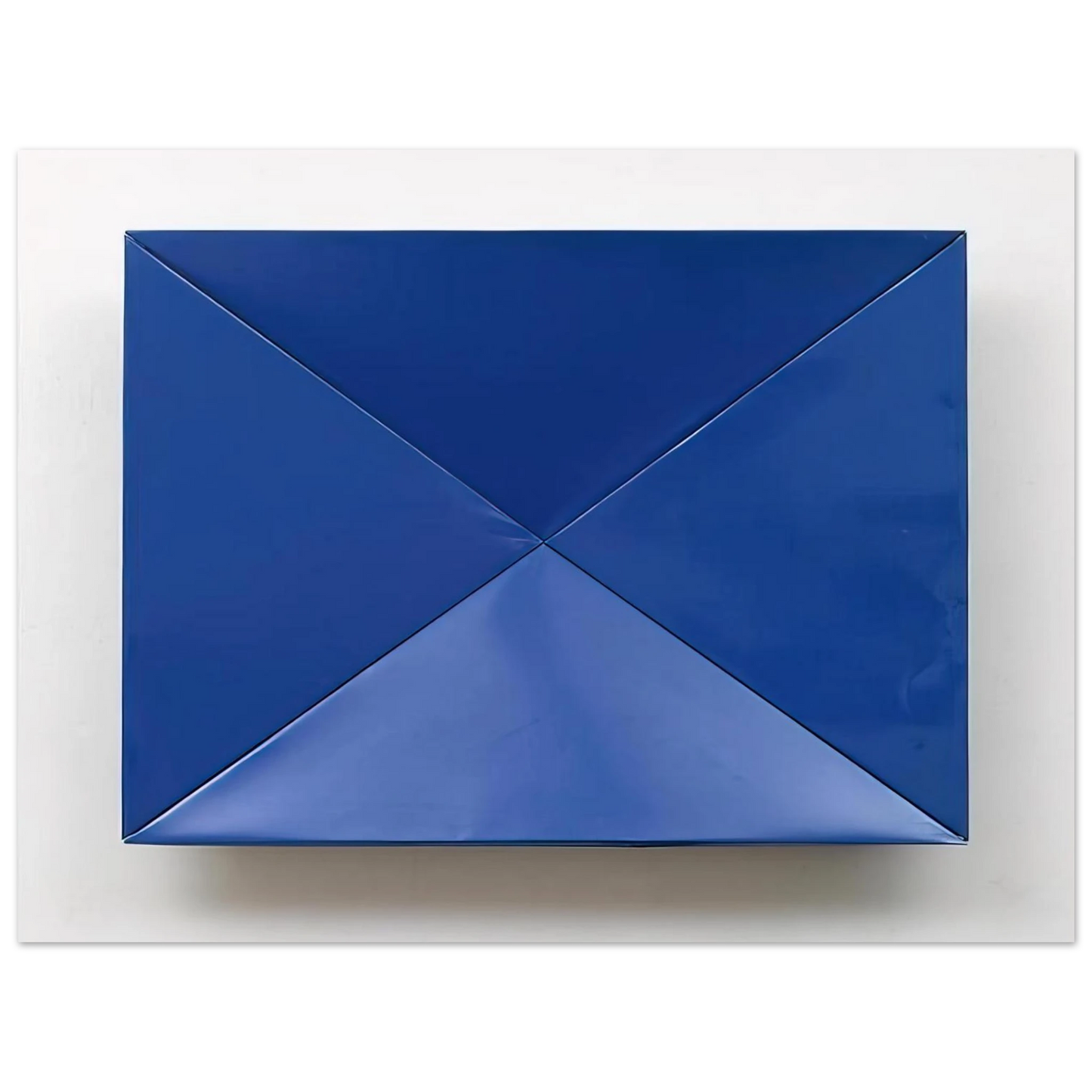
What defines the quality of this Charlotte Posenenske art print?
Our reproductions use Master's Edition archival paper, weighing 250 gsm. This museum-quality, natural white paper provides a luxurious matte finish and substantial thickness, ensuring the 'Fold' (1965) reproduction meets the highest gallery standards for clarity and texture.
Is the 'Fold' (1965) poster archival-grade?
Yes. The paper is acid-free with a pH value above 7, which prevents yellowing and ensures the print's longevity. This archival-grade material is designed to preserve the stark minimalist details of Posenenske's work for decades.
How does the matte finish affect the appearance of the artwork?
The matte, uncoated finish eliminates glare from indoor lighting, allowing the viewer to focus on the geometric forms. The natural white tone of the paper provides a soft, sophisticated backdrop that enhances the industrial aesthetic of the piece.
What are the shipping and fulfillment details?
RedKalion prints and ships each order on demand to ensure pristine condition. There are no minimum order requirements, and each print is handled with white-glove care to maintain the integrity of the 250 gsm archival paper during transit.
Is the paper used for this reproduction sustainable?
Sustainability is a core value at RedKalion. We use FSC-certified paper for all our Charlotte Posenenske prints, ensuring the materials are sourced from responsibly managed forests that provide environmental, social, and economic benefits.
What is the historical context of Charlotte Posenenske's Fold series?
The 'Fold' series represents Posenenske’s shift toward Minimalist logic in 1965. She moved away from subjective expression toward standardized, reproducible forms, often using industrial materials to challenge the concept of the 'unique' art object and the elitism of the art market.
How did Posenenske's 'Fold' influence minimalist art?
Posenenske’s work was radical for its modularity and democratic nature. By using 'folds' to create depth from flat planes, she bridged the gap between 2D painting and 3D sculpture, influencing the development of Conceptual art and contemporary installation practices.