
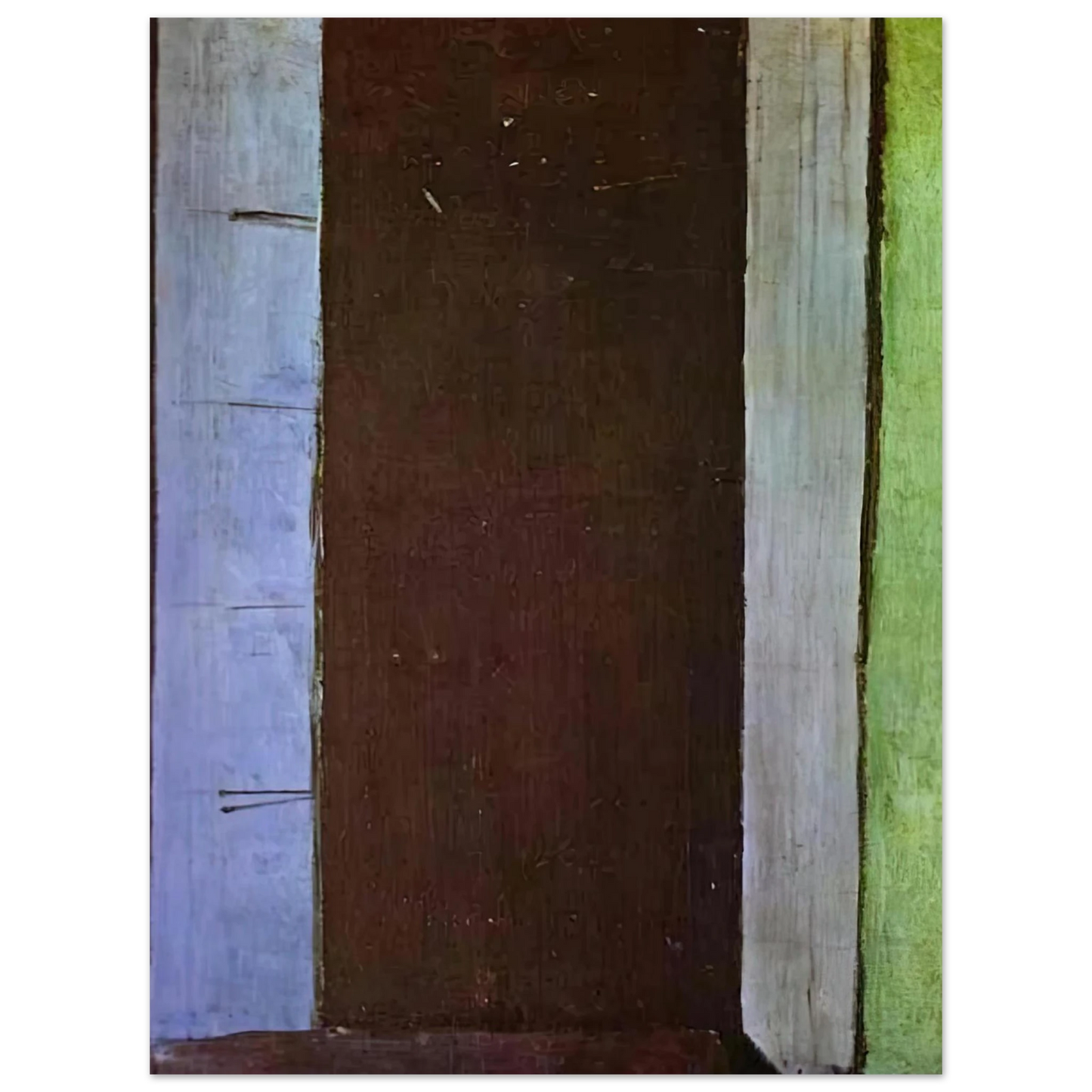
What is the historical significance of Henri Matisse's French Window at Collioure?
Painted in 1905, this work is a key example of Fauvism, where Matisse used intense, non-naturalistic colors to express emotion, revolutionizing modern art with its bold palette and simplified forms inspired by the Mediterranean light.
How does this fine art print capture the details of the original painting?
Our museum-quality reproduction uses high-resolution imaging to preserve Matisse's vibrant colors and brushwork, ensuring an authentic Fauvist art print that mirrors the original's expressive energy and composition.
It features Master's Edition archival paper with a matte, uncoated finish in natural white, 250 gsm weight, 0.29 mm thickness, and acid-free properties for long-lasting color fidelity and a luxurious texture.
How is this print shipped and what are the delivery options?
Printed and shipped on demand with no minimum orders, it arrives securely packaged to protect your premium art poster, with global shipping available for timely delivery.
What makes this print archival and resistant to deterioration?
Made from acid-free (pH above 7) and FSC-certified paper, it prevents yellowing and ensures durability, offering a sustainable, museum-quality reproduction that lasts for generations.
Why did Matisse choose Collioure as the subject for this painting?
Collioure's intense Mediterranean light and vibrant landscapes inspired Matisse to experiment with pure color, leading to breakthroughs in Fauvism and his artistic style during his 1905 stay there.
How does the size of this print (75x100 cm / 30x40 inches) enhance its display?
This large format allows the bold Fauvist colors and composition to make a striking visual impact, ideal for feature walls in homes or offices as a statement art piece.