
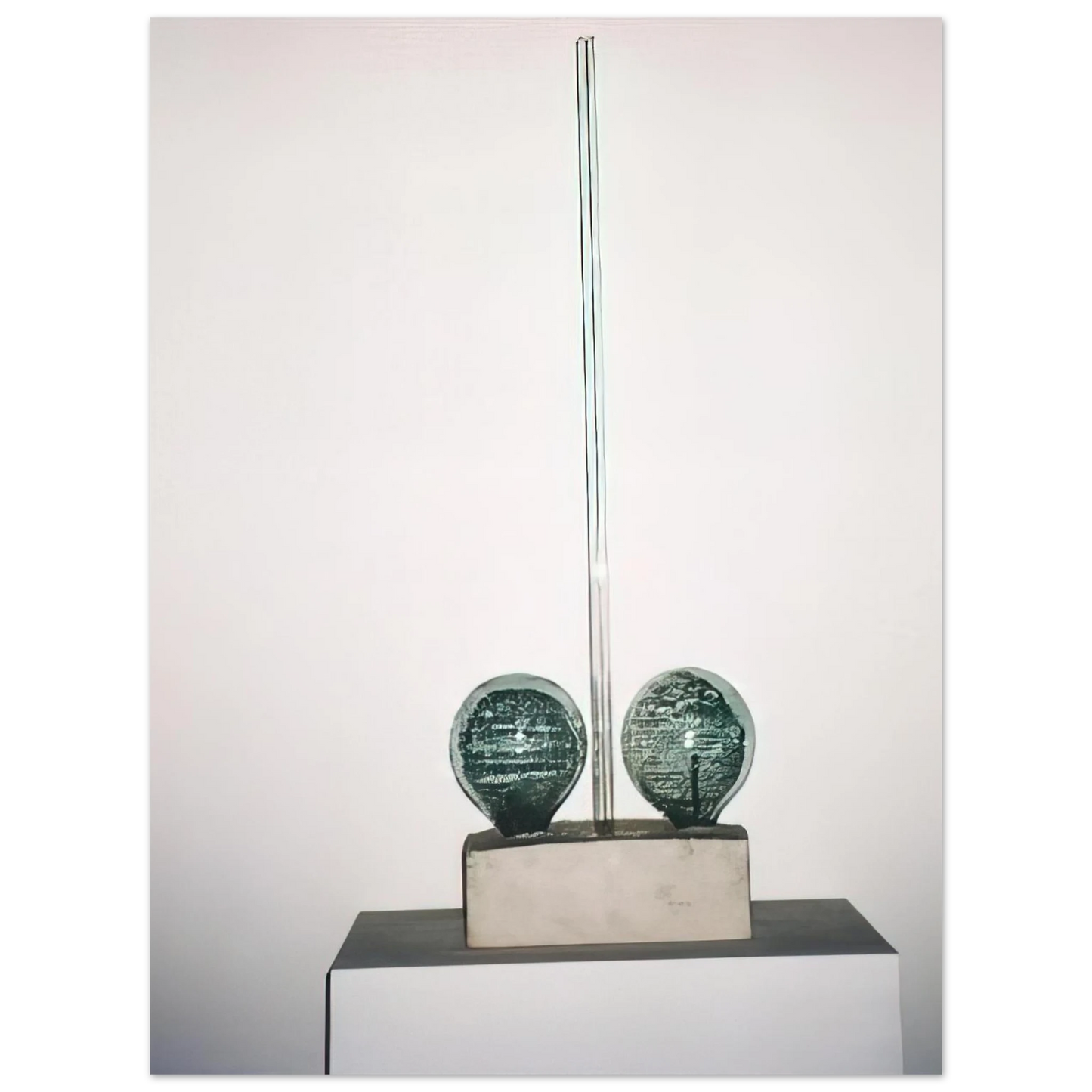
What is the historical significance of Robert Rauschenberg's THE MAN WITH TWO SOULS?
Created in 1950, this work marks Rauschenberg's early exploration of mixed media, blending collage and painting to challenge traditional art forms and foreshadow the rise of Pop Art, making it a key piece for collectors of mid-century American art.
How does this fine art print capture the details of the original artwork?
Our museum-quality reproduction uses high-resolution imaging and Master's Edition archival paper to ensure every texture and color nuance of Rauschenberg's original mixed-media technique is preserved in this 75x100 cm print.
What are the specifications of the paper used for this print?
This print is on Master's Edition archival paper: matte, uncoated, natural white finish, 250 gsm (110 lb) weight, 0.29 mm thickness, acid-free (pH above 7) to prevent yellowing, and FSC-certified for sustainability.
How is this print shipped and what are the ordering policies?
We print and ship on demand with no minimum orders, ensuring each Robert Rauschenberg poster is freshly produced and carefully packaged for secure delivery to your doorstep.
How long will this archival print last without fading or damage?
Made with acid-free, museum-quality paper, this fine art reproduction is designed to resist yellowing and fading for decades, maintaining its vibrant colors and integrity as a lasting investment.
What techniques did Rauschenberg use in THE MAN WITH TWO SOULS?
Rauschenberg employed collage and mixed media, layering found objects and paint to create a textured, dynamic composition that reflects his innovative approach to art in the 1950s.
Why is the 1950s period important for Rauschenberg's career?
This era was crucial as Rauschenberg began merging Abstract Expressionism with everyday materials, setting the stage for his later Combines and influencing the trajectory of contemporary art.