
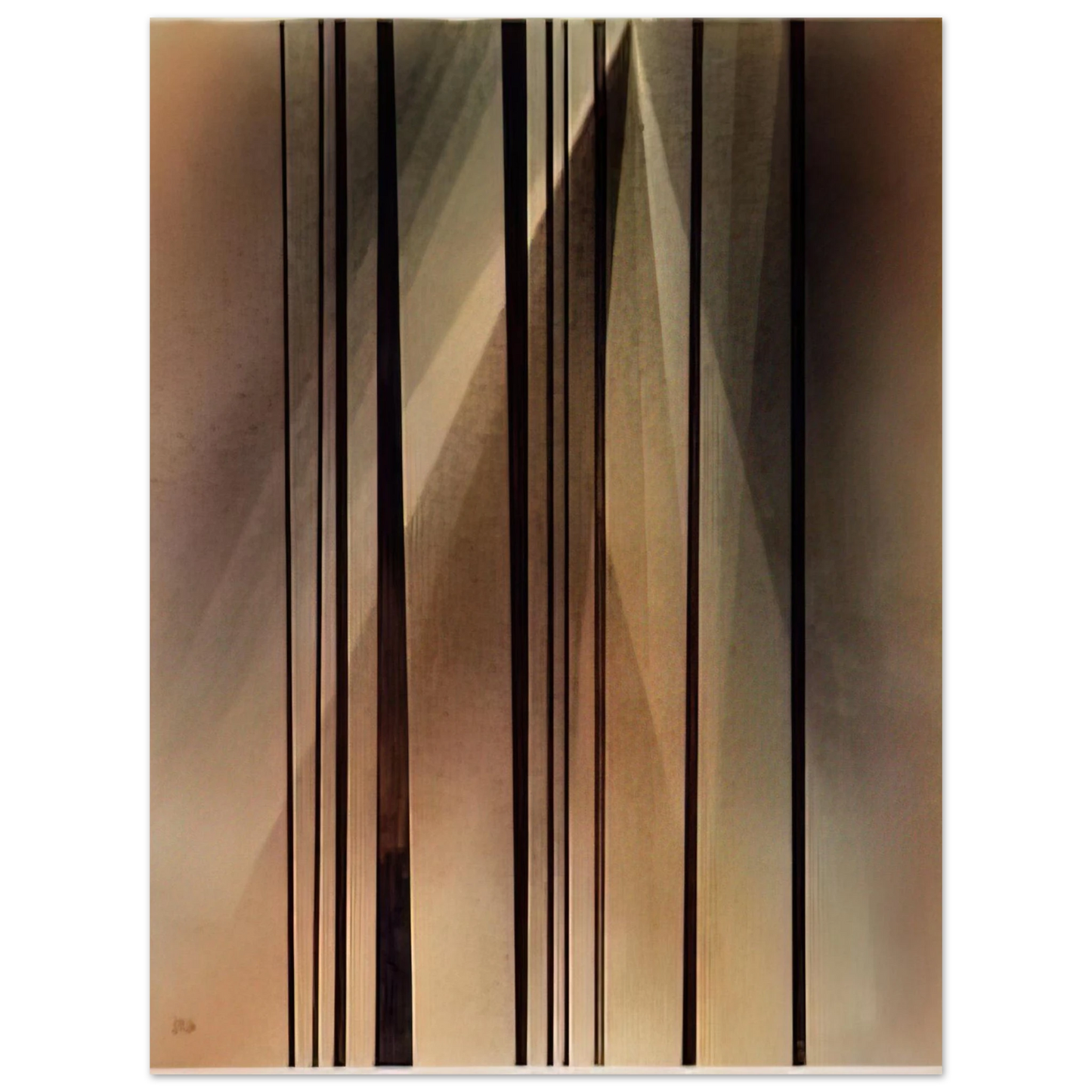
What is the significance of Wassily Kandinsky's CROSSING 1928 in art history?
CROSSING 1928 is a key work from Kandinsky's Bauhaus period, showcasing his transition to geometric abstraction and exploration of spiritual themes through dynamic forms and colors, influencing modern abstract art movements.
How does the paper quality ensure this fine art print is museum-quality?
Our Master's Edition archival paper is acid-free (pH above 7), FSC-certified, and 250 gsm thick, providing a matte, uncoated finish that prevents yellowing and replicates the texture of original artworks for a premium reproduction.
What are the dimensions of this Kandinsky print, and is it ready to frame?
This print measures 75x100 cm (30x40 inches) and comes unframed, allowing you to customize it with your preferred frame to match your decor style for a personalized display.
How is the print produced and shipped to ensure quality?
We print on demand using high-resolution techniques and ship carefully rolled in a protective tube, with no minimum orders, to deliver a pristine museum-quality reproduction directly to you.
What makes this archival paper long-lasting and sustainable?
The acid-free, FSC-certified paper resists deterioration and yellowing over time, offering eco-friendly durability that preserves Kandinsky's vibrant colors for decades as a sustainable art choice.
What artistic techniques did Kandinsky use in CROSSING 1928?
Kandinsky employed geometric shapes, bold lines, and contrasting colors in CROSSING 1928 to create visual tension and movement, reflecting his theories on the spiritual in art and abstraction.
How does this print compare to original Kandinsky artworks?
While not an original, this museum-quality reproduction captures every detail of CROSSING 1928 with archival precision, making Kandinsky's masterpiece accessible for collectors and enthusiasts to enjoy.