Passer aux informations produits
1 de 1

RedKalion

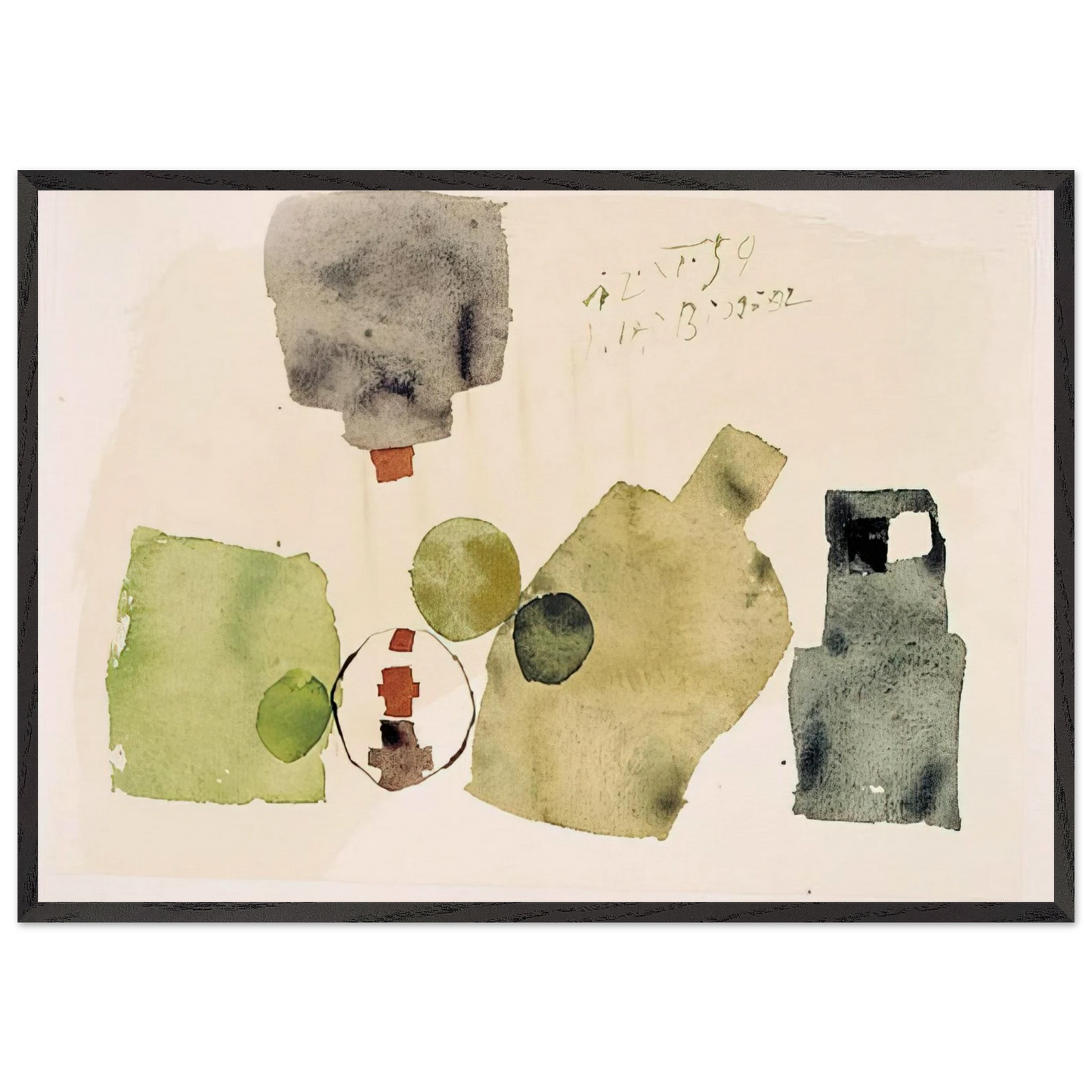
12XI59 - 1959 - Julius Bissier 70x100 cm / 28x40 inches Framed Art Print – Black Wooden Frame

12XI59 - 1959 - Julius Bissier 70x100 cm / 28x40 inches Framed Art Print – Black Wooden Frame

Prix habituel $449.99 USD
Prix habituel $999.99 USD Prix promotionnel $449.99 USD
Promotion Épuisé
Quantité

Elevate Your Space with Julius Bissier’s 12XI59

Experience the profound tranquility of mid-century lyrical abstraction with this museum-quality reproduction of Julius Bissier’s 12XI59. Created in 1959, this work represents the pinnacle of Bissier’s late period, where he synthesized the precision of German craftsmanship with the meditative fluidity of Zen-influenced ink signs. At RedKalion, we specialize in archival-grade prints that preserve the delicate spatial relationships and subtle tonal shifts that define Bissier’s mastery of the 'sign'—a visual language that occupies the space between calligraphy and pure abstraction.

Art Historical Context and Technique

Julius Bissier (1893–1965) was a master of the miniature and the meditative gesture. In 12XI59, the date of its creation serves as its title, reflecting the artist’s view of painting as a daily spiritual exercise. His technique involved a unique use of egg-oil tempera and ink, creating forms that seem to float within a timeless void. This piece is a testament to the era of Informel art, capturing a moment of quiet intensity that invites deep contemplation. By introducing this fine art print into your collection, you are not merely decorating a wall; you are curating an atmosphere of intellectual and spiritual refinement.

Premium Material Specifications

At RedKalion, we believe that an archival masterpiece deserves nothing less than the finest materials. This framed art print is crafted to endure for generations:

  • Archival Museum-Quality Paper: Printed on 250 gsm (110 lb) natural white, uncoated paper with a matte finish to prevent glare and highlight every subtle detail.
  • Robust Frame Construction: Encased in a premium black wooden frame made from responsibly sourced oak and ash. The frame measures 20mm (0.79") in both thickness and width, providing a contemporary, substantial profile.
  • Shatterproof Protection: Your artwork is shielded by high-clarity, shatterproof plexiglass, ensuring both safety and preservation.
  • Ready to Hang: Each piece arrives with a pre-installed hanging kit, allowing for immediate installation.
  • Sustainable Excellence: We use FSC-certified materials, aligning luxury with environmental responsibility.
Afficher tous les détails
What makes this Julius Bissier print "museum-quality"?

We use 250 gsm archival museum-quality paper with a matte, natural white finish. This acid-free paper ensures long-term preservation and high color fidelity, reflecting the quality found in world-class art galleries.

What are the specifications of the black wooden frame?

The frame is crafted from FSC-certified oak and ash, measuring 20mm (0.79") in both width and thickness. This wider profile offers superior structural integrity compared to standard frames.

How is the artwork protected during shipping and display?

Each print is protected by shatterproof plexiglass, which is more durable and safer than standard glass while maintaining exceptional clarity for viewing the fine details of Bissier’s work.

Is the framed print ready to hang upon arrival?

Yes, every framed art print from RedKalion includes a professional-grade hanging kit, ensuring the piece is ready to be displayed on your wall immediately upon delivery.

Is the paper and frame sustainably sourced?

RedKalion is committed to sustainability. We exclusively use FSC-certified wood and paper (or equivalent certifications) to ensure your artwork supports responsible forest management.

What does the title "12XI59" represent in Julius Bissier’s work?

Bissier titled his works using the date of their creation (November 12, 1959). This practice emphasizes the artwork as a temporal record of a specific meditative state or spiritual moment.

How did Zen philosophy influence Julius Bissier’s technique?

Bissier was deeply influenced by Zen-Buddhism and ink wash painting. This is evident in his use of calligraphic 'signs' and the strategic use of empty space, or 'Ma,' to create balance.