RedKalion
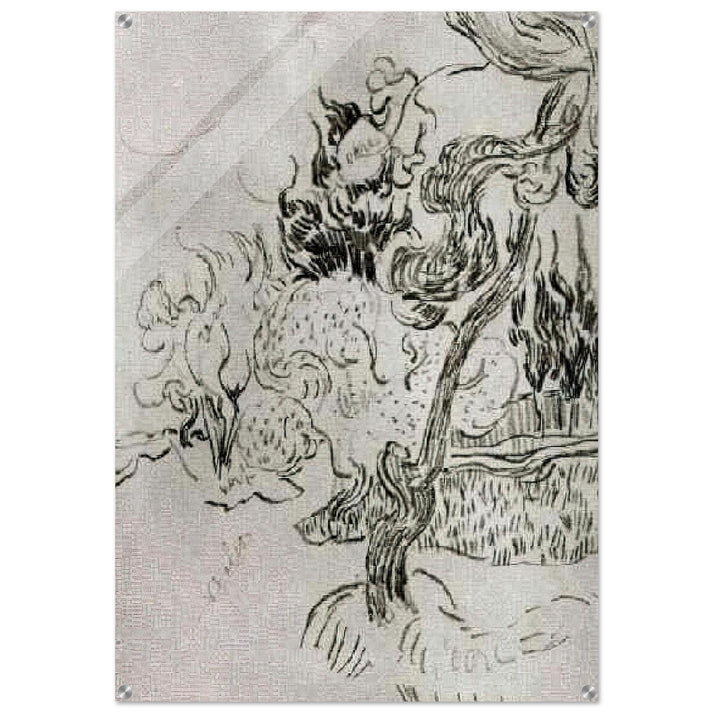
A Pine Tree and Cypresses in the Garden of the Asylum - Vincent van Gogh Acrylic Print - 70x100 cm / 28x40″ inches
A Pine Tree and Cypresses in the Garden of the Asylum - Vincent van Gogh Acrylic Print - 70x100 cm / 28x40″ inches
Impossible de charger la disponibilité du service de retrait
Experience Van Gogh’s Spiritual Landscape
Invite the profound emotional resonance of Saint-Rémy into your home with RedKalion’s museum-quality reproduction of A Pine Tree and Cypresses in the Garden of the Asylum. Painted in late 1889 by Vincent van Gogh, this work captures the restless energy of the Provence landscape, where the artist sought solace amidst the walled gardens of Saint-Paul-de-Mausole. This piece is a testament to Van Gogh’s ability to find divinity in the natural world during his most challenging periods.
Mastery in Every Brushstroke
Van Gogh’s signature impasto technique and swirling brushwork are brought to life through our premium acrylic medium. The 4mm (0.15") acrylic glass provides an unparalleled depth, making the dark, flame-like cypresses and the twisted pines appear almost three-dimensional. This isn't merely a print; it is a meticulous recreation of an era defined by Post-Impressionist intensity, offering a vibrant, glass-like finish that traditional canvas cannot match.
The RedKalion Standard: Archival Quality
At RedKalion, we curate works for the discerning collector who demands longevity. Our Vincent van Gogh acrylic print features modern straight-cut corners and a sleek, durable finish that resists the passage of time. To ensure a seamless installation, each 70x100 cm (28x40″) masterpiece includes a professional-grade hanging kit. The print is designed with pre-drilled holes at each corner, 14mm from the edge, allowing the artwork to float elegantly against your wall with the included industrial-grade hardware.
- Material: 4mm (0.15") high-grade acrylic for brilliant clarity and impact resistance.
- Design: Minimalist straight-cut edges for a contemporary, gallery-style aesthetic.
- Installation: Includes 4 corner screws (15mm heads) and all necessary mounting hardware.
- Longevity: Printed using archival inks that are UV-resistant, ensuring your investment remains vivid for generations.

Discover Unlimited Art Possibilities
At RedKalion, you can find virtually any artwork from any artist, available in a wide range of sizes to perfectly match your space.
If you didn’t find what you’re looking for, contact us at support@redkalion.com . We will source any artwork and produce it in any size and format you need, including art prints, posters, canvas, framed pieces, framed canvas, and more.
For dedicated art enthusiasts, we also offer handcrafted replicas of any artwork, carefully painted by highly skilled artists using traditional techniques.
For custom requests, contact us at support@redkalion.com .
How is the print quality of this Van Gogh reproduction?
We use high-definition giclée printing directly onto 4mm acrylic, ensuring vibrant color accuracy and a sense of depth that beautifully mimics the heavy texture of Van Gogh's original oil paintings.
What mounting hardware is included with the acrylic print?
Each print includes a full hanging kit: four 15mm screw-head standoffs, screws, and pre-drilled 8mm holes located 14mm from the corners for a secure and modern floating display.
Is the acrylic material durable and fade-resistant?
Yes, our acrylic prints are crafted for extreme longevity. We use archival-grade inks and UV-resistant 4mm acrylic that shields the artwork from sunlight, preventing fading or yellowing over time.
How is the artwork packaged for shipping?
At RedKalion, we use specialized protective layering and high-strength crating to ensure your museum-quality print arrives in pristine condition, ready for immediate installation in your home or gallery.
Why is acrylic the best choice for Van Gogh's work?
The refractive properties of the 4mm acrylic enhance Van Gogh’s use of light and color, providing a luminosity and depth of field that makes the swirling brushstrokes feel alive.
What is the historical significance of the asylum garden series?
Painted in 1889 during Van Gogh's stay at Saint-Paul-de-Mausole, this series represents his struggle and triumph, turning the asylum's restricted garden into a symbol of untamed natural beauty.
Why were cypresses so important to Van Gogh during this period?
Van Gogh was obsessed with the verticality and 'Egyptian obelisk' shape of cypresses, viewing them as symbols of both mourning and immortality, which he balanced against the gnarled pine trees.