
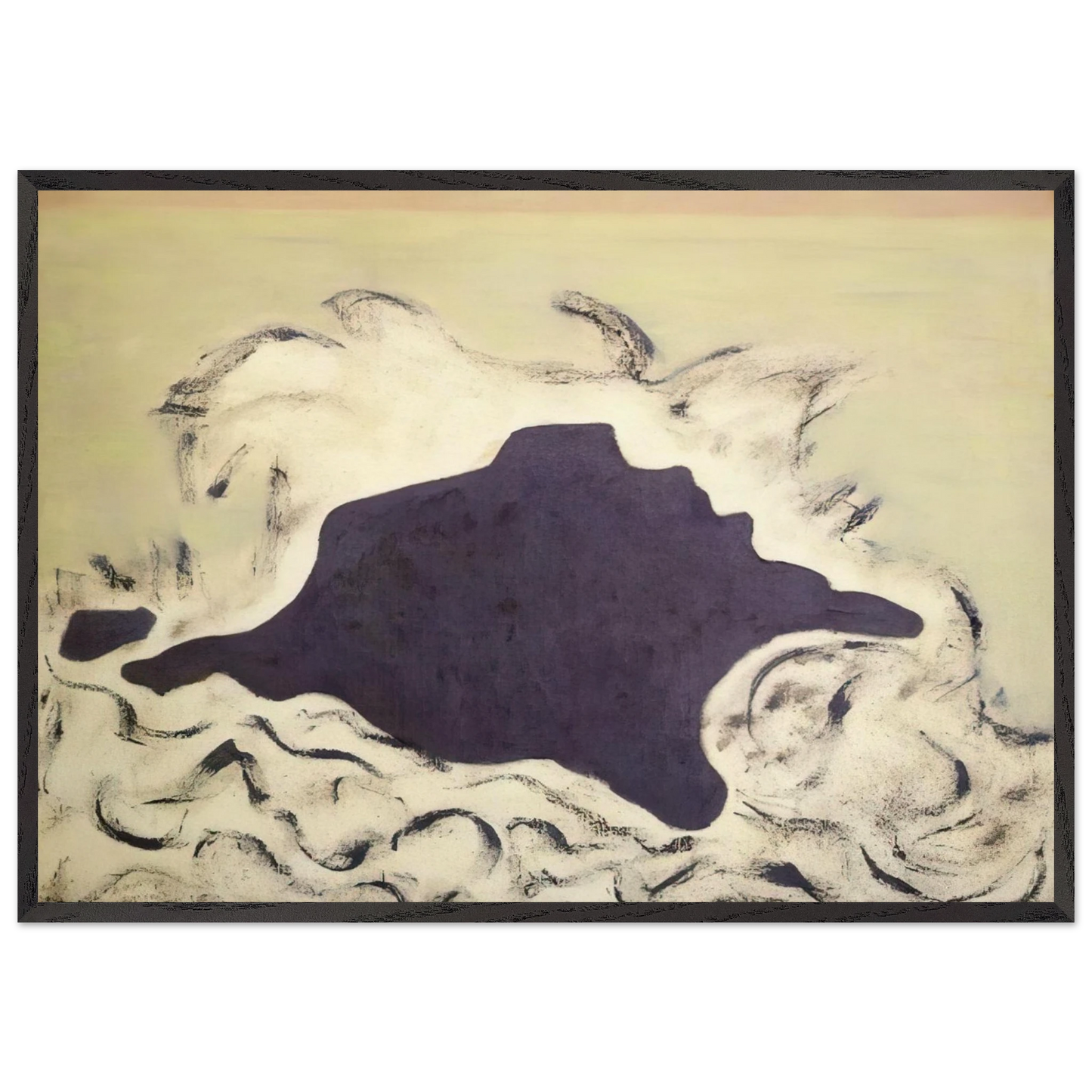
What materials are used for this Milton Avery print?
We use 250 gsm (110 lb) natural white, archival museum-quality paper. The frame is crafted from responsibly sourced 20mm thick oak or ash wood with a matte black finish and shatterproof plexiglass.
How does the frame thickness compare to standard options?
Our premium frames are 20mm (0.79") wide and thick, offering a more robust and sophisticated profile than the 14mm frames commonly used in mass-market art prints.
Is the artwork ready to hang upon delivery?
Yes, your Advancing Sea print arrives fully assembled in its black wooden frame with a hanging kit included, making it ready to mount on your wall immediately.
Will the colors fade over time?
No. We use archival-grade paper and high-pigment inks designed to resist yellowing and fading, ensuring the print remains a vibrant centerpiece for decades.
Is this product environmentally friendly?
Absolutely. We prioritize sustainability by using FSC-certified wood and paper, ensuring that your fine art reproduction supports responsible forest management.
Why is the year 1953 significant for Milton Avery?
1953 represents Avery's late-career mastery, a period where he achieved maximum emotional impact through the radical simplification of forms and sophisticated color harmonies.
What is Milton Avery’s influence on modern art?
Avery is known as the 'American Matisse.' His use of flat color shapes directly influenced the Color Field movement and artists like Mark Rothko.