Discover Unlimited Art Possibilities
At RedKalion, you can find virtually any artwork from any artist, available in a wide range of sizes to perfectly match your space.
If you didn’t find what you’re looking for, contact us at support@redkalion.com . We will source any artwork and produce it in any size and format you need, including art prints, posters, canvas, framed pieces, framed canvas, and more.
For dedicated art enthusiasts, we also offer handcrafted replicas of any artwork, carefully painted by highly skilled artists using traditional techniques.
For custom requests, contact us at support@redkalion.com .
What makes the paper quality 'museum-grade'?
We use 250 gsm (110 lb) archival paper with a thickness of 0.29 mm. This natural white, uncoated paper is acid-free and designed to prevent yellowing, ensuring your Alma Woodsey Thomas print retains its brilliance for decades.
How is the artwork protected during display?
Each print is shielded by premium shatterproof plexiglass. This provides the clarity of glass without the risk of breakage, protecting the fine art surface from UV rays, dust, and environmental moisture.
Is this art print sustainably produced?
Yes. RedKalion utilizes FSC-certified (Forest Stewardship Council) oak and ash wood for our frames. Our commitment to sustainability ensures that your luxury decor supports responsible forest management practices.
How will my framed print arrive?
Your 70x100 cm artwork arrives fully assembled in its 20mm black wooden frame. It includes a professional hanging kit, meaning it is ready to hang directly on your wall the moment it is unboxed.
How long will the colors last?
By utilizing archival-grade inks on museum-quality matte paper, our prints are engineered for longevity. Under normal indoor lighting conditions, the pigments are designed to resist fading for over 75 years.
Who was Alma Woodsey Thomas?
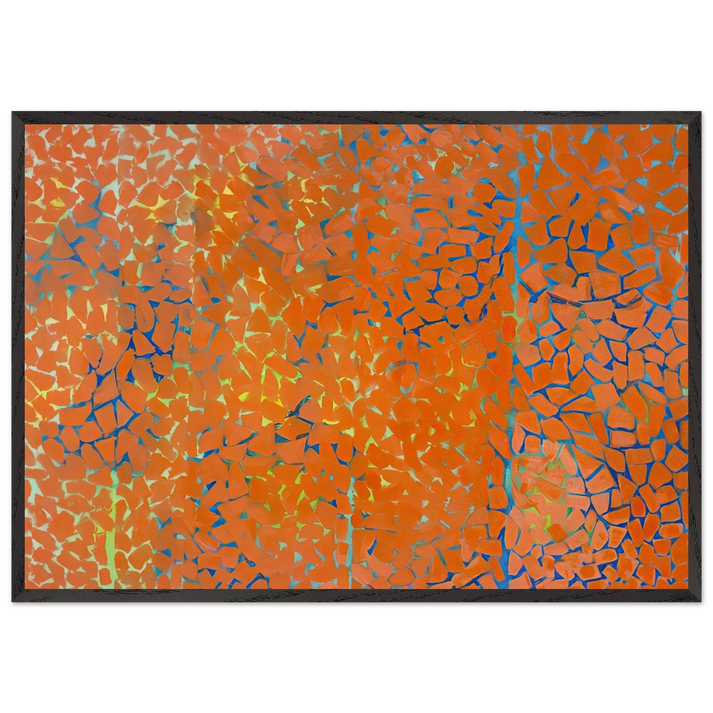
Alma Woodsey Thomas (1891–1978) was a pivotal figure in the Washington Color School. She is celebrated for her vibrant, rhythmic abstractions inspired by nature, space exploration, and her personal garden.
What characterizes the 'Autumn Leaves' technique?
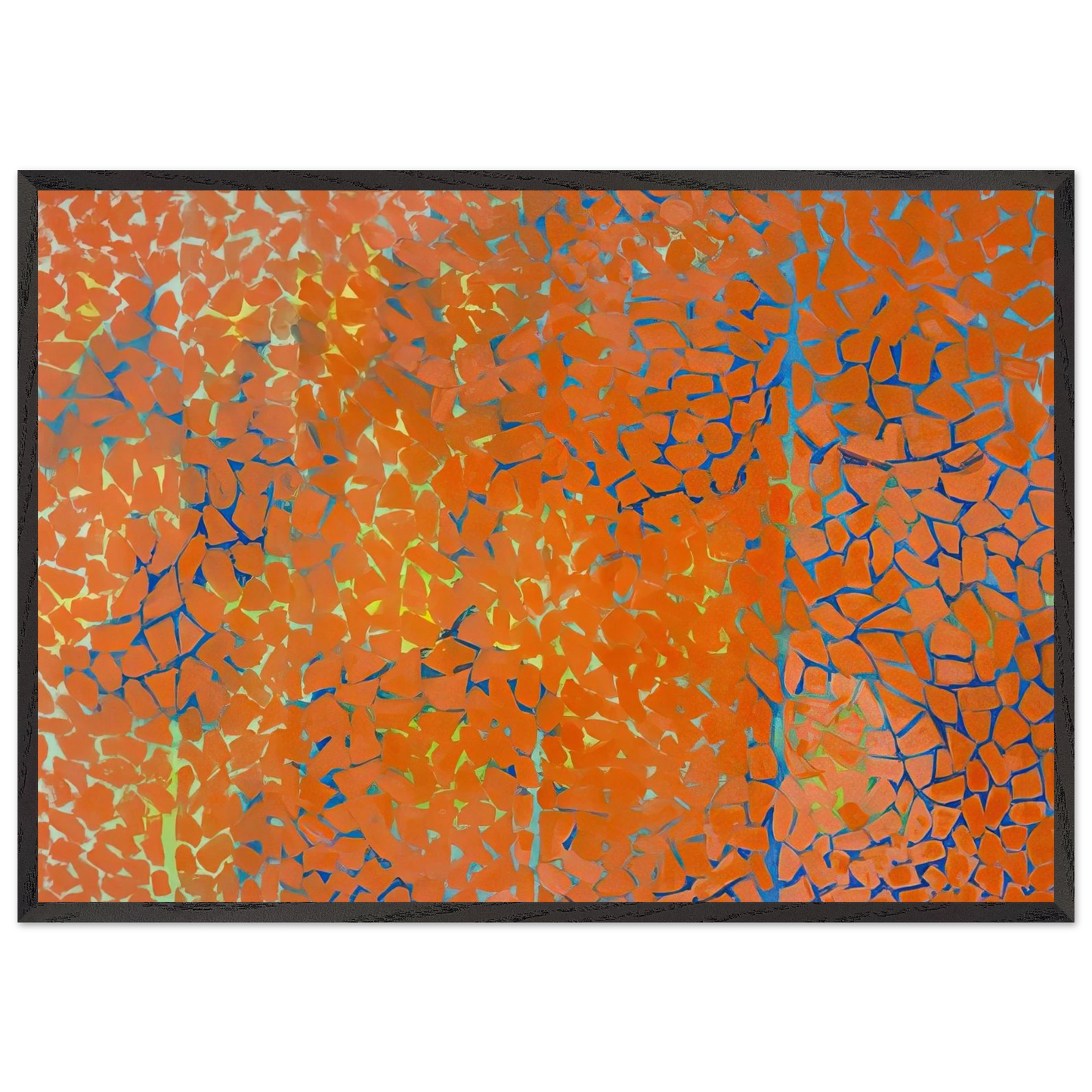
This 1973 work utilizes 'Thomas dabs'—short, staccato strokes of color. This technique creates a sense of flickering light and movement, mimicking the visual sensation of leaves dancing in the wind.