
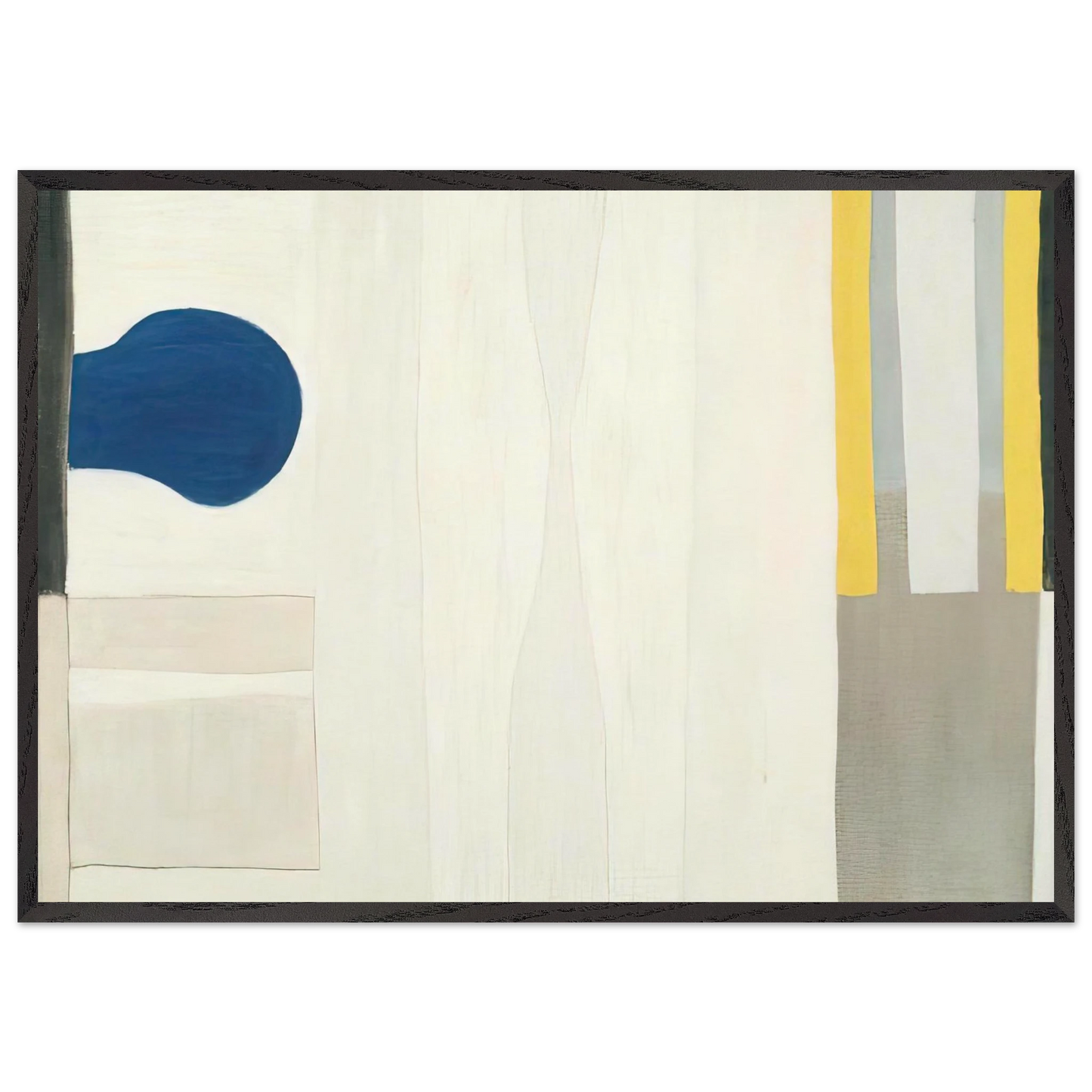
What paper quality is used for this William Scott print?
We use 250 gsm (110 lb) archival museum-quality paper. This natural white, matte, and uncoated paper ensures the longevity of the Blue Form on White print while maintaining the textural integrity and color depth of the original 1964 masterpiece.
What are the specifications of the black wooden frame?
Our frames are crafted from responsibly sourced oak and ash wood. They measure 20mm (0.79") in both width and thickness, providing a premium, robust profile that is significantly sturdier than standard 14mm frames, finished in a sophisticated black.
Is the artwork ready to hang upon arrival?
Yes. Your framed art print includes a professional hanging kit. It is delivered fully assembled and ready to hang directly on your wall, ensuring a seamless transition from our gallery to your home or office space.
How does RedKalion ensure the sustainability of its prints?
RedKalion is committed to ethical curation. We use FSC-certified materials or equivalent sustainable certifications for our paper and wood frames, ensuring that your fine art reproduction supports responsible forest management and environmental stewardship.
Will the colors of Blue Form on White fade over time?
No. By utilizing archival-grade, acid-free paper and shatterproof plexiglass protection, this museum-quality reproduction is designed to resist yellowing and fading, ensuring the vibrant blue and crisp white remain pristine for decades.
What was the artistic significance of William Scott's 1964 period?
In 1964, William Scott reached a peak in minimalist abstraction. He moved away from domestic subjects toward 'Hard Edge' painting, focusing on the spatial relationship between organic forms and the canvas, a transition captured perfectly in this piece.
What does the 'Blue Form' represent in Scott's abstraction?
While entirely abstract, Scott's forms often retain an 'organic ghost' of his previous still-life subjects. The blue form represents a balance between austerity and sensuality, a hallmark of mid-century British modernism and Scott's unique visual vocabulary.