
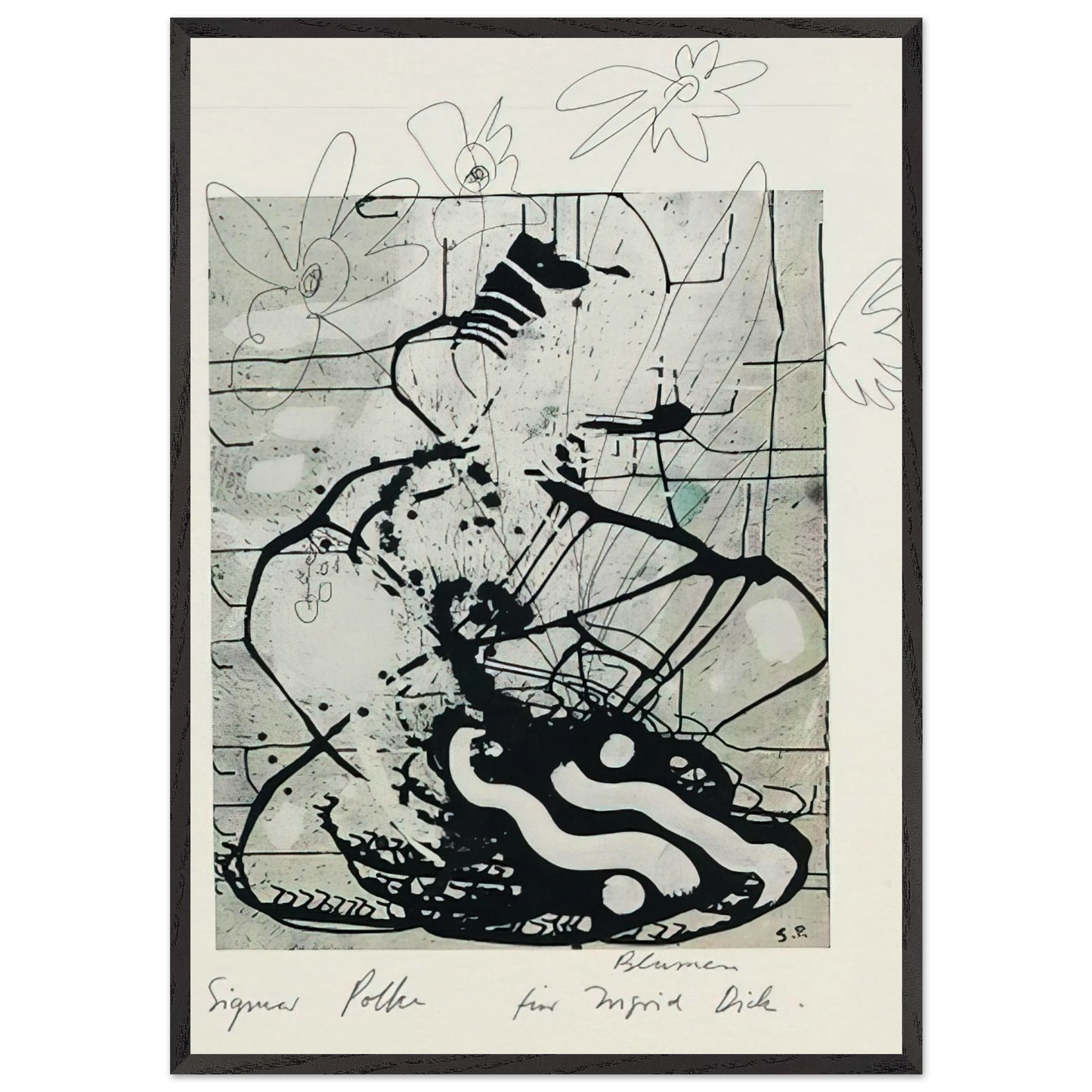
What makes this Sigmar Polke print "museum-quality" at RedKalion?
RedKalion utilizes archival-grade 250 gsm natural white paper and acid-free inks. This combination ensures high color fidelity and longevity, meeting the strict standards required for gallery-grade fine art reproductions.
Is the black wooden frame sustainably sourced?
Yes. Our frames are crafted from responsibly sourced oak and ash wood, carrying FSC certification or equivalent. This ensures your artwork is both a premium aesthetic choice and an environmentally conscious one.
How is the artwork protected during shipping and on the wall?
Each print is secured behind shatterproof plexiglass, providing clarity and safety. We ship in robust, protective packaging to ensure your framed piece arrives in flawless condition, ready for immediate display.
What are the technical specifications of the fine art paper used?
We use heavyweight 250 gsm (110 lb) paper with a thickness of 0.29 mm (11.4 mils). The matte, uncoated, natural white finish provides a sophisticated texture that prevents distracting reflections.
Does the Sigmar Polke Blumen 1985 print come ready to hang?
Absolutely. Your framed print includes a professional-grade hanging kit. The 20mm thick frame provides a sturdy, gallery-ready structure that can be displayed immediately upon arrival.
Who was Sigmar Polke and why is Blumen (1985) significant?
Polke was a German artist known for his "alchemical" experimentation. Blumen (1985) reflects his transition toward more fluid, organic abstractions, challenging the traditional floral motif with his unique post-modern aesthetic.
What artistic technique did Polke employ in the original 1985 work?
Polke was famous for using unconventional pigments and chemical reactions. In 1985, he often layered translucent colors and manipulated the surface to create depth, a detail our high-resolution prints capture beautifully.