
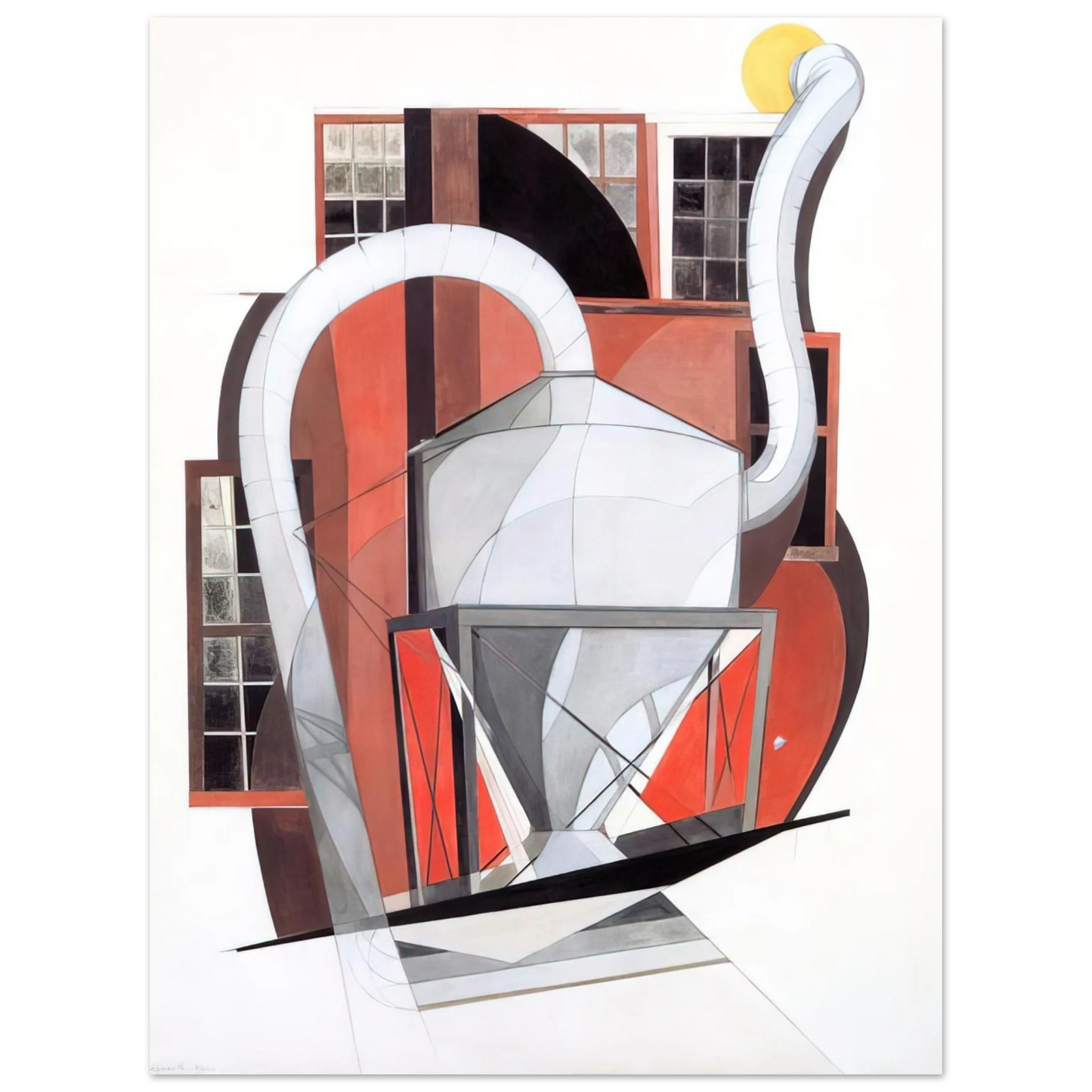
What are the print specifications for this Demuth reproduction?
Our Charles Demuth fine art print is produced on 250 gsm Master's Edition archival paper. It features a matte, natural white finish with a thickness of 0.29 mm, ensuring a museum-quality texture and appearance.
Will the paper yellow over time?
No. We use acid-free paper with a pH level above 7. This archival-grade quality prevents yellowing and degradation, ensuring your artwork remains vibrant for decades.
Is the paper sustainably sourced?
Yes, RedKalion is committed to sustainability. All our prints use FSC-certified paper (or equivalent certifications depending on regional availability), supporting responsible forest management.
How is shipping handled for large-format prints?
Each print is produced on demand and shipped in robust, protective packaging. There are no minimum order requirements, and we fulfill orders globally to ensure safe arrival.
What makes RedKalion's fine art prints "museum-quality"?
Our prints meet museum standards through the use of high-weight (250 gsm) archival paper, acid-free chemistry, and precision printing techniques that capture every nuance of the original work.
What is the significance of "Machinery" in Charles Demuth's career?
Created in 1920, "Machinery" is a quintessential example of American Precisionism. It reflects Demuth’s fascination with industrial architecture, blending Cubist fragmentation with the clean lines of the machine age.
What art movement does this piece belong to?
This work is a cornerstone of the Precisionist movement, which emerged in the U.S. after WWI. It celebrated the industrial landscape through simplified geometric forms and clear, sharp-edged rendering.